
August 7, 2026 · Market Updates
Can You Build an ADU in Dayton? What Homeowners Need to Know in 2026
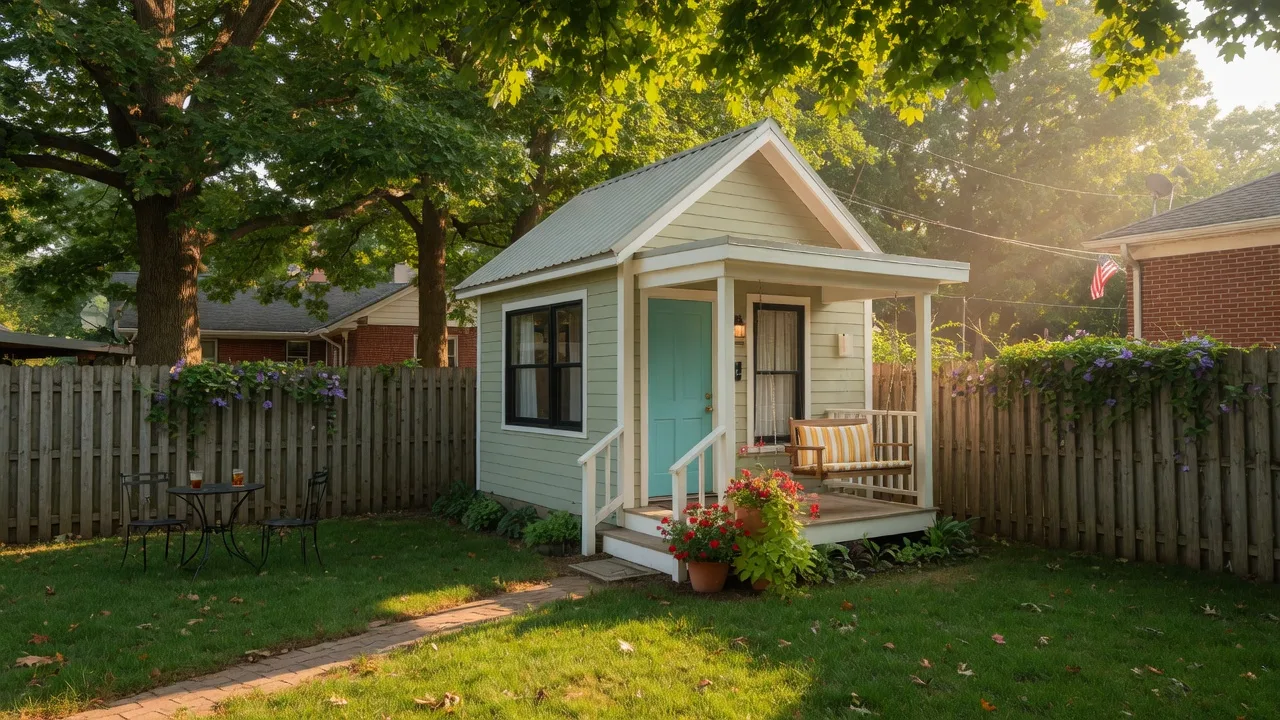
Yes, you can build an accessory dwelling unit, or ADU, in Dayton today, but the rules are changing fast. Right now an ADU is treated as a conditional use in most single-family neighborhoods, which means you need approval from the planning commission before you break ground. The city has been working on making them permitted by right, so 2026 is the year homeowners should finally take the idea seriously.
If you have been asking whether a backyard cottage, a converted garage, or an in-law suite makes sense for your property, you are not alone. It is one of the most common questions our brokerage hears from Dayton homeowners this summer, right up there with "Is it a good time to sell?" Here is what you need to know before you start drawing up plans.
What Exactly Is an ADU?
An accessory dwelling unit is a second, smaller living space on the same lot as your main home. It has its own entrance, its own kitchen, and its own bathroom, which makes it a true independent home rather than just a finished room. The most common forms in the Dayton area are detached backyard cottages, garage conversions, apartments above a garage, and basement units with a separate entrance.
For years Daytonians have called them granny flats and in-law apartments, and they serve exactly those purposes: housing an aging parent, giving an adult child a place to land, or bringing in rental income from a long-term tenant. As housing costs climb across Ohio, cities are looking at ADUs as one of the fastest ways to add gentle density without changing the character of a neighborhood.
Where Dayton's ADU Rules Stand Right Now
Dayton revised its zoning code in 2022 to make ADUs easier to build. That update allowed them in more places but kept them as a conditional use, so every project still needs planning commission approval and a public process. In late 2024 the city drafted a further amendment that would make ADUs permitted by right in single-family residential districts, meaning a homeowner could build one without discretionary review as long as they meet the code.
As of this summer, that full legalization is still working its way through the process, so the specifics can change. What matters for you is the rule in your exact city, not the rule in Dayton proper. Beavercreek, Centerville, Kettering, Oakwood, Troy, Springfield, and every other community we serve writes its own zoning, and the differences are real: lot sizes, setbacks, height limits, parking requirements, and design standards all vary. Before you fall in love with a floor plan, call the planning or zoning department in your municipality and confirm what is allowed on your lot.
What an ADU Costs to Build
The honest answer is that an ADU is not cheap. Construction costs in Ohio typically run $150 to $400 per square foot, and a detached ADU in our region commonly lands between $120,000 and $230,000 depending on size, finishes, and site work. Garage and basement conversions tend to cost less than new construction because the shell already exists.
Ohio does not currently offer a statewide grant program specifically for ADUs, so most homeowners finance the project with home equity, a HELOC, a cash-out refinance, or a construction loan. The good news: in Dayton's market, the numbers can work. A modest backyard rental can generate meaningful monthly income, and the added living space typically raises the value of the property well beyond the cost of the build.
$150-400
Cost per Sq Ft in Ohio
$120-230K
Typical Detached ADU
+35%
Avg. Price Premium with ADU
2022
Dayton Code Update
How an ADU Can Pay Off
The value of an ADU is rarely just the rental check. For multigenerational families it can mean the difference between an aging parent living independently next door versus moving into assisted living. For remote workers it becomes a quiet office or studio. For investors it is a second door on the same lot, which changes the math on a property entirely.
On the resale side, the data is compelling. A 2021 Porch Research study found that homes with ADUs are typically priced about 35% higher than comparable homes without one. That is a national average, and Dayton will have its own variations by neighborhood, but the pattern holds: buyers see a flexible second living space as a premium feature, especially at a time when inventory is tight and every square foot counts.
Questions to Ask Before You Build
- Confirm zoning in your exact municipality. Dayton, Beavercreek, Centerville, Kettering, Oakwood, Troy, and Springfield all have different rules. Get the current code in writing before you budget.
- Check setbacks, height, and lot coverage. Older lots in Dayton's core neighborhoods often have less room than newer suburban lots, and that can decide whether a detached cottage is even feasible.
- Understand parking requirements. Many communities require an off-street parking space for the ADU, which can eat into your yard and your budget.
- Ask about short-term rental rules. Long-term rentals are usually fine, but many Ohio municipalities restrict Airbnb-style stays in ADUs. Know the difference before you plan on income.
- Price utilities and separate meters. Sewer, water, and electric connections add real cost. A licensed contractor who has built ADUs in Ohio is worth the investment.
The Bottom Line
ADUs are one of the most talked-about housing topics in Dayton right now, and for good reason: they add housing without changing neighborhoods, create income for homeowners, and give families flexible space they cannot buy for the same money. The rules are moving in the right direction, but they are also in flux. That is exactly when local knowledge matters. At Glasshouse Realty, we track these changes neighborhood by neighborhood, and we are happy to help you figure out what is possible on your lot.
Frequently Asked Questions
Are ADUs legal in Dayton?
Yes, with conditions. Dayton revised its zoning code in 2022 to allow ADUs as a conditional use, meaning each project needs planning commission approval. The city is considering an amendment that would make them permitted by right in single-family districts, but that change is not final yet.
How much does it cost to build an ADU in Dayton?
Construction costs in Ohio typically range from $150 to $400 per square foot. A detached ADU in the Dayton region commonly costs $120,000 to $230,000, while garage and basement conversions can be less expensive because the structure already exists.
Do ADUs increase property value?
Generally yes. A 2021 Porch Research study found homes with ADUs are typically priced about 35% higher than comparable homes without one. Local value varies by neighborhood, but buyers consistently view a second living space as a premium feature.
Can I rent out my ADU?
Long-term rentals are generally permitted, but short-term rentals like Airbnb are often restricted at the local level. Check your municipality's zoning code for rental rules, parking requirements, and owner-occupancy conditions before planning on income.
Published August 7, 2026 · Updated August 7, 2026
Thinking about adding an ADU to your property?
We can help you understand what your neighborhood allows, what it might add to your home's value, and who to talk to next. No obligation, just honest local guidance.
Talk to an AgentQuestions about ADUs or your property's potential? We can help.
Whether you're considering a backyard cottage, a garage conversion, or just wondering what's possible in your neighborhood, we'd love to point you in the right direction.
Raise your hand and we'll reach out with honest, local insight, no pressure, no scripts.
Schedule a Consultation