
October 22, 2026 · Internet & Smart Home Guide
Fiber in Greene & Montgomery Counties: About 99% of Beavercreek and 88% of Kettering Have It, and the 2026 altafiber Build-Out Is Changing the Map
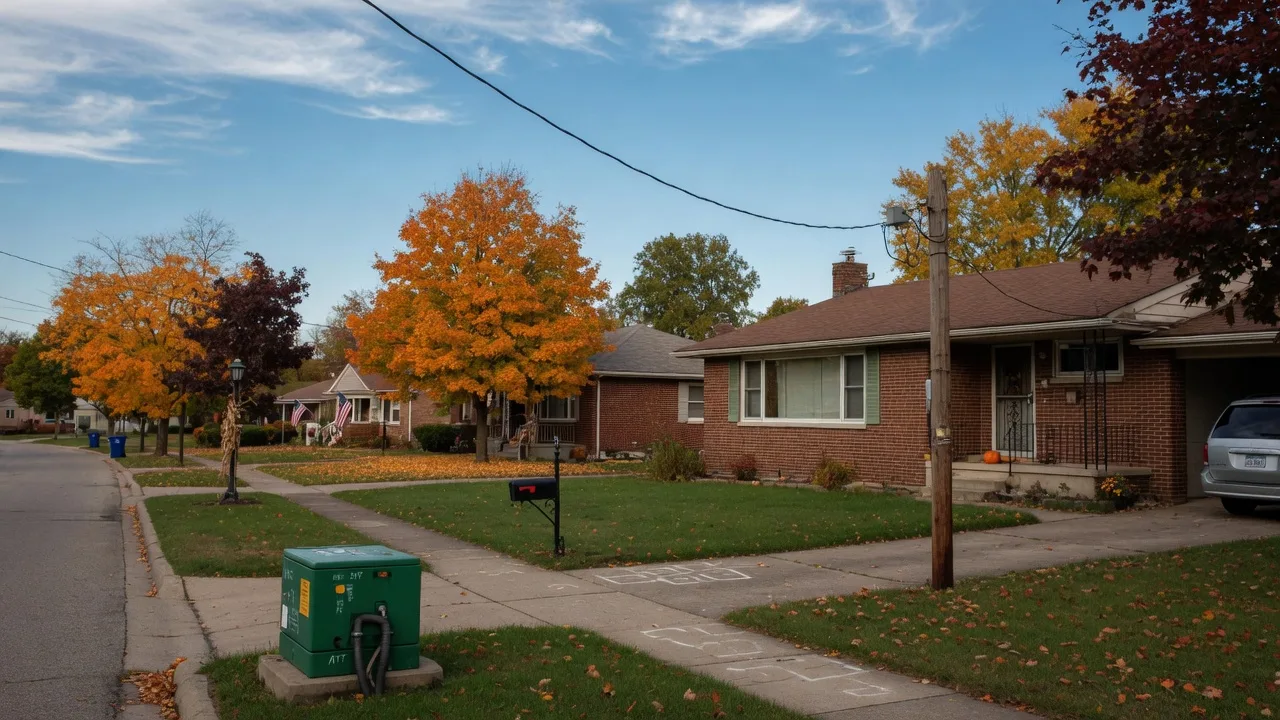
Fiber-optic internet is now the default option across most of Greene County and Montgomery County, but coverage is address-specific and the real retrofit gap is inside the house, not at the curb. In Beavercreek, Metronet reports fiber at roughly 99% of addresses; in Kettering, AT&T Fiber reaches about 88% to 99% of addresses; and in Xenia, the county-wide altafiber build is still landing neighborhood by neighborhood, with AT&T Fiber at roughly 17% of addresses. Because the FCC National Broadband Map and every provider's availability page can disagree at the address level, the first step of any smart-home retrofit is checking your exact address, and the second is planning the wiring inside the home.
The Miami Valley is in the middle of the largest fiber build in its history. In February 2022, Greene County commissioners approved a partnership with Cincinnati Bell, now altafiber, committing $9.6 million in county American Rescue Plan Act funds to pull roughly $55 million of private investment into a gigabit-capable fiber-to-the-premise network, about 5 million feet of fiber aimed at close to 40,000 addresses in Xenia, Cedarville, Jamestown, Bellbrook, Beavercreek, and Fairborn. On the Montgomery County side, altafiber announced a 10-gig build in February 2024 targeting roughly 27,000 addresses in Centerville, Washington Township, and Kettering, and by February 2026 the company reported passing 70,000 Dayton-region addresses across both counties as part of a roughly $200 million, 2,300-route-mile program. What all of that means for a buyer, a seller, or a homeowner planning a smart-home retrofit is the subject of this guide, verified against the sources listed at the bottom on October 22, 2026.
Which Fiber Providers Actually Serve Greene and Montgomery Counties?
Five providers dominate residential fiber in the two counties: Metronet, AT&T Fiber, altafiber, Spectrum, and Omni Fiber. The mix differs by city. Metronet is the dominant fiber provider in Beavercreek and Huber Heights, AT&T Fiber leads in Kettering, and altafiber is the county partner on Greene County's expansion and the mid-build network across Centerville, Washington Township, and Kettering. The numbers below come from address-level coverage trackers built on FCC Broadband Data Collection reporting and from the providers' own city pages, and the ranges reflect that different trackers pull different snapshots of a moving build.
| City / county | Dominant fiber provider | Reported address share | Other fiber options | Source |
|---|---|---|---|---|
| Beavercreek (Greene) | Metronet | ~99% of addresses (tracker); Metronet lists fiber live across downtown, midtown, west, north, and east sides | altafiber ~5 to 13%; Spectrum fiber widely available; AT&T Fiber in portions | BroadbandMap.com, bestneighborhood.org, Metronet, 2026 |
| Kettering (Montgomery) | AT&T Fiber | ~88% to 99% of addresses | altafiber ~68% (mid-build); Metronet ~6%; Spectrum mostly cable | bestneighborhood.org, BroadbandMap.com, AT&T, 2026 |
| Centerville (Montgomery) | AT&T Fiber | ~66% to 89% of addresses | altafiber ~23% (construction began 2025); Metronet ~8%; Point Broadband ~9% | bestneighborhood.org, BroadbandMap.com, altafiber, 2026 |
| Huber Heights (Montgomery) | Metronet | ~93% to 98% of addresses | AT&T Fiber ~79%; Spectrum fiber ~18%; altafiber DSL only in parts | bestneighborhood.org, BroadbandMap.com, ISPReports, 2026 |
| Fairborn (Greene) | altafiber (county project) | ~58% of homes (altafiber); Metronet ~10% | AT&T Fiber in portions | bestneighborhood.org, Greene County, 2026 |
| Xenia (Greene) | altafiber (county project) | Build landing neighborhood by neighborhood; AT&T Fiber ~17% | County project covers eastern and southern Greene County | BroadbandNow, Greene County, 2026 |
| Bellbrook, Cedarville, Jamestown (Greene) | altafiber | Covered by the county partnership project | Metronet fiber in Bellbrook | Greene County, 2026 |
| Dayton (Montgomery) | Address-specific | Varies by neighborhood; AT&T Fiber, Metronet, and Spectrum available in many areas | Omni Fiber available in portions | Provider city pages, 2026 |
Reporting note: address-share figures are provider-reported or tracker estimates built on FCC Broadband Data Collection filings and were accessed October 2026. altafiber's build is ongoing, so any percentage will be higher by the month. Always confirm at the individual address.
How Do I Check Fiber Availability at My Exact Address?
The official starting point is the FCC National Broadband Map at broadbandmap.fcc.gov. Enter a street address and the map returns the providers that report service there, the technology type (fiber, cable, DSL, fixed wireless, satellite), and the advertised speeds. The map is built from provider filings to the FCC's Broadband Data Collection and is updated on a rolling basis, and if the data for your address looks wrong you can file a challenge through the same site. Greene County also publishes an availability map for its altafiber project, and every major provider, from AT&T and altafiber to Metronet and Omni Fiber, runs an address check on its own site.
In our work with buyers across Greene and Montgomery counties, the availability check comes first and the wiring plan comes second. A home can sit on a gigabit fiber line at the curb and still stream poorly in the far bedroom because the router is in a basement utility room and the walls are plaster and lath. Before an offer, we walk clients through the FCC map and, for an older house, budget for a mesh system or a structured ethernet drop, because the retrofit reality is that the fiber drop is maybe a third of the work. The interior network, the devices, and the power behind them are the rest.
What Does a Smart Home Retrofit Actually Require Beyond the Fiber Drop?
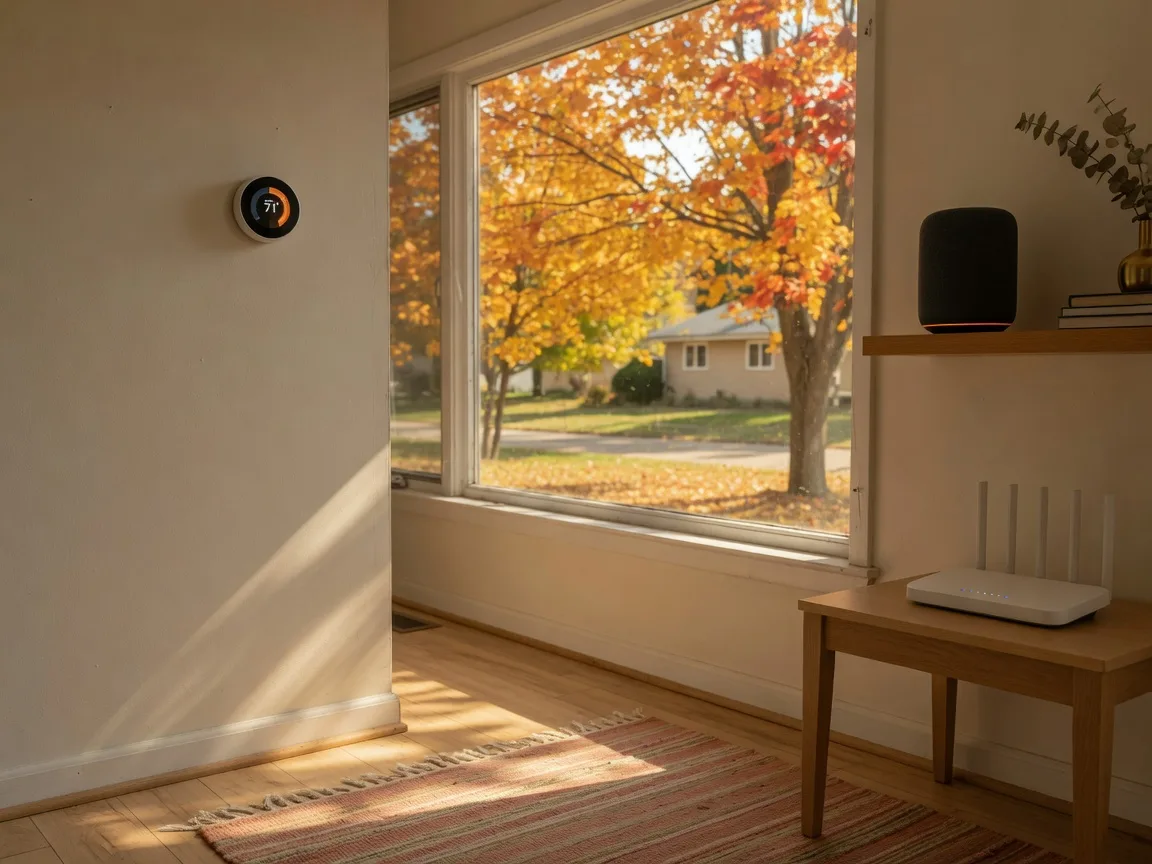
Fiber to the home is the fastest, lowest-latency connection you can buy, and it is the right backbone for a house full of smart devices, but the fiber terminal is only the beginning. A smart thermostat, video doorbell, security cameras, smart locks, garage controllers, and smart lighting all depend on reliable WiFi coverage, and coverage is where Ohio's housing stock pushes back. Mid-century ranches in Kettering and Beavercreek often have plaster walls, a single central utility room, and no structured ethernet; century homes and older suburbs add knob-and-tube-era walls where running cable is harder and where a WiFi signal struggles to cross the rooms. The practical retrofit order is: confirm fiber at the address, install the provider's gateway in a central location, add a mesh WiFi system or ethernet backhaul for whole-home coverage, then add devices and a smart panel or battery backup for the systems you depend on.
The speeds matter too. A gigabit fiber plan is about headroom: dozens of devices, multiple 4K streams, video calls, gaming, and uploads all at once. For most households 500 Mbps to 1 gigabit is plenty, and fiber's symmetrical uploads are the feature that matters for cameras and work-from-home video. Here is what current plans run in the Dayton area, with the caveat that nearly all of these are promotional rates for a set term, that equipment and taxes add on, and that prices reset after the term ends.
| Provider | Plan | Promo price | Notes |
|---|---|---|---|
| AT&T Fiber | 300 Mbps / 500 Mbps / 1 Gig | ~$35 to $50 / ~$55 to $65 / ~$70 to $80 per month | Symmetrical, no data caps, no equipment fee, no annual contract; multi-gig tiers in some areas |
| altafiber (Fioptics) | 400 Mbps / 600 Mbps / 1 Gig | ~$40 / ~$50 to $55 / ~$80 per month, promos lower with eBill | 2 and 3 gigabit tiers available; modem or router rental ~$11.99 per month |
| Metronet | 500 Mbps / 1 Gig | ~$60 / ~$70 per month with AutoPay; intro rates from ~$34.95 (150 Mbps) and ~$49.95 (1 Gig) | No data caps, no annual contract; first-month-free promos |
| Omni Fiber | 500 Mbps / 1 Gig | ~$65 / ~$85 per month with eBill and AutoPay discount | One-year price guarantee, free install, WiFi router included, no data caps |
| Spectrum | 100 Mbps / 500 Mbps / 1 Gig | ~$30 / ~$40 / ~$50 per month for year one | Fiber-powered service is mostly hybrid fiber-coaxial in Dayton; true fiber-to-the-home in select new areas; free modem |
Pricing note: rates are promotional, tied to a term, and exclusive of taxes, fees, and some equipment charges. Verify current pricing and availability at your address with the provider before making any decision.
Which Greene and Montgomery County Areas Are Still Waiting for Fiber?
The remaining gaps are the ones public money exists to close. BroadbandOhio, the state office inside the Ohio Department of Development, administers the Ohio Residential Broadband Expansion Grant (ORBEG) program, created by House Bill 2 in 2021 with federal Capital Projects Fund money. Round 1, announced March 18, 2022, awarded more than $232 million across 31 counties and 33 projects to about 43,000 households, and both Greene and Montgomery counties were in that first round. Round 2, announced August 21, 2024, included Time Warner Cable Midwest, the Charter/Spectrum entity, which received about $83.1 million total for five projects, including about $17.5 million to serve 6,645 households across Auglaize, Butler, Logan, Montgomery, and Preble counties.
The programs target unserved and underserved addresses, which is why the suburban cities with strong private build-outs rarely show up on the grant lists while rural townships do. Charter separately committed a roughly $750 million private investment in late 2023 to expand service in Montgomery, Butler, Clark, Warren, Greene, Miami, Darke, Preble, and Champaign counties, and reported bringing fiber to about 930 previously unserved or underserved homes and businesses in Montgomery County by 2026. If you are buying on the eastern or southern edge of Greene County, in a rural township, or in an older Montgomery County neighborhood, the address-level map is the only honest answer, and it is worth checking the BroadbandOhio project list and the FCC map before you fall for a listing photo of a router.
| Program / investment | Counties / cities | Scale | Status |
|---|---|---|---|
| Greene County + Cincinnati Bell (altafiber) partnership, Feb. 2022 | Xenia, Cedarville, Jamestown, Bellbrook, Beavercreek, Fairborn | $9.6M county ARPA + ~$55M private; ~5 million feet of fiber to ~40,000 addresses | Construction underway 2022 through 2025 to 2026; address-by-address completion |
| altafiber Dayton-region 10-gig build, announced Feb. 2024 | Centerville, Washington Township, Kettering (Montgomery); plus Greene County | ~$200M total, 2,300 route miles; 70,000 addresses passed by Feb. 2026 | Mid-build as of early 2026; targeting ~27,000 addresses in the Centerville and Kettering area |
| ORBEG Round 1, announced March 2022 | 31 Ohio counties including Greene and Montgomery | $232M+, 33 projects, 11 ISPs, ~43,000 households | Awarded; construction completed or in progress |
| ORBEG Round 2, announced Aug. 2024 | Montgomery County among 23 counties (Time Warner Cable Midwest / Spectrum) | ~$17.5M of an ~$83.1M award to serve 6,645 households across five counties | Awarded; construction underway |
| Charter / Spectrum private expansion, announced late 2023 | Montgomery, Butler, Clark, Warren, Greene, Miami, Darke, Preble, Champaign | ~$750M investment; fiber to ~930 previously unserved or underserved sites in Montgomery County by 2026 | Ongoing |
Source: Greene County, BroadbandOhio, Ohio Department of Development, Charter Communications, and provider announcements, accessed October 2026.
What Should Buyers and Sellers Check Before an Offer or a Listing?
Internet availability is not part of Ohio's standard residential disclosure form, so it never appears in the paperwork unless the seller volunteers it. For buyers, that means the FCC map and provider address checks are your own due diligence, done before the offer so the fiber gap is a budget line, not a surprise after closing. For a property where running fiber from the street to the house would cross a neighbor's lot or a utility easement, or where the home is in a historic district, ask about exterior wiring rules before you plan a mesh system that needs outside access points.
For sellers, a home with fiber to the premises and a clean, documented interior network is a legitimate marketing point, and it is one more data point in the Ohio REALTORS residential disclosure conversation. There is no rule that says you must disclose your internet provider, but a seller who can point to a gigabit connection and a whole-home WiFi setup answers a question most buyers are already asking quietly. In our experience, buyers moving from other states ask about internet in the first conversation, because remote work is a deal-breaker question in this region.
Buyer and Seller Takeaways
- Buyers: run the FCC National Broadband Map and the provider address checks before the offer, so the fiber gap is a budget line instead of a closing surprise. Availability is address-specific even on fully wired streets.
- Buyers: ask what the fiber drop to the house would cost if the line stops at the street, and confirm exterior wiring rules for any planned outdoor cameras or access points.
- Buyers: budget the whole retrofit, not just the monthly plan: mesh WiFi or structured ethernet, a central gateway location, and devices. Older plaster-wall homes need more network hardware than new construction.
- Sellers: a verified fiber-to-the-premises connection and documented whole-home network is a legitimate listing point in the Dayton-area market, especially with out-of-state and remote-work buyers.
- Everyone: promotional fiber prices reset after the term, and equipment and taxes add on. Compare the out-the-door monthly number, not the teaser rate, and confirm current pricing at your address.
- Everyone: this is general education about internet availability and smart-home retrofits, not legal, tax, financial, or construction advice. For wiring, permits, easements, or a specific property question, consult a qualified professional in your area.
For the full picture around where fiber sits relative to the rest of a move, our Greene County region guide covers Beavercreek, Bellbrook, Fairborn, and Xenia, and our Montgomery County region guide covers Kettering, Centerville, Huber Heights, and the Dayton core. Homeowners weighing how the internet shapes the market can also read our update on how remote work is changing Dayton housing.
Sources
- FCC National Broadband Map (address-level availability, technology type, and speeds, accessed October 2026)
- Greene County, Fiber in Greene County (altafiber and Metronet coverage, county project details)
- Greene County, Broadband Expansion (the $9.6M county ARPA and Cincinnati Bell partnership)
- altafiber, Fiber Is Coming to Greene County (provider build and free speed upgrades)
- altafiber Passes 70,000 Dayton-Region Addresses With Fiber (Business Wire, Feb. 2026: the ~$200M, 2,300-route-mile build)
- WDTN, altafiber Expands to Centerville and Kettering (the Feb. 2024 10-gig announcement, ~27,000 addresses)
- BroadbandOhio, Ohio Residential Broadband Expansion Grant Program (ORBEG rounds and funding)
- Ohio Department of Development, $94.5M for Broadband in 23 Counties (ORBEG Round 2 awards, Aug. 2024)
- WYSO, $232M Broadband Round 1 in Southwest Ohio (Greene and Montgomery among the 31 counties)
- Charter Communications, Spectrum Expands Fiber in Montgomery County (about 930 previously unserved or underserved sites)
- AT&T Fiber Plans (pricing and availability, accessed October 2026)
- altafiber Special Offers (Fioptics plan pricing, accessed October 2026)
- Metronet Fiber in Beavercreek (coverage and plan pricing)
- Omni Fiber Internet Plans (plan pricing and features, accessed October 2026)
- Spectrum Internet Plans (year-one promotional pricing, accessed October 2026)
- bestneighborhood.org, Fiber Providers by City (address-share estimates built on FCC data, accessed October 2026)
- Coverage, grant, and pricing details reviewed October 22, 2026.
Share This Post
Suggested social caption
"Fiber reaches about 99% of Beavercreek addresses and roughly 88% of Kettering, while altafiber's $200M Dayton-region build is still changing the map. Here is how to check fiber at your exact address and what a smart-home retrofit really needs beyond the fiber drop, across Greene and Montgomery counties."
Published October 22, 2026 · Updated October 22, 2026 · Information verified on October 22, 2026 against the sources listed above. Fiber builds, coverage percentages, and plan prices change frequently; confirm current availability and pricing at your specific address with the provider, the FCC National Broadband Map, and Greene County or Montgomery County before you act.
Retrofitting a home for smart living in the Dayton area?
Get a data-backed read on the Greene and Montgomery county market: which neighborhoods have fiber to the premises today, what the build-out timeline looks like, and how to budget the interior network before you make an offer. We know every corner of the Miami Valley.
Talk to an AgentChecking internet before you buy or sell?
Whether you are comparing Kettering and Centerville, watching the altafiber build in Beavercreek, or listing a home with a gigabit connection, a Glasshouse agent can pull the address-level availability data and walk you through the market before you look at a single listing.
No pressure, no guesswork. Just honest, local answers from a team growing across Greene, Montgomery, and the rest of Ohio.
Schedule a Consultation