
October 27, 2026 · MetroPark Boundary Guide
Five Rivers MetroParks Boundary Guide: Nearly 16,000 Protected Acres, the 33-Acre Woodman Fen Inside Kettering, and the Survey, Tree, Deer, and Easement Rules for Homes That Border Park Land
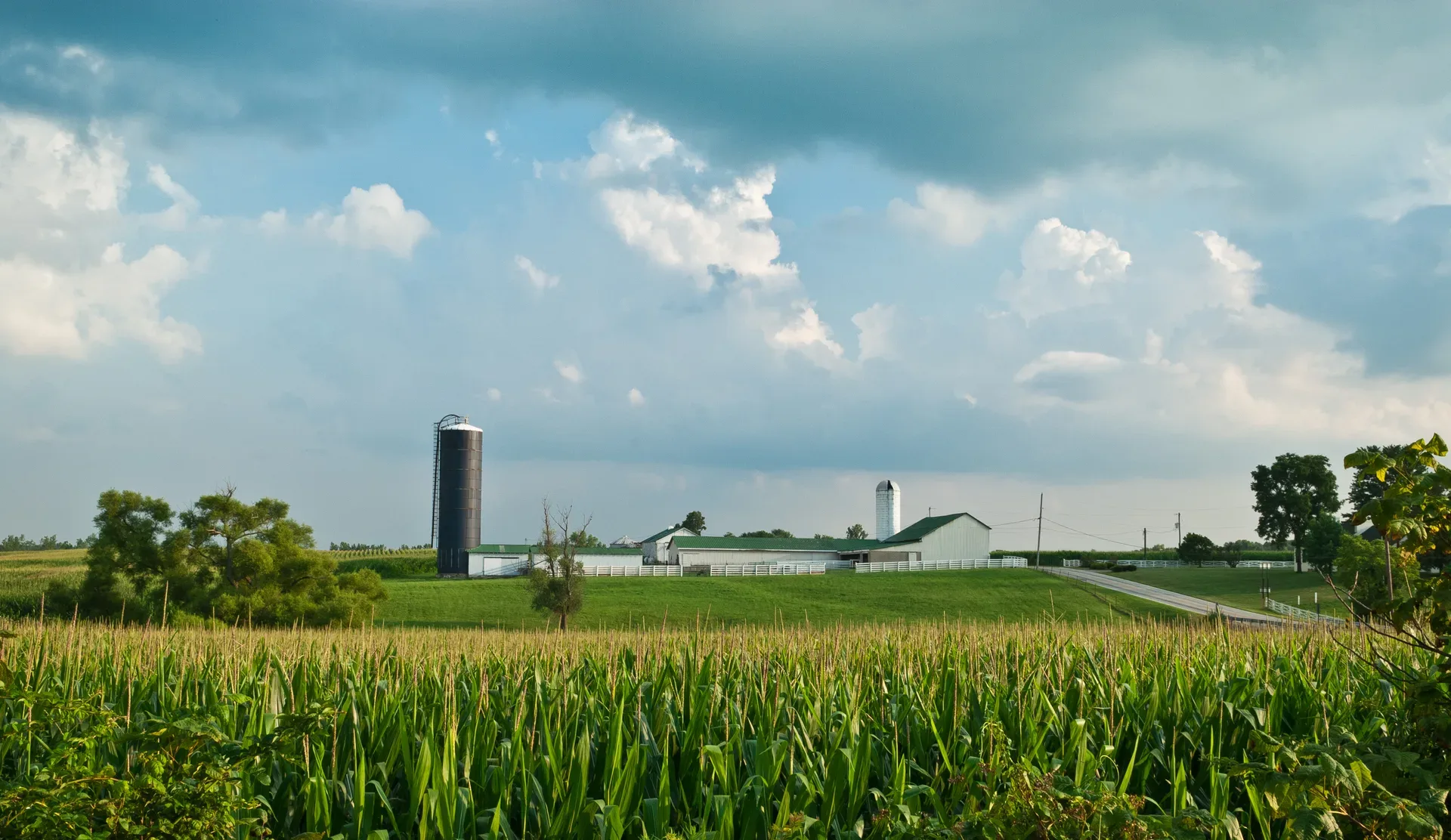
Five Rivers MetroParks is the park district for all of Montgomery County, Ohio, and it protects nearly 16,000 acres of open space across 18 MetroParks and more than a dozen conservation areas, with about 3,000 additional acres held under permanent conservation easements. When your property borders that land, the practical questions are concrete: where the survey line actually sits, who can trim a tree that overhangs it, what the deer-management program means for your yard, and whether an easement on the next parcel restricts what happens there. This guide answers each one with the district's own published rules and Ohio law, with a source and an access date for every figure.
The boundary between your lot and a park is a property line like any other: it is set by deed and survey, enforced by whoever owns each side, and settled by the county recorder's records, not by a fence that has stood for years. The difference with a MetroPark is that the owner on the other side is a public agency that manages its land for conservation and enforces its own code. In our experience helping buyers and sellers in the Miami Valley work through homes that touch Five Rivers property, the survey and the tree questions are where deals most often stall. Here is what we check before an offer.
What Is Five Rivers MetroParks, and How Much Protected Land Sits Next to Montgomery County Homes?
Five Rivers MetroParks was created in 1963 and is an independent political subdivision of the State of Ohio formed under Ohio Revised Code Chapter 1545 (Park Districts). It is governed by a three-member, volunteer Board of Park Commissioners appointed by the Montgomery County Probate Judge, and it serves Dayton and every city and township in Montgomery County. The district reports protecting nearly 16,000 acres of open space, about 90 percent of it kept in a natural state, across 18 MetroParks, roughly 11 conservation areas, the 2nd Street Market, and regional recreation trails.
Funding explains a lot of how the district behaves as a neighbor. Five Rivers gets most of its revenue from voter-approved property tax levies, about 93 percent as of 2025. On November 5, 2024, Montgomery County voters passed Issue 35, a new 1.0-mill, 10-year levy designed to work down a $58 million backlog of repair and replacement projects across the district's 35 locations while it continues acquiring and managing natural areas. That levy context matters to a home buyer because the district's ability to enforce boundaries, manage deer, and buy buffer land is funded by the same countywide tax base that your property tax bill supports.
Which Five Rivers Parks and Conservation Areas Border Residential Neighborhoods?
Several Five Rivers properties sit directly amid or alongside residential streets. Woodman Fen Conservation Area is a 33-acre groundwater-fed fen at 2409 Newcastle Drive in Kettering, purchased in 2003 and surrounded by houses, with the Iron Horse Trail running along its northern border. Cox Arboretum MetroPark on Springboro Pike in Miami Township is enveloped by the residential subdivisions of Kettering, Washington Township, and Miami Township near the Dayton Mall, and the park's own history notes that in the early 1960s development surrounded the pastures of the former farm that would have become a housing tract. Englewood MetroPark, Carriage Hill MetroPark and Huffman MetroPark in Huber Heights, Sugarcreek MetroPark on the Sugarcreek Township and Bellbrook line, Possum Creek MetroPark in Miami Township near West Carrollton, and Taylorsville MetroPark in Vandalia all sit within or against residential communities. Farther south, Germantown MetroPark and Twin Creek MetroPark anchor the Twin Valley Conservation Corridor.
The conservation areas are the most likely to have a residential backyard on the other side of a tree line, because they are significant natural tracts with minimal infrastructure. Table 1 lists the conservation areas with published acreage and addresses, plus the communities they border. Where the district has not published an address or acreage, the table says so rather than guessing.
| Conservation area | Acreage | Location / entrance | How it borders homes |
|---|---|---|---|
| Woodman Fen | 33 acres | 2409 Newcastle Dr., Dayton / Kettering 45420 | Rare groundwater-fed fen inside residential Kettering; Iron Horse Trail along the north border; purchased 2003 |
| Medlar | 417 acres (416 per district map) | 4558 Medlar Rd., Miami Township, south of Miamisburg | Added December 2010; open farmland and habitat bordering township and village residential areas |
| Spring Run | 550 acres | 2765 N. Snyder Rd., Dayton 45426 (Trotwood) | Two parcels: 360-acre Great Miami Mitigation Bank and 190-acre former Larch Tree Golf Course; adjacent to the 2,384-acre Sycamore State Park |
| Dull Woods | 8 acres | 8199 Cole St., Brookville 45309 (Clay Township) | Small wooded tract along the Wolf Creek Trail in northwest Montgomery County |
| Needmore | 160 acres | Three tracts along the Great Miami River north of Dayton, near Needmore Rd. | River floodplain tracts adjacent to residential and park land between Dayton and Old Troy Park |
| Pigeye, Sandridge Prairie, Shiloh Woods, Twin Valley (Upper Twin) | Acreage not published in sources reviewed | Englewood area; bluff prairie; Montgomery County; Twin Valley Corridor | Pigeye is planned to become part of Englewood MetroPark; verify parcel lines on the district's interactive map |
Reporting note: names, acreage, and addresses from Five Rivers MetroParks park pages, the What We Protect page, and the interactive parks map, accessed October 2026. The district publishes acreage and street addresses only for its enhanced-access areas; the rest are listed without published figures rather than guessed.
Do I Need a Survey If My Yard Touches a Five Rivers Property?
Yes, and it is the first practical step, because the district actively manages and enforces its own property line. Five Rivers operates under a published Code of Rules and Regulations and a Code of Ordinances: Title XIII, Chapter 131 of the code makes unauthorized entry onto park land, or placing structures on it, a matter of criminal or aggravated trespass under Section 131.03, and Section 131.11 bars injuring or removing vines, bushes, trees, or crops on park property. A fence, shed, patio, or driveway that crosses onto district land is an encroachment the district treats seriously, so a current survey is how you prove where your line actually is.
One thing a Five Rivers property does not do is impose a private setback on you. The district's conservation priorities include protecting natural areas adjacent to existing MetroParks and river corridors and establishing buffer areas where needed, but it achieves those buffers through its own land purchases and conservation easements, not by mandating how far your deck must sit from the line. Setbacks for new structures come from your municipality's or township's zoning code, so your local zoning department, not the park district, sets the building setback on your side of the boundary.
Can I Trim a Five Rivers Tree That Overhangs My Yard?
Ohio follows the Massachusetts Rule on encroaching branches: you may trim a neighbor's tree branches that overhang your property line back to the line, at your own expense, without the neighbor's permission, as long as you do the work from your own side and do not harm the overall health of the tree. Ownership of a tree follows the trunk, so a tree whose trunk sits on Five Rivers land is the district's tree even when half of its canopy hangs over your yard.
The limits are real. You may not trespass onto park land to reach the branches, you may trim only back to the property line and not beyond, and if the trunk straddles the line the tree is co-owned and both owners must consent to significant pruning or removal. Ohio Revised Code 901.51 makes it a fourth-degree misdemeanor, with treble damages available in a civil case, to recklessly cut down, girdle, or otherwise injure a tree on another person's land. Because the tree is on public park land, the practical move is to call the district first: Five Rivers takes property-line questions at (937) 567-4265 and general questions at (937) 275-7275, and written approval before you prune avoids a dispute over a public tree.
| Situation | The rule | What a homeowner should do |
|---|---|---|
| Park tree branches overhang your yard | Massachusetts Rule: self-help trimming to the property line at your expense, from your side, without harming the tree | Call the district at (937) 567-4265 for written approval before pruning a public tree |
| Trunk straddles the property line | Co-owned tree; both owners must consent to significant pruning or removal | Get the district's agreement in writing before any major work |
| Cutting or injuring a tree on park land | ORC 901.51: fourth-degree misdemeanor plus possible treble damages; district Code 131.11 bars injuring plants and trees on park property | Never cut, girdle, or top a tree you cannot prove is on your side of the line |
| Fence, shed, patio, or driveway near the line | Structures on park land are unauthorized encroachments under Code Chapter 131 | Survey first, keep every improvement fully on your side, and note setback rules from your zoning code |
| Who decides a boundary disagreement | The deed, the recorded survey, and the county recorder's records decide the line, not a long-standing fence | Pull the survey and parcel records from the Montgomery County Recorder before closing |
Sources: Ohio Farm Bureau tree and property-rights Q&A, OSU Farm Office overhanging-branches guidance, and Five Rivers MetroParks Code of Ordinances (Title XIII, Chapter 131), all accessed October 2026. This is general education about Ohio property and tree law, not legal advice.
What Are the Deer, Dog, Hunting, and Burning Rules Near Park Land?
General public hunting is not allowed on Five Rivers land, with one managed exception. The district runs a Controlled Bowhunting Program as part of its deer population management, alongside ranger culling. For the 2026-2027 season, 146 registered applicants were randomly drawn to qualify; each qualified hunter must hold a valid Ohio hunting license and deer tag, pass an orientation, and demonstrate marksmanship, with the district's standard being at least 4 of 5 arrows inside a 10-inch target at 20 yards. There is a $20 registration fee, and harvested venison is donated through Farmers and Hunters Feeding the Hungry. Critically for neighbors, the district states that all hunting is located away from trails and adjacent properties, so it is not running in the tree line behind your backyard, and it cites increased development on adjacent land as a cause of high deer numbers in the first place.
Dogs are welcome on the trails but must stay on a leash no longer than 8 feet and under your immediate control, per the district's published abbreviated rules. Fires are allowed only in grills or designated areas, and bringing firewood into MetroPark facilities is prohibited. The rules apply on the park side of the line, but they matter to owners because the reservation is often the trailhead, the view, and the deer corridor all at once.
| Rule | What it means on the ground | What a homeowner should do |
|---|---|---|
| Hunting on park land | No general public hunting; only the Controlled Bowhunting Program for deer management, sited away from trails and adjacent properties | Do not assume park-adjacent land is huntable; deer work is done by qualified, permitted archers |
| Dogs on park land | Must be leashed no longer than 8 feet and under your immediate control | Keep the leash at 8 feet or less at every trailhead, including the one off your own yard |
| Fires and firewood | Fires only in grills or designated areas; bringing firewood into facilities is prohibited | Use park grills as posted and never move firewood between sites, a step tied to invasive-pest control |
| Deer presence near homes | The district links high deer numbers to increased development on adjacent land and manages them scientifically | Expect deer near the tree line; the program is active and year-round, not a no-wildlife zone |
| Encroachment onto park land | Unauthorized entry or structures on district land are addressed under Code Chapter 131 | Survey before building anything near the line and keep every improvement on your side |
Sources: Five Rivers MetroParks Complete and Abbreviated Rules & Regulations, Deer Population Management page, and Code of Ordinances, all accessed October 2026.
What Are Conservation Easements, and Can They Restrict Land Next Door?
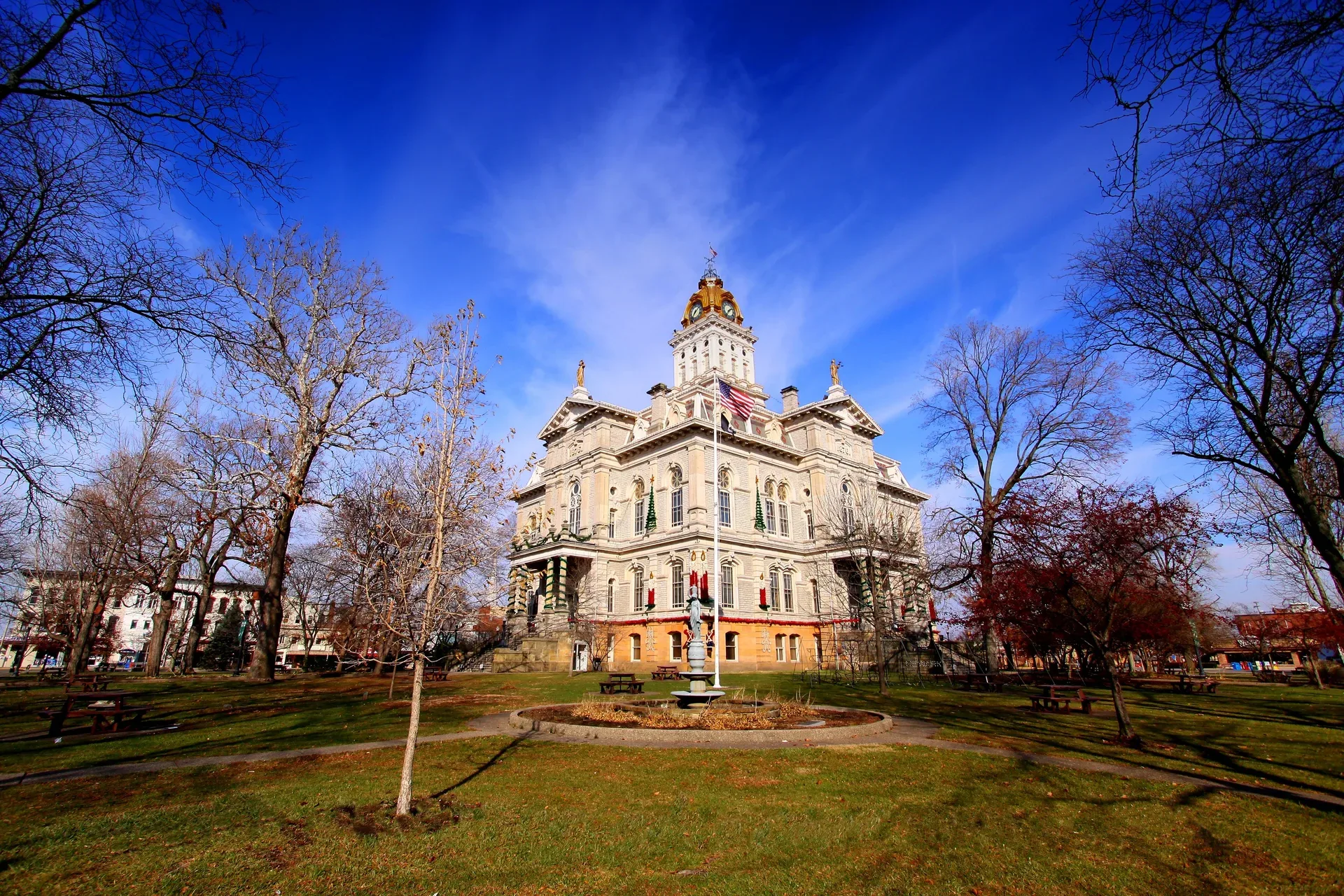
Five Rivers protects more than 3,000 acres through conservation easements, and its largest concentration is along Twin Creek: roughly 1,711 acres of private land surrounding Twin Creek MetroPark and Germantown MetroPark, part of the Twin Valley Conservation Corridor, completed in partnership with the Three Valley Conservation Trust. A conservation easement is a permanent legal agreement in which a private landowner keeps ownership of the land but permanently gives up the right to develop it. The owner can keep farming, forestry, recreation, and other green-space uses, and can sell or transfer the land, but the restrictions run with the title and the trust regularly monitors the property to enforce them.
The key point for a home buyer is that an easement on a neighboring parcel does not restrict your land, but an easement on a parcel you are buying does bind you. A five-acre field under easement next to your subdivision can stay open forever, which is often a genuine amenity, but you have no legal right to develop it either. Before an offer, your title commitment's Schedule B exceptions are the place to spot easements of record, and the Montgomery County Recorder's office holds the recorded documents if you want the exact restriction language.
How Do Property Taxes and Levies Factor Into Park-Adjacent Ownership?
Living next to a MetroPark does not set your property tax rate; taxes follow the county auditor's appraisal of your parcel and your community's millage. The district's levies are countywide, so every Montgomery County property owner, park-adjacent or not, pays toward Five Rivers through the same property tax bill, currently including the 1.0-mill, 10-year levy voters passed in November 2024. What is worth a specific check is the appraisal on your own parcel through the Montgomery County Auditor, because park-adjacent homes with mature trees and protected views sometimes appraise differently than interior lots in the same subdivision, and only your parcel's real numbers matter at closing.
For buyers, the practical checklist is the same as for any parcel with a long property line: confirm the survey, read the title commitment's Schedule B for easements and right-of-way exceptions, verify the community's millage and the exact parcel's tax bill through the auditor, and get any fence or tree question in writing before you sign. This is general education about park rules, Ohio property law, and market data, not legal, tax, title, or financial advice; consult a qualified attorney, your title company, and your lender for your specific transaction.
Buyer and Seller Takeaways
- Buyers: order a survey before you close on a property that touches Five Rivers land, and keep fences, sheds, patios, and driveways fully on your side of the line; the district enforces encroachments under Code Chapter 131.
- Buyers: read the title commitment's Schedule B for conservation easements and other exceptions of record, and pull the exact restriction language from the Montgomery County Recorder if you are buying land under an easement.
- Buyers: check the parcel's real tax bill and millage through the Montgomery County Auditor rather than assuming park proximity raises or lowers your rate.
- Sellers: document the property line, the nearest trailhead, and any easement on the parcel in the disclosure package, and be ready to explain the deer, dog, and burning rules at showing time.
- Everyone: this is general education about park rules and Ohio property law, not legal, tax, title, or financial advice. Consult a qualified attorney, your title company, and your lender for your specific transaction.
If you are weighing a home along a Five Rivers park or conservation area, our Greater Dayton region guide maps the Miami Valley market, and our Kettering neighborhood page covers the community where the 33-acre Woodman Fen sits. Englewood's neighborhood page details the western community anchored by Englewood MetroPark, and the Montgomery County region page pulls together auditor, recorder, and levy links for every parcel in the county. Buyers new to the area can start with our newcomer's guide to relocating to Dayton before they look at a single listing. The parks are one of the best features of living here, and knowing the boundary is half of making park-adjacent living work.
Frequently Asked Questions
Does my property tax increase if my home borders a Five Rivers MetroParks property?
Not because of the boundary itself. Taxes follow the county auditor's appraisal of your parcel and your community's millage. Five Rivers levies are countywide, so every Montgomery County property owner pays toward the district, currently including the 1.0-mill, 10-year levy passed in November 2024, whether or not they live next to a park. Check your parcel's actual figures with the Montgomery County Auditor.
Can I trim a tree branch that hangs over my yard from Five Rivers land?
Under Ohio's Massachusetts Rule you may trim overhanging branches back to the property line at your own expense, from your own side, without harming the tree's health. Because the tree is on public park land, contact Five Rivers at (937) 567-4265 for written approval first. Recklessly cutting or injuring a tree on another's land is a fourth-degree misdemeanor under Ohio Revised Code 901.51 with possible treble damages.
Can I hunt on Five Rivers MetroParks land if my backyard borders it?
No general public hunting is allowed. The only hunting is the Controlled Bowhunting Program for deer management, run by qualified, permitted archers who must pass a marksmanship test, and the district states all hunting is located away from trails and adjacent properties.
Do I need a survey before buying a home that borders a MetroPark?
Yes, it is the practical first step. Five Rivers manages and enforces its own property line, and structures that cross onto park land are addressed under Code Chapter 131 as unauthorized encroachments. A current survey is how you prove where the line actually sits before you install anything near it.
Are dogs allowed off-leash in Five Rivers MetroParks?
No. Dogs must be on a leash no longer than 8 feet and under your immediate control while in the parks, per the district's published abbreviated rules. The rule applies at every trailhead, including the one adjacent to your own property.
What is a conservation easement, and can it affect land next to mine?
A conservation easement is a permanent agreement in which a landowner keeps ownership but gives up development rights; the restrictions run with the title and are monitored by a land trust. Five Rivers protects about 1,711 acres along Twin Creek this way with the Three Valley Conservation Trust. An easement on a neighboring parcel does not restrict your land, but one on a parcel you are buying does bind you, so check the title commitment's Schedule B and the county recorder's records.
Sources
- Five Rivers MetroParks, FAQs (nearly 16,000 acres, about 90% natural, 18 MetroParks, 8 conservation areas, 2nd Street Market, 150-191 miles of trails)
- Five Rivers MetroParks, What We Protect (open space, conservation areas, conservation easements)
- Five Rivers MetroParks, Organization (created 1963; independent political subdivision under Ohio Revised Code Chapter 1545; Board of Park Commissioners appointed by the Montgomery County Probate Judge)
- Five Rivers MetroParks, Funding (about 93% of funding from levy revenue as of 2025)
- Five Rivers MetroParks, Montgomery County Voters Pass Five Rivers MetroParks Levy (Issue 35, 1.0-mill, 10-year levy, November 5, 2024; $58 million repair and replacement backlog)
- Five Rivers MetroParks, 2024 Annual Report (3,000-plus acres under conservation easement; invasive-species and land stewardship work)
- Five Rivers MetroParks, Complete Rules and Regulations (current through 8-1-2022)
- Five Rivers MetroParks, Abbreviated Rules & Regulations (dogs leashed no longer than 8 feet and under immediate control; fires in grills or designated areas; no firewood brought into facilities)
- Five Rivers MetroParks, Code of Ordinances (2023) (Title XIII, Chapter 131; Sections 131.03 criminal and aggravated trespass, 131.11 injuring vines, bushes, trees, and crops)
- Five Rivers MetroParks, Deer Population Management (Controlled Bowhunting Program; 146 applicants drawn for 2026-2027; license, deer tag, orientation, and marksmanship standard of 4 of 5 arrows in a 10-inch target at 20 yards; $20 fee; venison donated through Farmers and Hunters Feeding the Hungry; hunting located away from trails and adjacent properties)
- Five Rivers MetroParks, Conservation Leadership: How We Do It (conservation easements let owners keep land and protect it from development; 1,711 acres along Twin Creek in the Twin Valley Conservation Corridor)
- Three Valley Conservation Trust, Land Stewardship & Easement Monitoring (permanent easement terms run with the title and are monitored)
- Five Rivers MetroParks, Woodman Fen (33 acres, 2409 Newcastle Dr., purchased 2003, Iron Horse Trail)
- Five Rivers MetroParks, Medlar (417 acres, 4558 Medlar Rd., Miami Township, added December 2010)
- Five Rivers MetroParks, Dull Woods (8 acres, Clay Township, Wolf Creek Trail, 8199 Cole St., Brookville)
- Five Rivers MetroParks, Spring Run (550 acres, Trotwood; 360-acre Great Miami Mitigation Bank and 190-acre former Larch Tree Golf Course; adjacent to the 2,384-acre Sycamore State Park; 2765 N. Snyder Rd., Dayton)
- Five Rivers MetroParks, Germantown MetroPark and Twin Creek MetroPark (Twin Valley Conservation Corridor, Twin Valley Backpacking Trail)
- Five Rivers MetroParks, Cox Arboretum (development surrounded the former farm in the early 1960s; land was slated for a housing tract)
- Ohio Farm Bureau, Q&A About Trees and Property Rights and OSU Farm Office, Overhanging Branches (Massachusetts Rule self-help trimming; Ohio Revised Code 901.51 and treble damages)
- Five Rivers MetroParks, Contact (Administrative Offices, 409 E. Monument Ave., 3rd Floor, Dayton, OH 45402; general line (937) 275-PARK)
- Five Rivers MetroParks, Safety (property-request contact at (937) 567-4265; non-emergency ranger line (937) 225-HELP)
- Five Rivers MetroParks, Interactive Parks Map (address-level park and conservation-area boundaries)
- Acreage, rule text, levy details, and market context reviewed October 27, 2026.
Share This Post
Suggested social caption
"Five Rivers MetroParks protects nearly 16,000 acres across Montgomery County, and about 3,000 more sit under permanent conservation easements, including 1,711 acres along Twin Creek. Here is what property owners should know when their land borders park ground: the survey, Ohio's tree-trimming rule, the controlled bowhunting deer program, the 8-foot leash law, and what an easement next door actually restricts. Data-backed park-boundary guidance from Glasshouse Realty."
Published October 27, 2026 · Updated October 27, 2026 · Information verified on October 27, 2026 against the sources listed above. Park acreage, rules, levies, and boundary practices can change; confirm current details with Five Rivers MetroParks, the Montgomery County Auditor, the Montgomery County Recorder, and your municipality before you act.
Looking at a home along a Five Rivers park or conservation area?
Get a data-backed read on park-adjacent living in the Miami Valley: which conservation-area communities fit your budget, what the survey, tree, deer, and easement questions mean for a specific property, and how the levy math shows up on your tax bill. We cover every corner of the Dayton market.
Talk to an AgentExploring the Miami Valley market?
Whether you are comparing conservation-area communities like Kettering, Englewood, Vandalia, and Miamisburg or want to understand what the boundary and easement questions mean for a specific home, a Glasshouse agent can pull the parcel data, the survey guidance, and the trail access details before you look at a single listing.
No pressure, no guesswork. Just honest, local answers from a team growing across the Miami Valley and beyond.
Schedule a Consultation