June 10, 2026 · Market Updates
Interest Rates Moved — Here's What That Actually Means for Your Monthly Payment
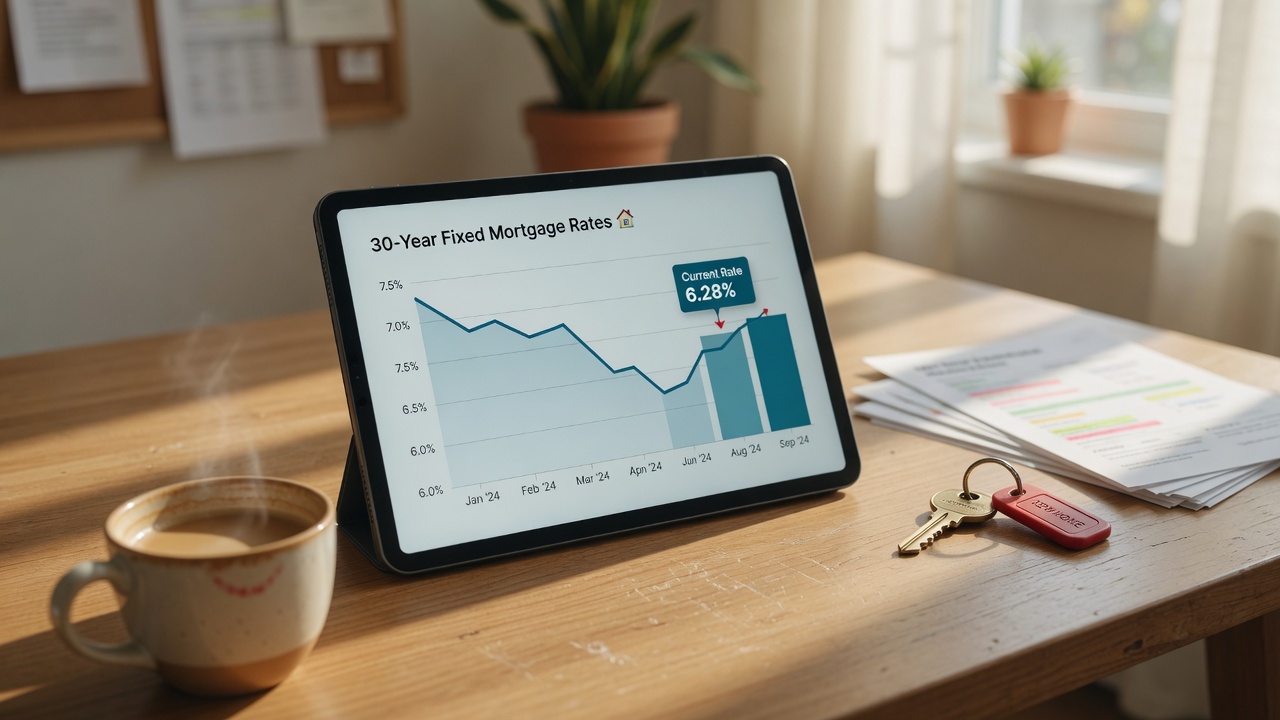
A half-point mortgage rate change shifts your monthly payment by about $63 on a $200,000 loan, adding up to roughly $22,700 over 30 years. With the current 30-year fixed rate around 6.5% in mid-2026, here's exactly what that means for your monthly payment, your budget, and whether you should buy now or wait.
Where are mortgage rates right now in 2026?
As of mid-June 2026, the average 30-year fixed mortgage rate is about 6.5%. That's up from roughly 6.2% at the start of the year. For context, a year ago we were closer to 6.8%, and during the pandemic frenzy many buyers locked in rates under 4%.
Here's what matters: a change of even half a percentage point can mean hundreds of dollars per month on a typical Dayton-area home purchase. Let's look at the math.
How does a rate change affect my monthly payment in dollars?
Let's use a $250,000 home — right around the Dayton-area median. We'll assume 20% down ($50,000), so you're financing $200,000. Here's what your principal-and-interest payment looks like at three different rates:
At 5.5%
$1,136
/month
At 6.0%
$1,199
/month
At 6.5%
$1,264
/month
The difference between 5.5% and 6.5% is $128 per month — or about $46,000 over the life of a 30-year loan. That's real money. And it's the kind of number that makes people say, "I'll wait for rates to drop."
Should I wait for mortgage rates to drop before buying?
Here's the part most articles won't tell you: waiting for rates to drop can backfire. Here's why.
When rates fall, more buyers enter the market. More buyers means more competition, which pushes prices up. You might save $128/month on your rate — but if home prices jump 5% in the meantime, you've just paid an extra $12,500 on a $250K home. The rate savings get eaten by the price increase.
The smart move? Buy when you can afford the payment as-is, at today's rate. If rates drop later, you refinance and win twice — you locked in a lower purchase price and you get a lower rate. That's the play.
What is the total monthly cost of owning a home in Dayton?
A lot of buyers fixate on the interest rate when they should be fixating on the monthly payment they can comfortably afford. At Glasshouse, we encourage buyers to think about the total housing cost — not just principal and interest, but also:
- Property taxes — Ohio's effective property tax rate is about 1.36%, and in Montgomery County it's closer to 2.04%. On a $250K home, that's roughly $425/month.
- Homeowner's insurance — typically $100–$150/month in the Dayton area.
- PMI — if you put less than 20% down, add $80–$200/month depending on your loan type.
- Maintenance — budget 1% of your home's value per year, or about $208/month on a $250K home.
At 6.5%, your total monthly housing cost on a $250K home is more like $2,000–$2,100 — not just the $1,264 headline number. Know the full picture before you commit.
The Bottom Line
Interest rates matter — but they're one piece of a bigger puzzle. Focus on what you can afford monthly, buy when the home and the budget make sense, and remember that you can always refinance later. You can't go back in time and buy at yesterday's price. If you want to run the numbers on a specific scenario, a Glasshouse agent can walk you through it.
Frequently Asked Questions
How much does a 0.5% interest rate change affect my payment?
On a $200,000 loan (typical for a $250K home with 20% down), a half-point rate change shifts your monthly principal-and-interest payment by about $63. Over 30 years, that adds up to roughly $22,700.
Should I wait for rates to drop before buying?
It's a gamble. If rates drop, competition increases and home prices tend to rise — often offsetting the rate savings. The better strategy is to buy when the total monthly payment fits your budget, and refinance later if rates improve.
What's the best loan type for first-time buyers in Dayton?
It depends on your situation. FHA loans offer lower down payments (3.5%) and more flexible credit requirements. Conventional loans avoid mortgage insurance once you reach 20% equity. VA loans offer zero-down for eligible veterans. Ohio also has OHFA programs with down payment assistance. A local lender can help you compare.
Published June 10, 2026 · Updated July 10, 2026
Let's run your numbers together.
We'll help you understand exactly what you can afford at today's rates — and what the real monthly cost looks like.
Talk to an AgentHave questions about rates and affordability? We can help.
We'll walk you through the numbers — what you can really afford, what the total cost looks like, and what makes sense for your situation.
No pressure, no sales pitch. Just honest answers from people who do this every day.
Schedule a Consultation