
September 30, 2026 · Water & Sewer Homeowner Guide
Sewer Deduct Meters in Montgomery County: How a Second Meter Cuts the Sewer Portion of Kettering and Centerville Water Bills
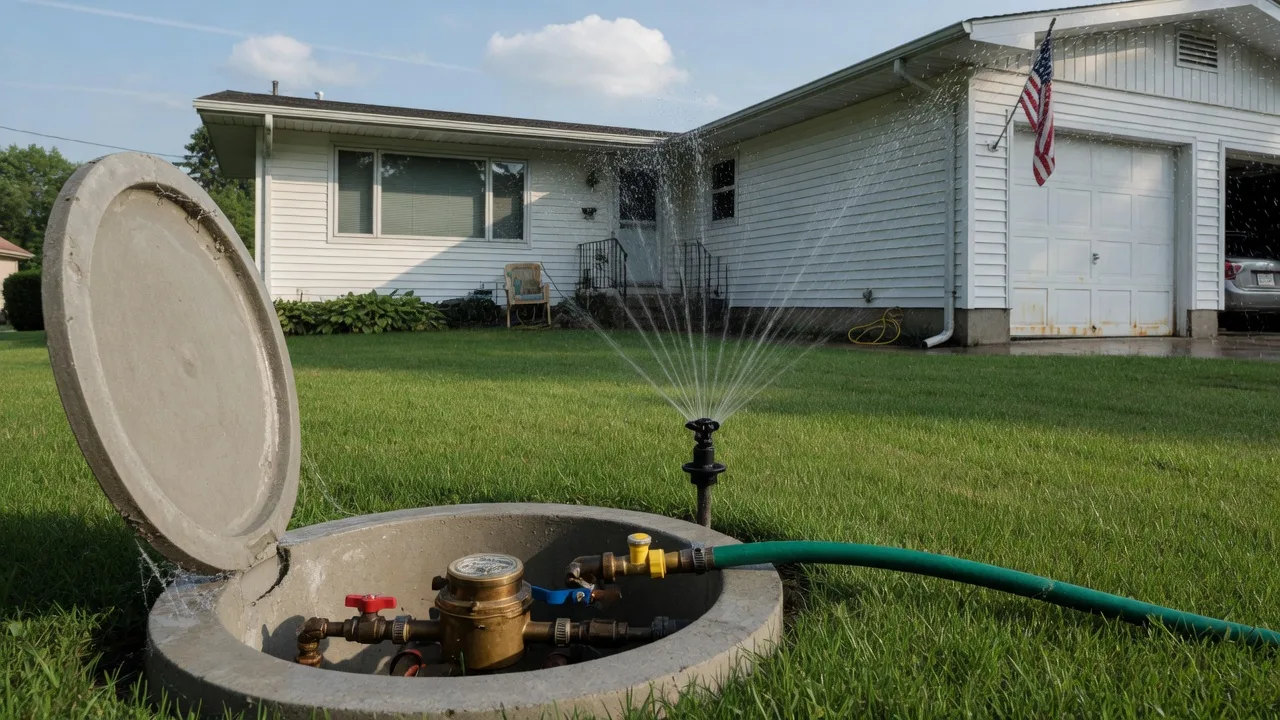
A sewer deduct meter is a second water meter on the outdoor-only line that measures irrigation water separately, and Montgomery County Environmental Services (MCES) subtracts that volume from your sewer charge, because sewer is billed on metered water. In our Dayton coverage area, MCES customers in Kettering and Centerville, plus Oakwood homeowners on the city's own utility, can use a deduct meter to cut the sewer portion of a quarterly bill, while City of Dayton Water customers do not currently have a documented residential deduct-meter path for lawn watering. Here is who offers the program, what the meter costs, and how the savings math works.
Montgomery County's water and sewer service is split among several utilities, and which one serves you determines whether a deduct meter is even on the table. The county's largest provider is MCES, which serves more than 80,000 water and sewer customers, including the City of Kettering and the City of Centerville along with unincorporated and township areas. The City of Dayton Department of Water serves Dayton, Vandalia, Riverside, Trotwood, Brookville, and parts of Greene County, while Oakwood, Huber Heights, Miamisburg, and West Carrollton each run their own municipal systems. The one-line summary: the deduct-meter payoff is real, but it is concentrated with MCES and Oakwood customers, not spread across every water bill in the county.
What Is a Sewer Deduct Meter and How Does It Work?
In most of Montgomery County, there is no separate sewer meter. Your sewer charge is calculated from the water meter that measures everything entering your home: showers, laundry, dishes, toilets, and the hose outside. Water that goes down the drain becomes sewage, but water that lands on the lawn never reaches the sanitary sewer. A deduct meter, sometimes called a sprinkling meter, sits on the outdoor-only line so the utility can measure that non-sewered water separately and remove it from the volume used to compute your sewer bill.
MCES bills water and sewer in units of 100 cubic feet (a CCF, about 748 gallons) read from the meter, and its published Rules and Regulations explicitly allow accounts with deduct meters and sprinkling meters. Its own customer FAQ puts it plainly: customers with heavy lawn-sprinkling use may realize savings in sewer charges by having a separate sprinkling meter. The property owner pays for the meter and the installation, and MCES reads both meters on the normal cycle and bills sewer on the difference.
One catch worth knowing before you apply: MCES's Rules and Regulations note that accounts with deduct or sprinkling meters are not eligible for the separate pool-fill sewer waiver, because the deduct meter is the intended tool for that kind of large outdoor use. If you fill a pool in the spring and water a lawn all summer, the deduct meter is the single mechanism that covers both.
Which Montgomery County Utilities Offer a Deduct Meter?
The answer is not the same across the county, which is the part that surprises most people. The three largest providers in Montgomery County treat outdoor water differently, so check which utility bills your address before you assume the program exists.
| Utility | Service area | Irrigation deduct meter? | What to know |
|---|---|---|---|
| Montgomery County Environmental Services (MCES) | Kettering, Centerville, unincorporated and township customers | Yes, sprinkling/deduct meter | Owner pays for meter and installation; MCES reads it and subtracts outdoor volume from sewer charges |
| City of Oakwood | Oakwood (own wells and treatment plants) | Yes, irrigation/sprinkling deduct meter | Installed at owner's expense on a direct-read or deduction basis; temporary pool-fill deduct meter rents for $25 per 96 hours |
| City of Dayton Water | Dayton, Vandalia, Riverside, Trotwood, Brookville, parts of Greene County | No documented residential program for sprinkling | Sewer billed on all metered water; sewer credits only for water that never entered the sewer (e.g., line breaks); no pool-fill credit |
| City of Kettering | Kettering | Same as MCES | Kettering is billed by MCES for both water and sewer |
| Huber Heights, Miamisburg, Vandalia, West Carrollton | Each city's own municipal system | Set by each city | Confirm deduct-meter policy directly with the city's utilities division |
How Much Can a Deduct Meter Save on Your Sewer Bill?
The starting point is how much of a typical household's water never makes it down the drain. The U.S. Environmental Protection Agency (EPA) estimates that roughly 30 percent of average household water use goes to outdoor purposes like lawn watering and gardening. For an MCES customer, the sewer charge is built from the same metered volume as the water charge, so every gallon that stays in the yard is a gallon you are currently paying sewer on twice over: once as water, once as sewage that never existed.
MCES's published context gives the scale. Its 2024 average residential bill was $211.73 per quarter for 13,465 gallons (18 CCF), and the county approved a combined water and sewer rate increase of 5 percent per year for five years effective January 1, 2026, which adds roughly $10.50 more per quarter to the average bill. Run the EPA's 30 percent share against the average usage and about 4,000 of those 13,465 quarterly gallons are outdoor water. Removing that volume from sewer billing takes somewhere in the $15 to $35 range off the quarterly sewer portion for a home watering a normal lawn through the season, and more for an in-ground irrigation system on a larger lot.
We quote a range rather than a single number on purpose: the exact saving depends on your utility's current rate schedule, your meter size, and how much you actually water, and those numbers change as the 5 percent adjustments compound. Treat $60 to $140 a year as the realistic neighborhood for a typical Montgomery County lawn, and confirm the current rate table with your utility before you commit.
| Figure | Value | Source |
|---|---|---|
| MCES 2024 average residential bill | $211.73 per quarter for 13,465 gallons (18 CCF) | Montgomery County Environmental Services |
| Estimated 2026 average after two annual 5% adjustments | Roughly $233 per quarter | MCES combined rate adjustment, effective Jan. 1, 2026 |
| Share of household water used outdoors | About 30% of average household use | U.S. EPA, cited via FLOWS.com |
| Outdoor volume on the average bill | About 4,000 gallons of 13,465 per quarter | Calculated from MCES average and EPA share |
| Illustrative avoided sewer charge | About $15-$35 per quarter, $60-$140 per year | Estimate based on published averages; confirm with the current rate schedule |
What Does a Deduct Meter Cost to Install?
The meter and the installation are the owner's responsibility, per MCES's own guidance. A licensed plumber taps the outdoor-only line, installs the meter and the required backflow protection, and the total depends on how far the line runs from the house and whether a meter pit already exists. Get a written quote before you commit; the payback period is then simply the install cost divided by your annual sewer saving, which is why a home with an in-ground irrigation system reaches the break-even point much faster than one watered with a hose.
Once installed, the utility handles reading and maintenance. MCES inspects and maintains the meters on its system, and it charges a trip fee when a missed appointment or damage caused by someone other than the utility sends a technician to the property, so keep the reading date on your calendar. In Oakwood, the city's utility billing office manages deduct meters on a direct-read or deduction basis, and it also rents a temporary deduct meter for pool filling at $25 per 96 hours, credited against sewer charges.
How Do I Apply for a Deduct Meter with MCES or Oakwood?
For MCES, the application runs through its Water Services division using the forms in the county's Form Center, and customer service can be reached at 937-781-2688, Monday through Friday, 8 a.m. to 5 p.m. The swimming pool meter rental application on the same page includes the deduct and sprinkling meter guidance, so it is the right starting place even if a pool is not your reason. MCES will tell you the current application and installation requirements for your account type.
For Oakwood, start with the city's utility billing department. Oakwood runs its own water production from eight wells and three treatment plants and its own sewer lines, and its published utility billing pages describe the sprinkling and irrigation deduct meters installed at the owner's expense. City of Dayton Water customers, by contrast, will hear a different answer: Dayton's published billing FAQ credits the sewer portion only when water did not enter the sanitary sewer, such as a leak from a broken line, and it does not credit sewer charges for pool fills. If you are on Dayton Water and want the definitive current answer for your address, call Dayton Water customer service directly before you plan around a deduct meter.
What About City of Dayton Water Customers?
This is the nuance that matters for a large share of the county. City of Dayton Water bills sewer on all metered water, and its 2026 published rates show the shape of that charge: a minimum quarterly sewer charge of $28.12 for a 5/8-inch meter alongside a $23.51 minimum water charge, and a sewer consumption charge of $32.55 per 1,000 cubic feet, about $4.34 per 1,000 gallons, on the first 10,000 cubic feet each quarter. Because there is no documented residential deduct-meter program for lawn watering on the Dayton side, the levers for a Dayton Water customer are different: fix leaks promptly, use the bill adjustment process for water that provably never entered the sewer, and if outdoor use is large enough, ask Dayton Water directly whether an irrigation meter arrangement is available for your service class.
The standards document Dayton Water publishes for taps, services, meters, and backflow prevention does reference domestic and irrigation meters and the meter pits required for them, which is why the question is worth asking your specific utility contact rather than assuming a flat no. Policies change, and the phone call is free.
What Montgomery County Buyers, Sellers, and Homeowners Should Know
In our experience helping buyers and sellers across Montgomery County, the deduct meter question comes up most often when a home has an in-ground irrigation system or a large, heavily watered lawn, and the utility answer genuinely differs street by street depending on whether the address is billed by MCES, Dayton Water, or a city system. Here is how we plan for it in practice: on the showing side, we ask whether the home already has a second meter before we talk about a buyer's future water bill, because a home with a deduct meter in place is already paying sewer only on indoor use. On the selling side, we flag a second meter as a documented utility feature worth mentioning in the disclosures and the marketing, and we note the quarterly sewer charge on the current bill so the buyer sees the effect.
For homeowners who already have an irrigation system, the ordering question is simply whether the system was permitted and metered at installation. If it was added without a second meter, adding one retroactively is the move, and the math in Table 2 tells you whether the payback is worth it. And for anyone reading this before closing, add one line to your list of questions: which utility bills this property, and does it already have a sewer deduct meter? That single question tells you a surprising amount about the future water bill you are about to inherit.
Buyer and Seller Takeaways
- Homeowners: if you water a lawn or garden heavily and your utility is MCES or the City of Oakwood, ask about a sprinkling or deduct meter and compare the install quote against your current sewer charge.
- Buyers: on a home with an in-ground irrigation system, ask whether a second water meter already exists and which utility bills the property, because that changes the monthly cost you are taking on.
- Sellers: list a deduct meter as a documented utility feature and share the current quarterly sewer charge so buyers can see the effect on paper.
- Dayton Water customers: there is no documented residential deduct-meter program for sprinkling; fix leaks, use the bill adjustment process for water that never entered the sewer, and confirm current policy by phone.
- Everyone: this is general education, not legal, tax, or financial advice. For a specific property, confirm current rates and requirements with your utility and consult your plumber, attorney, or lender as your situation warrants.
If you are weighing a home in the county, our Montgomery County market coverage maps the communities and price points, and our guide to sewer lateral inspections covers the other sewer cost that catches Dayton-area buyers off guard. And if you are just starting the search, our buyer guide walks through the full checklist, from utility questions to closing.
Frequently Asked Questions
What is a sewer deduct meter?
A second water meter installed on the outdoor-only line that measures irrigation water separately. Because sewer is billed on metered water, the utility subtracts the outdoor volume from the sewer charge, so you pay sewer only on water that actually goes down the drain.
Does Montgomery County offer a deduct meter for lawn sprinkling?
Yes, if your utility is Montgomery County Environmental Services. MCES's Rules and Regulations allow deduct and sprinkling meters, its customer FAQ says heavy sprinkling customers may realize savings in sewer charges, and the owner pays for the meter and installation while MCES reads it and deducts the outdoor volume from sewer billing.
How much can a deduct meter save on my sewer bill?
For a typical Montgomery County lawn, roughly $15 to $35 per quarter, or $60 to $140 a year, based on the EPA's estimate that about 30 percent of household water use is outdoor and MCES's 2024 average residential bill of $211.73 per quarter. Homes with large in-ground irrigation systems save more; the exact figure depends on your utility's current rate schedule and how much you water.
Does the City of Dayton offer a sewer deduct meter for irrigation?
No documented residential program exists. City of Dayton Water bills sewer on all metered water and credits the sewer portion only when water did not enter the sanitary sewer, such as a line-break leak. It does not credit pool fills. Call Dayton Water customer service to confirm whether an irrigation meter arrangement is available for your service class.
How much does a second water meter cost to install?
The owner pays for the meter and installation. A licensed plumber taps the outdoor-only line and installs the meter plus required backflow protection, and the cost depends on the line run and whether a meter pit exists. Get a written quote and divide it by your annual sewer saving to estimate the payback period.
Can I get a sewer credit for filling a swimming pool?
It depends on your utility. MCES rents a swimming pool meter through its Form Center, and accounts with deduct meters are the intended mechanism for large outdoor use. Oakwood rents a temporary deduct meter for pool filling at $25 per 96 hours. City of Dayton Water does not credit sewer charges for pool fills, so a Dayton customer should confirm the current policy by phone before filling.
Sources
- Montgomery County Environmental Services, Current Water & Sewer Rates (rate schedule, 2024 average residential bill context)
- MCES Water & Sanitary Sewer Rules and Regulations (deduct meters and sprinkling meters, pool-fill waiver eligibility)
- MCES FAQ, How Is My Bill Calculated / Sprinkling Meter (CCF billing basis, savings from a separate sprinkling meter)
- MCES FAQ, Deduct Meter (owner pays for meter and installation)
- MCES Form Center, Swimming Pool Meter Rental Application (deduct and sprinkling meter guidance, trip charges)
- MCES, 2026 Combined Water and Sewer Rate Adjustment (5% per year for five years, ~$10.50 more per quarter)
- MCES, Residential Customers (customer service 937-781-2688)
- City of Dayton, Water & Sewer Service Rates (2026) (minimum charges, sewer consumption rate per 1,000 CF)
- City of Dayton, Water Bills FAQ (sewer credits for water that did not enter the sewer, no pool-fill credit)
- City of Dayton, Standards for Taps, Services, Meters and Backflow Prevention (domestic and irrigation meters, meter pits)
- City of Oakwood, Water Meters (separate irrigation and sprinkling meters)
- City of Oakwood, Utility Billing (sprinkling and irrigation deduct meters, direct-read or deduction basis)
- City of Oakwood, Swimming Pools (temporary deduct meter rental, $25 per 96 hours)
- City of Kettering, Montgomery County Environmental Services (Kettering water and sewer billed by MCES)
- City of Huber Heights, Water & Wastewater (city-run utility)
- FLOWS.com, Deduct Water Meters (EPA outdoor-usage context)
- WYSO, Water and Sewer Rates Will Climb for Montgomery County Residents, November 2025
- Market and program details reviewed September 30, 2026.
Share This Post
Suggested social caption
"A second water meter can cut the sewer portion of your bill if your utility offers a deduct meter. In Montgomery County, MCES customers in Kettering and Centerville and Oakwood homeowners can use one, while City of Dayton Water customers currently can't. Here is what it costs and what it saves, from Glasshouse Realty."
Published October 1, 2026 · Updated October 1, 2026 · Information verified on September 30, 2026 against the sources listed above. Rates, program status, and utility policies can change; confirm current requirements with your water and sewer provider and a licensed plumber before you act.
Utility questions when you buy or sell in Montgomery County?
Get a no-pressure, data-backed read on the Montgomery County market, the water and sewer questions to ask before you write an offer, and the communities that fit your life. We know Dayton, Kettering, Centerville, Oakwood, and every corner of the county.
Talk to an AgentBuying or selling in Montgomery County, Ohio?
Whether you are buying, selling, or just weighing the move, a Glasshouse agent can show you the real Montgomery County market, the water and sewer questions that matter for the home you are considering, and the communities that fit your life.
No pressure, no guesswork. Just honest, local answers from a team growing across Dayton and the Miami Valley.
Schedule a Consultation