
October 2, 2026 · Out-of-State Relocation Guide
Dayton Winters Average 23.3 Inches of Snow and Nearly Every Home Has a Basement: What California and Texas Buyers Should Check First
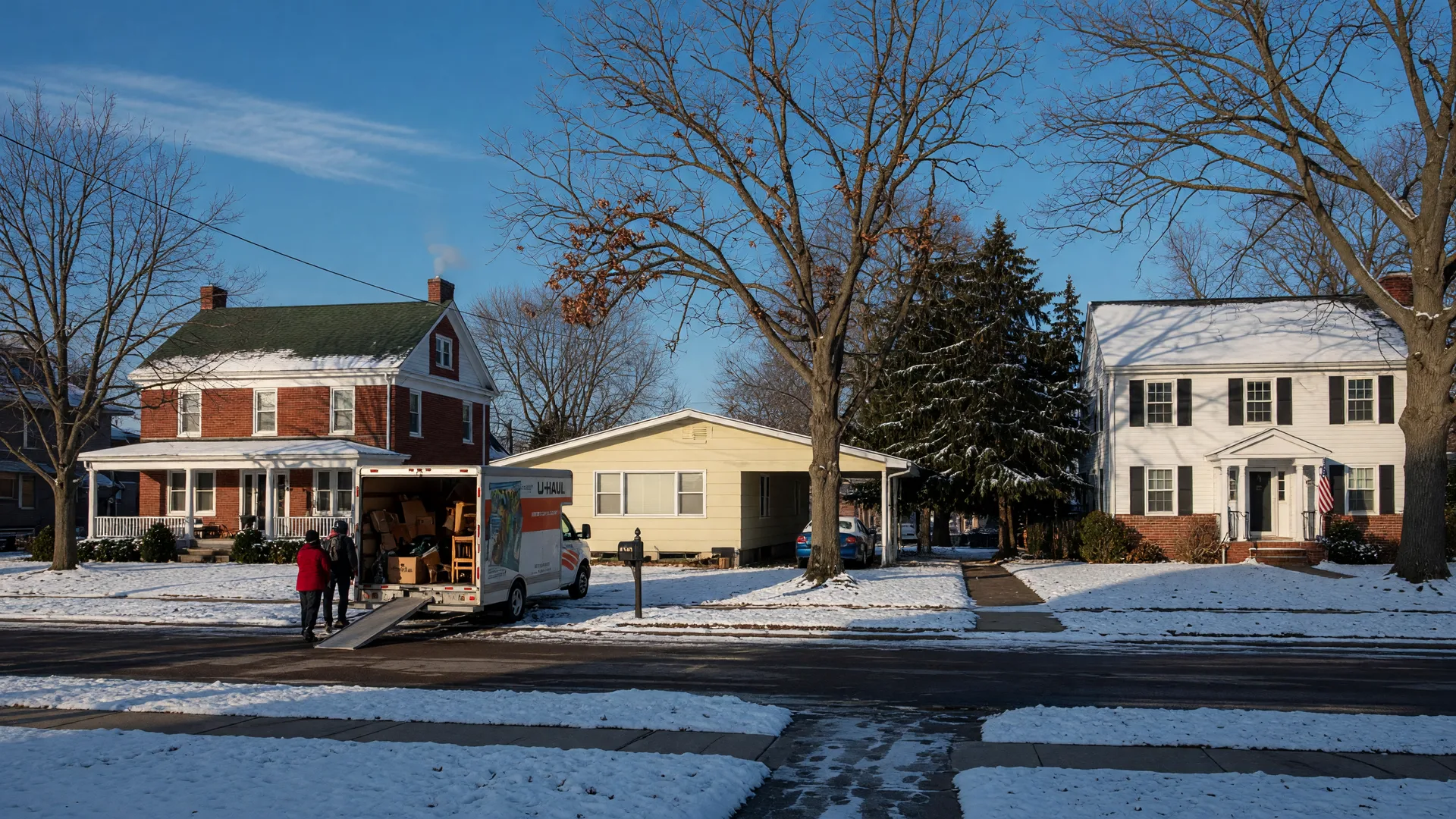
Dayton averages 23.3 inches of snow a year under NOAA 1991-2020 climate normals at Dayton International Airport, January lows sit near 20°F, and the vast majority of homes in the Miami Valley are built on full basements rather than slabs. For buyers moving from California or Texas, that means three practical adjustments: a real heating season with gas furnaces and higher winter utility bills, a basement that needs a working sump pump and a plan for water, and foundations, water heaters, and furnaces that are located and maintained differently than in warmer states. This guide walks through the climate data, the basement realities, and the utility setup for Dayton homes, with sources and reporting dates throughout.
The adjustment is real but manageable. A buyer coming from Dallas or Sacramento trades a longer, hotter summer for a shorter, colder winter, and the housing stock reflects it. Because foundations in southwest Ohio must extend below the frost line, which the Montgomery County Building Regulations Division sets at 32 inches, builders dig basements instead of pouring slabs. That is why the water heater and furnace live in the basement in a Dayton home, why a sump pump is common, and why a home inspection here looks at different things than one in California or Texas. None of it should stop a move. It should just be on the checklist before an offer.
How Much Colder Is a Dayton Winter Than Dallas or Sacramento?
The honest answer is: materially colder, and snowier. Dayton's January average low is about 20°F, versus roughly 37°F in Dallas and roughly 40°F in Sacramento, and Dayton picks up about 23.3 inches of snow a year where Dallas sees about 1.6 inches and Sacramento essentially none. The flip side is that Dayton summers are milder than either, with a July average high near 84°F versus the mid-90s in Dallas and Sacramento. The table below lays out the NOAA 1991-2020 normals side by side, with the reporting station for each figure.
| Metric (NOAA 1991-2020) | Dayton, OH | Dallas, TX | Sacramento, CA |
|---|---|---|---|
| Average annual snowfall | 23.3 in | ~1.6 in | ~0 in |
| January average low | 20°F | ~37°F | ~40°F |
| January average high | ~36°F | ~58°F | ~54°F |
| July average high | 84°F | ~96°F | ~94°F |
| Average annual precipitation | 41.1 in | ~37.0 in | ~18.1 in |
Reporting note: normals accessed October 2026. Dayton figures are official NOAA normals for station USW00093815 (Dayton International Airport). Dallas and Sacramento figures are NOAA normals for DFW and Sacramento Executive Airport as summarized in the sources below; some values are rounded.
The practical takeaway is about the heating season, not just the snow. Dayton's heating season effectively runs from November into March, and the homes are built for it. A buyer from a warmer state should expect a real heating bill, a furnace that needs annual maintenance, and a home that is insulated and double-paned for cold winters. The good news for the budget is that Dayton real estate tends to be more affordable than Dallas or coastal California, with the Dayton area median sale price near $271,500 in September 2026 per the Dayton Area Board of REALTORS, so the trade-off between price and heating cost is one buyers can actually run the numbers on.
Why Do Nearly All Dayton Homes Have Basements?
Basements are the norm in Ohio because the ground freezes. Foundations must extend below the frost line so they do not heave when the soil freezes and thaws, and the Montgomery County Building Regulations Division sets the frost depth at 32 inches for both commercial and residential construction. Once a builder is digging footings that deep, a full basement is a modest extra cost and a lot of usable space, so the housing stock in the East North Central census division is overwhelmingly basement homes. That is a structural difference from much of California and Texas, where slab-on-grade foundations are common and frost depth is not a factor.
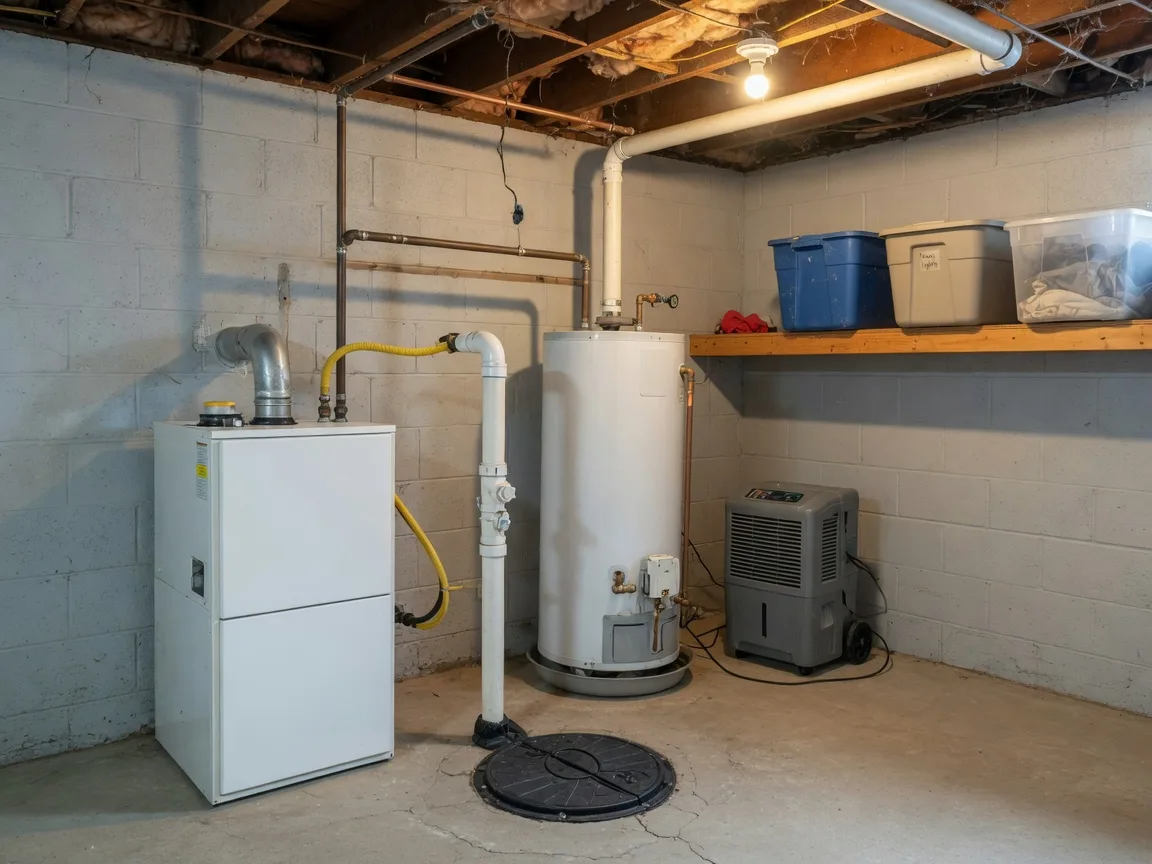
The basement changes where the mechanicals live. In a typical Dayton home the natural gas furnace and the water heater sit in the basement utility room, where in many California and Texas homes they are in a garage, an attic, or outside. It also changes what a buyer should check: a basement with a sump pump, a concrete floor, and painted walls is normal, and the condition of the pump, the drainage, and the foundation walls matters more than it would in a slab home. The table below summarizes the structural differences a warmer-state buyer is most likely to notice.
| Feature | Typical California / Texas home | Typical Ohio (Dayton) home |
|---|---|---|
| Foundation | Slab on grade in many areas | Full basement; footings below the 32-inch frost line (Montgomery County) |
| Heating | Heat pump or electric; mild winters | Natural gas furnace; real heating season November to March |
| Water heater location | Garage, attic, or exterior | Basement utility room |
| Sump pump | Rarely present | Common in basement homes; pit and discharge pipe in the floor |
| Snow and ice | Minimal to none | 23.3 in annual snowfall; sidewalk clearing duties |
| Windows and insulation | Varies by climate zone; often lighter | Double-pane and insulated for cold winters; older stock varies |
What Basement Issues Should Out-of-State Buyers Check Before Making an Offer?
In our experience helping buyers from warmer states close on Dayton homes, the basement is where the surprises live. Here is what we check before an offer. The Miami Valley gets about 41 inches of rain a year on clay-heavy soils, so water intrusion is the most common issue: seepage along the walls, a damp musty smell, efflorescence (the white mineral crust on concrete), or a floor that stays wet. A working sump pump is the standard first line of defense, and pumps typically last only 7 to 10 years, so the age and condition of the pump, and whether it has a battery backup for power outages, are inspection items, not details.
The mechanicals are the second thing to verify. A water heater has a typical service life of about 8 to 12 years and a furnace about 15 to 20, and both sit in the basement in Ohio. Ask the seller for the age of each, and for 12 months of utility bills so you can see the actual heating cost of the home. Ohio homes also commonly test for radon during the inspection period, so if the seller has not provided a recent test, budget for one. None of these are deal-breakers; they are the things that become expensive if they are ignored, which is exactly why they belong on a pre-offer checklist for a buyer who has never owned a basement home.
Which Utility Companies Serve Dayton Homes and What Do They Cost?
The utility map for a Dayton home is straightforward, and the provider depends on where the home sits. AES Ohio (formerly Dayton Power & Light) is the electric distribution utility for the Dayton area, with a standard service offer of 10.86 cents per kilowatt-hour for the delivery year June 1, 2026 through May 31, 2027, and a lower electric-heating rate of 9.18 cents for qualifying customers from November 1, 2026 through May 31, 2027. CenterPoint Energy (formerly Vectren) delivers natural gas, which is how most Dayton homes heat, and you choose the gas supplier separately. Water and sewer come from the City of Dayton Department of Water within the city and its expanded service area, or from Montgomery County Environmental Services for the roughly 80,000 county customers outside the city. Trash and recycling are handled by the City of Dayton Division of Waste Collection, with weekly trash and biweekly single-stream recycling.
| Service | Provider | What to know | Where to set up |
|---|---|---|---|
| Electricity | AES Ohio (formerly Dayton Power & Light) | Standard service offer 10.86¢/kWh (June 1, 2026-May 31, 2027); electric-heating rate 9.18¢/kWh (Nov 1, 2026-May 31, 2027) | aes-ohio.com; compare suppliers at Energy Choice Ohio |
| Natural gas | CenterPoint Energy (formerly Vectren) | Distribution only; you choose a supplier. Heating-season average ~$94/mo (2023-24) and ~$112/mo (2024-25); budget billing available | centerpointenergy.com |
| Water and sewer | City of Dayton Water, or Montgomery County Environmental Services | City of Dayton serves the city and expanded service area; MCES serves ~80,000 county customers outside the city | City of Dayton Water or Montgomery County Environmental Services |
| Trash and recycling | City of Dayton Division of Waste Collection | Weekly trash and biweekly single-stream recycling for ~67,000 residences within the city | City of Dayton Waste Collection |
Reporting note: rates and provider details accessed October 2026. Utility rates and supplier choices change, so confirm current figures with each provider and the Public Utilities Commission of Ohio's Energy Choice Ohio comparison before you act.
What Does Winterizing a Dayton Home Actually Involve?
Winterizing is a seasonal routine that is new to many warmer-state buyers. Before the first hard freeze, disconnect and drain garden hoses, shut off the interior shut-off valve for each outdoor hose bib, and fit the bib with an insulated cover; outdoor pipes are vulnerable once temperatures fall below roughly 20°F. Clean gutters and downspouts in the fall so melting snow and ice have somewhere to go, because clogged gutters are what cause ice dams and water backing up under the roofline. Schedule a furnace tune-up in September or October, before HVAC companies book up on the first cold morning, and change the filter. It is a small list, but doing it in the fall is what keeps a first Ohio winter comfortable.
Snow removal is a responsibility to know before you buy. Ohio has no statewide law requiring property owners to clear sidewalks, but municipalities can impose that duty under Ohio Revised Code Section 723.011, and the City of Dayton requires property owners and tenants to clear snow and ice from sidewalks adjacent to their property. Check your city or suburb's ordinance, because the duty falls on the owner in many area municipalities. If you are considering a home with a long driveway or a corner lot, the snow you will move is part of the real cost of the property.
What Should California and Texas Buyers Budget for Heating?
Heating is the biggest new line item. Most Dayton homes heat with natural gas, and CenterPoint Energy reported an average customer heating bill of about $94 a month in the 2023-24 season and about $112 a month in the 2024-25 season, with actual bills varying widely by home size, age, insulation, thermostat settings, and supplier rate. CenterPoint offers a budget-billing option that averages usage into equal monthly payments, which is worth asking about if you want predictable bills. Ask the seller for 12 months of actual utility bills before you make an offer, because the sticker price of the home says less than the real cost of heating it.
The whole picture is what matters. A Dayton home costs less to buy than a comparable home in Dallas or most of California, but it costs more to heat and it needs a little more seasonal care. Run the numbers with the actual utility bills, the property taxes for the specific county, and the insurance quote, and the comparison is honest. That is the same advice we give every out-of-state buyer, whether they are coming from a warmer state or a colder one.
Buyer and Seller Takeaways
- Buyers from California or Texas: expect a full basement, a natural gas furnace, and a real heating season. Budget for higher winter utility bills and plan for furnace and sump pump maintenance.
- Buyers: before offering, check the age and condition of the sump pump (expect a 7 to 10 year lifespan and a battery backup), the water heater, and the furnace, and ask the seller for 12 months of utility bills.
- Buyers: confirm the water and sewer provider for the specific address (City of Dayton Water or Montgomery County Environmental Services), and check the local sidewalk snow-clearing ordinance before you buy.
- Buyers: plan a fall winterization routine: drain and cover hose bibs, clean gutters, and schedule a furnace tune-up before the first cold morning.
- Sellers: have the furnace and sump pump serviced, gather 12 months of utility bills, and disclose the age of the mechanicals, because that paperwork is what a warmer-state buyer asks for first.
- Everyone: this is general education about climate, basements, and utilities, not legal, tax, financial, or mortgage advice. Consult a qualified home inspector, your lender, your insurance agent, and a licensed Ohio professional for your specific property.
If you are weighing the move, our complete guide to moving to Dayton covers neighborhoods, schools, and logistics, and our out-of-state relocation guide walks through the moving process step by step. To see how Dayton's housing and everyday costs stack up against Ohio's other big metros, our Dayton cost-of-living comparison runs the numbers side by side. And for a sense of where your budget lands in the local market, our what $300,000 buys in Ohio's biggest metros breakdown shows how far a given budget stretches in Dayton versus Cleveland, Columbus, and Cincinnati. The climate and the basements are part of the Dayton story; so is the value.
Frequently Asked Questions
Do homes in Dayton have basements?
Yes. Basements are the majority foundation type in Ohio because foundations must extend below the frost line, which Montgomery County sets at 32 inches. That is also why the furnace and water heater sit in the basement in most Dayton homes, and why a sump pump is common.
How much snow does Dayton get each year?
Dayton averages about 23.3 inches of snow a year under NOAA 1991-2020 normals at Dayton International Airport, with January lows near 20°F. That is far more than Dallas (about 1.6 inches) or Sacramento (essentially none).
What utility companies serve Dayton homes?
AES Ohio provides electricity, CenterPoint Energy delivers natural gas, and water and sewer come from the City of Dayton Department of Water or Montgomery County Environmental Services depending on the address. Trash and recycling are handled by the City of Dayton Division of Waste Collection.
Do I need a sump pump in a Dayton home?
Most basement homes in the Miami Valley have one. Sump pumps typically last 7 to 10 years and tend to fail during storms, often when power is out, so a battery backup is recommended. Check the age and condition of the pump during the inspection.
Is it more expensive to heat a home in Ohio than in California or Texas?
Generally yes, because Dayton has a real heating season from November into March and most homes heat with natural gas. CenterPoint Energy reported an average customer heating bill of about $94 a month in 2023-24 and about $112 a month in 2024-25. Budget billing can smooth the payments.
Who is responsible for shoveling snow on sidewalks in Dayton?
Ohio has no statewide sidewalk-clearing law, but municipalities can impose that duty under Ohio Revised Code Section 723.011, and the City of Dayton requires property owners and tenants to clear snow and ice from sidewalks adjacent to their property. Check your specific city or suburb's ordinance.
Sources
- NOAA NCEI, US Monthly Climate Normals 1991-2020, Dayton International Airport (USW00093815) (Dayton snowfall, temperatures, and precipitation)
- NOAA NWS Fort Worth, 1991-2020 Climate Normals (Dallas/DFW snowfall, temperatures, and precipitation)
- NOAA Technical Memorandum NWS WR-272, Climate of Sacramento, California (Sacramento temperatures and precipitation)
- Montgomery County Building Regulations FAQ (frost depth of 32 inches for residential and commercial construction)
- Energy Choice Ohio / PUCO, AES Ohio Price-to-Compare (standard service offer of 10.86¢/kWh, June 2026-May 2027)
- AES Ohio (electric distribution provider and electric-heating rate)
- CenterPoint Energy (natural gas distribution and budget billing)
- Dayton Daily News, heating cost reporting (CenterPoint heating-season averages and rate changes)
- City of Dayton Department of Water (water, wastewater, and storm water service area)
- Montgomery County Environmental Services, Water Services (water and sewer for ~80,000 county customers)
- City of Dayton Division of Waste Collection (weekly trash and biweekly recycling)
- Ohio Revised Code Section 723.011 (municipal sidewalk control and clearing authority)
- City of Dayton FAQ, sidewalk snow clearing (owner and tenant responsibility adjacent to the property)
- Ohio Basement Authority, Basement Waterproofing in Dayton (basement water intrusion, clay soils, and sump pump guidance)
- Climate, utility, and structural details reviewed October 2, 2026.
Share This Post
Suggested social caption
"Dayton averages 23.3 inches of snow a year and most homes sit on full basements with sump pumps and gas furnaces. If you are moving from California or Texas, here is what to check before you buy: the climate data, the basement realities, and the utility bills that come with a real heating season. From Glasshouse Realty."
Published October 2, 2026 · Updated October 28, 2026 · Information verified on October 2, 2026 against the sources listed above. Climate normals are NOAA 1991-2020; utility rates, supplier choices, and program details can change, so confirm current figures with AES Ohio, CenterPoint Energy, your local water and waste provider, and the Public Utilities Commission of Ohio before you act.
Moving to Dayton from California or Texas?
Get a no-pressure, data-backed read on the Miami Valley: which homes have the basement and mechanicals in good shape, what the real heating and utility costs run, and how your budget lands in the Dayton market. We know every corner of the region.
Talk to an AgentMoving to the Miami Valley?
Whether you are relocating from a warmer state or just across town, a Glasshouse agent can pull the utility history, flag the basement and mechanicals to check, and show you what fits your budget before you look at a single listing.
No pressure, no guesswork. Just honest, local answers from a team growing across Greater Dayton and the Miami Valley.
Schedule a Consultation