
July 8, 2026 · Buyer Tips
Why Dayton Homeowners Insurance Rates Are Rising — and What to Do About It
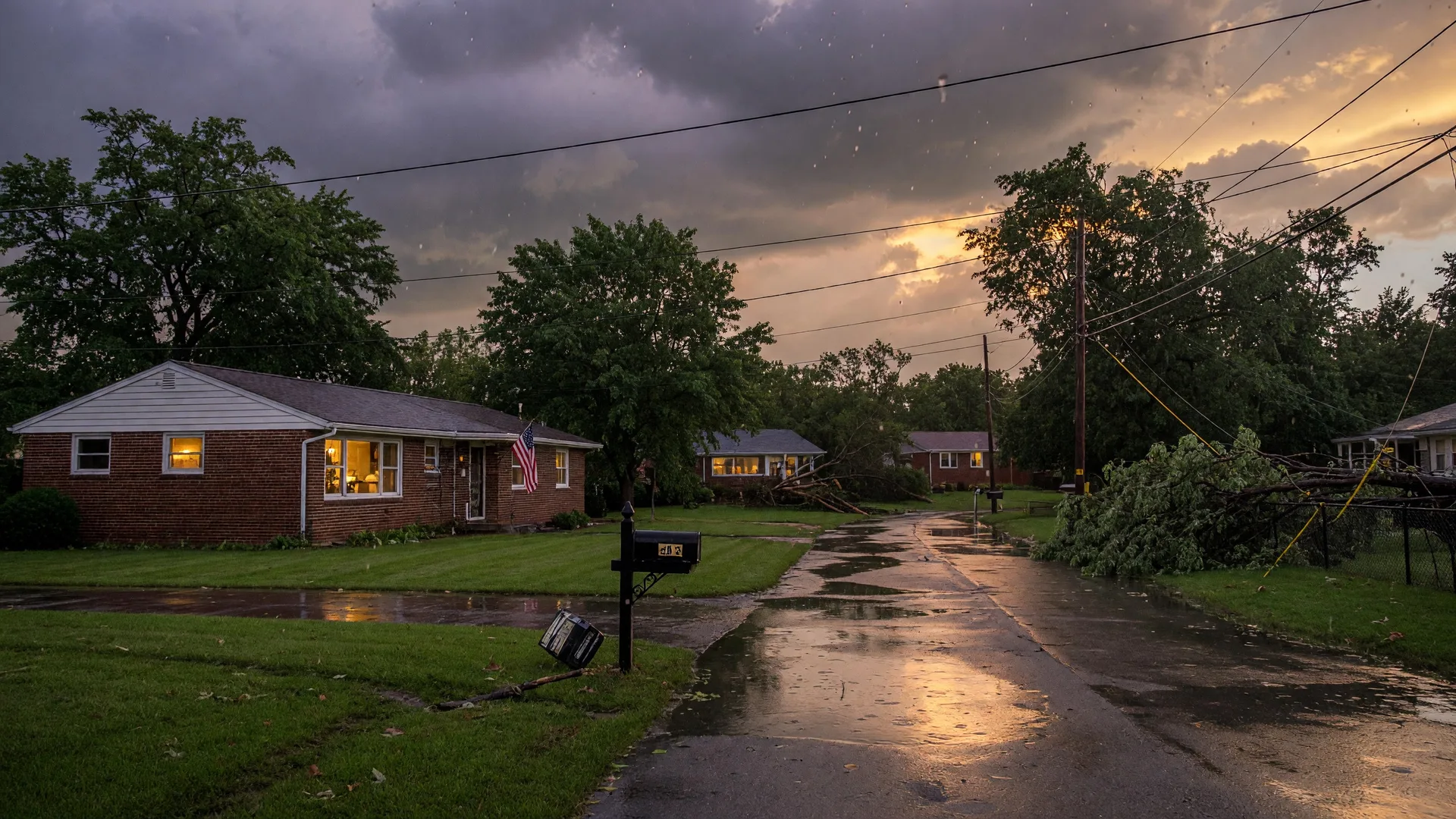
If you've opened your homeowners insurance renewal lately and felt a gut punch, you're not alone. Across Ohio — and especially in the Dayton metro — premiums have been climbing fast. Severe weather is the main driver, and for buyers and sellers in our area, understanding what's happening with insurance costs is now just as important as knowing the interest rate.
What's Driving the Increases?
Ohio recorded 74 tornadoes in 2024 — a single-year record. That wave of severe weather triggered a massive spike in claims across the state, and insurers responded by raising premiums across the board. According to the Columbus Dispatch, Ohio homeowners insurance rates rose an average of 36.4% between 2019 and 2024. Nationally, the trend is similar, but Ohio's tornado and wind exposure makes the increases sharper here than in many other states.
The Dayton area sits squarely in the heart of Ohio's severe weather corridor. Between tornadoes, straight-line winds, large hail, and the occasional derecho, insurers price our region's risk accordingly. If you're buying a home in Montgomery, Greene, Miami, or Clark County, expect your insurance quote to reflect that geography.
What Are Dayton-Area Homeowners Actually Paying?
The numbers vary widely based on home age, construction type, claims history, and coverage level, but here's a general snapshot:
Ohio Statewide Avg.
~$2,100
/year
Dayton Metro Avg.
~$2,500
/year
National Avg.
~$2,400
/year
For a typical Dayton-area home, that translates to roughly $175 to $250 per month in insurance costs — and it's become a significant line item in the monthly housing budget. When you're calculating what you can afford, don't forget to factor this in alongside your mortgage, property taxes, and maintenance.
What's Covered — and What Isn't
A standard Ohio homeowners policy typically covers wind, hail, and tornado damage under the dwelling and personal property sections. If a tornado rips off your roof or a windstorm sends a tree through your siding, that damage is generally covered — minus your deductible.
Here's where it gets tricky: many Ohio insurers now apply a separate wind and hail deductible, often calculated as a percentage of your dwelling coverage rather than a flat dollar amount. On a $300,000 home with a 2% wind/hail deductible, you'd be responsible for the first $6,000 of storm damage before insurance kicks in. That catches a lot of homeowners off guard.
The Big Exclusion: Flooding
Standard homeowners policies do not cover flood damage — including water intrusion caused by tornadoes, heavy rain overwhelming storm drains, or rising water from nearby creeks. Dayton has a well-documented flood history along the Great Miami River and its tributaries. If your home is in or near a FEMA flood zone, a separate flood insurance policy is essential. Even homes outside high-risk zones can benefit: about 25% of flood claims come from low-to-moderate risk areas.
Seven Ways to Lower Your Premium
You can't control the weather, but you can take real steps to bring your insurance costs down:
- 01 Upgrade your roof. Impact-resistant Class 4 shingles can qualify for discounts of 10–28%. If your roof is approaching 15–20 years old, a replacement may pay for itself in premium savings alone.
- 02 Bundle home and auto. Combining policies with the same insurer typically saves 10–25%. It's the easiest discount to claim.
- 03 Raise your deductible strategically. Moving from a $1,000 to a $2,500 deductible can meaningfully lower your annual premium — just make sure you can cover the higher out-of-pocket if disaster strikes.
- 04 Shop your coverage every renewal. Insurance is one of the few products where loyalty costs you. Getting three to five quotes at each renewal cycle keeps your pricing competitive.
- 05 Improve your credit score. Ohio allows credit-based insurance scoring. A stronger credit profile can lead to materially lower premiums — another reason to clean up your credit before applying for a mortgage.
- 06 Add safety features. Security systems, smoke detectors, water leak sensors, and updated electrical or plumbing can all earn discounts. Modern smart-home devices count, too.
- 07 Avoid small claims. Filing claims for minor damage can raise your premiums for years. For repairs under your deductible amount, paying out of pocket is often the smarter financial move.
What Buyers Should Know Before Closing
If you're buying a home in the Dayton area, your lender will require proof of homeowners insurance before closing. That means getting quotes early — ideally during your home search — so the cost doesn't surprise you. A home with an older roof, older wiring, or a history of claims can carry a significantly higher premium, and that affects your total monthly housing cost.
We always encourage our buyers to request insurance quotes on any home they're serious about. It's a step a lot of first-time buyers skip, and it can mean the difference between a comfortable monthly budget and a stretched one. Your Glasshouse agent can connect you with local insurance agents who know the Dayton market and can walk you through your options.
The Bottom Line
Homeowners insurance isn't the line item anyone gets excited about — but in Dayton's storm-prone market, it's a cost you need to plan for. Rising premiums are a reality driven by real weather events, not insurance company greed. The good news is that there are proven ways to manage the cost, and an informed buyer or seller is always in a better position.
Whether you're budgeting for your first home, shopping for insurance on a property you already own, or preparing to list, understanding how insurance fits into the bigger financial picture is part of making smart real estate decisions. That's exactly what we're here for.
The Bottom Line
Insurance costs are climbing across Ohio, but the right coverage strategy — paired with a smart home purchase — keeps you protected without breaking the budget. If you're buying or selling in the Dayton area, talk to a Glasshouse agent about how to factor insurance into your overall housing plan. We'll connect you with local resources to get the best coverage at the best price.
Frequently Asked Questions
Does homeowners insurance cover tornado damage in Ohio?
Yes. Standard homeowners insurance covers wind and tornado damage to your dwelling and personal property. However, many Ohio insurers now apply a separate wind/hail deductible — often a percentage of your dwelling coverage (typically 1–3%) — meaning you may pay the first several thousand dollars out of pocket before coverage applies.
How much is homeowners insurance in Dayton, Ohio?
Average annual premiums in the Dayton metro are roughly $2,300 to $2,600 for a standard single-family home, depending on the property's age, construction, claims history, and coverage limits. Newer homes with updated systems and impact-resistant roofing typically qualify for lower rates.
Do I need flood insurance if my home isn't in a flood zone?
It's worth considering. About 25% of all flood insurance claims come from properties in low-to-moderate risk zones. Dayton has significant flood history along the Great Miami River and its tributaries, and heavy rain events are becoming more common. Standard homeowners policies exclude flood damage entirely, so a separate policy is the only way to cover it.
Can I shop for homeowners insurance before I close on a home?
Yes — and you should. Most insurance agents can provide a preliminary quote based on the property's address, square footage, and construction details. Getting quotes early ensures you know the true monthly cost before committing, and it gives you time to compare options. Your Glasshouse agent can recommend local insurance professionals who know Dayton-area properties.
Published July 10, 2026 · Updated July 10, 2026
Let's make sure the full picture makes sense.
Mortgage, taxes, insurance — we'll help you understand what your total monthly cost really looks like before you commit. No surprises, just clarity.
Talk to an AgentGot insurance questions? We can help.
Whether you're buying your first home, shopping for better coverage, or just trying to understand the numbers — a Glasshouse agent can walk you through it.
No pressure, no sales pitch. Just honest answers from people who do this every day.
Schedule a Consultation