October 16, 2026 · Updated October 30, 2026 · Q&A
Springfield & Clark County Real Estate Q&A: What Buyers and Sellers Are Asking
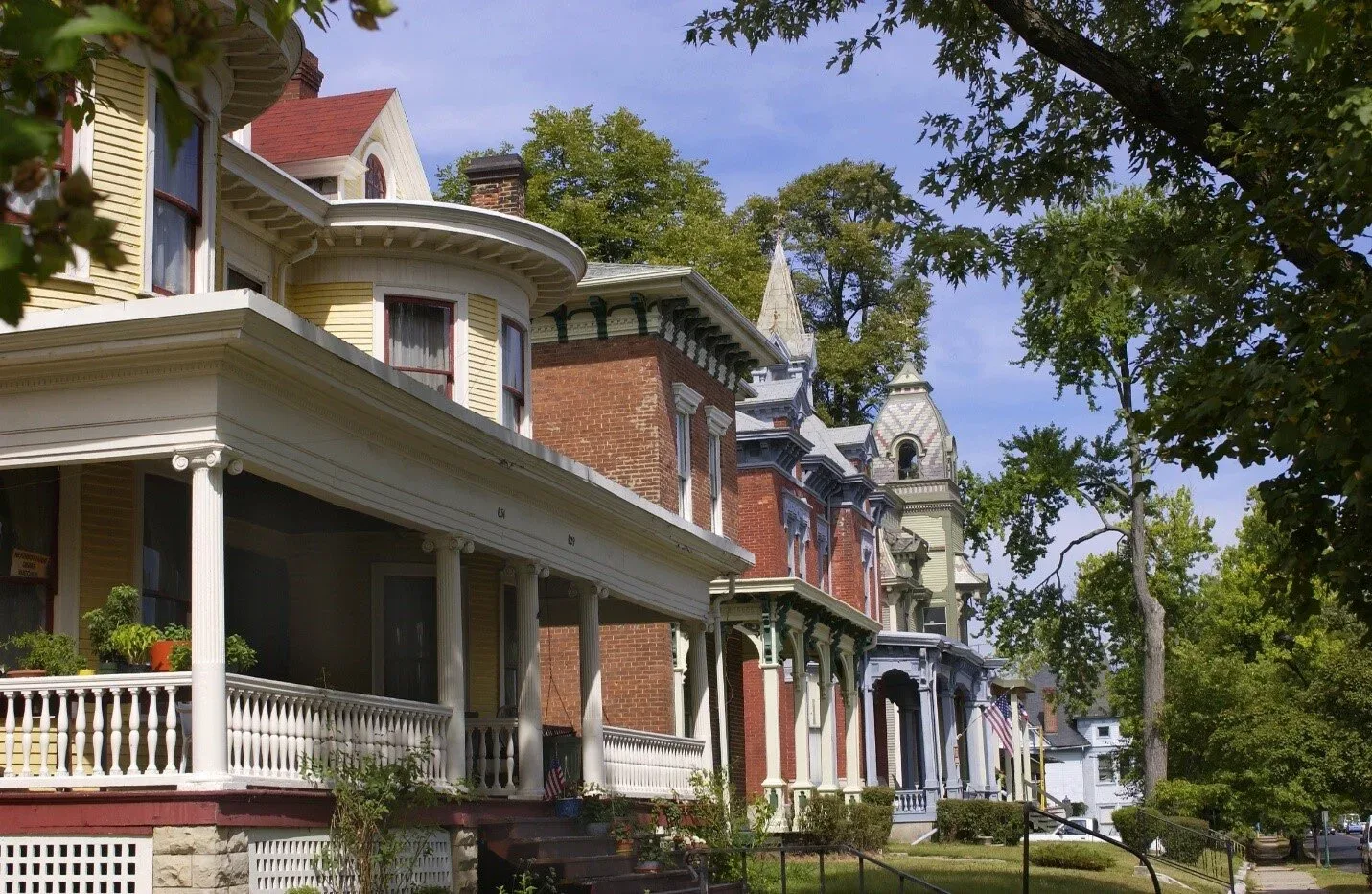
This Q&A answers the questions our Springfield office hears most from buyers and sellers across Clark County: closing costs, property taxes, inspections and appraisals, historic homes, commutes, market conditions, buyer agency, and seasonal timing, plus the questions that have picked up since our last refresh: down payment assistance, USDA loans, flood zones, and new construction. Each answer is general real estate education grounded in current local data from Realtor.com, Redfin, Movoto, Homes.com, LocalAlpha, the Clark County Auditor, the Ohio Housing Finance Agency, FEMA, the USDA, and Ohio state resources, with working links so you can verify the numbers yourself. Nothing here is legal, tax, or lending advice, and Glasshouse Realty shares data without rating neighborhoods or schools.
Is Springfield still one of Ohio's most affordable housing markets?
Yes. Springfield remains one of the most attainable markets in Ohio, though the numbers look different depending on which source you read. Realtor.com's September 2026 data shows a median listing price of about $210,000 and a median sold price of about $193,750, with roughly 512 active listings and a median 46 days on market. Redfin's three-month median sold price for the same period was about $163,822, up 2.4% year over year, while the Columbus metro median sold price was $345,500 in August 2026 according to Columbus REALTORS.
In our Springfield office, we read the monthly and three-month medians together because they measure different pools: the monthly figure tracks closings recorded in a single month, while the three-month figure smooths out a slower or lumpy sales mix. Neither number tells you what one specific house is worth, which is why we always price a home against recent sales on its own street.
The late-October 2026 snapshots keep the same story. Movoto's October data put Springfield's median list price near $259,000, Homes.com's trailing 12-month median sale price at $199,900 (up about 14% year over year), and LocalAlpha's most recent county brief showed a Clark County median sale price of $220,000 with a median 32 days on market and roughly 290 homes for sale. One caution when you read headlines: a widely shared "Clark County October 2026 report" citing medians near $525,000 is Clark County, Washington, not Ohio, so check the state before you compare numbers.
Figure 1: September 2026 snapshot, Springfield versus the Columbus metro. Listing prices, sold prices, and sales counts are different measures, and the two geographies are not directly comparable.
| Measure | Springfield | Columbus metro | Source |
|---|---|---|---|
| Median listing price | ~$210,000 | not stated at city level | Realtor.com |
| Median sold price (Aug 2026) | ~$193,750 | $345,500 | Realtor.com / Columbus REALTORS |
| Three-month median sold price | ~$163,822 | not stated at region level | Redfin |
| Active listings | ~512 | 6,530 (+12.3% YoY) | Realtor.com / Columbus REALTORS |
| Homes sold near Springfield | 172 in Sept 2026 | closed sales down 5.7% YoY | Redfin / Columbus REALTORS |
Springfield's sales slowed year over year in September 2026, with 172 closings versus 217 in September 2025, but lower volume does not automatically mean lower prices for every property. Well-priced, well-conditioned homes still move, especially in the range around and below the city's median sold price, where much of Clark County's activity concentrates.
How much should a buyer budget for closing costs on a Springfield home?
Buyers in Ohio typically pay 2% to 5% of the purchase price in closing costs on top of the down payment, according to Rocket Mortgage's state-level research. On a $200,000 home, that suggests roughly $4,000 to $10,000. The largest buyer-side items are usually loan origination and underwriting fees, the appraisal, title insurance, recording fees, and prorated property taxes set aside in escrow.
Ohio lets buyers lower the cash needed at closing. FHA loans allow a 3.5% down payment, VA loans allow 0% down for qualified veterans and service members, and the Ohio Housing Finance Agency (OHFA) offers down payment assistance, including the Your Choice! program with up to 2.5% or 5% of the purchase price as a forgivable loan through participating lenders (myohiohome.org). Program limits, income caps, and lender requirements change, so verify every detail with the lender you actually use.
Figure 2: Illustrative closing cost ranges for one buyer on a $200,000 Ohio home. Actual totals depend on the loan program, lender, title company, and closing date; this is not a loan estimate.
| Buyer cost | Typical range on a $200,000 purchase | Notes |
|---|---|---|
| Loan origination / underwriting | $1,000 to $3,000 | varies by lender and loan program |
| Appraisal | $300 to $600 | required by most mortgage lenders |
| Title insurance (owner's + lender's) | $1,500 to $3,000 | buyer customarily pays in Ohio |
| Recording and county fees | $100 to $300 | set by the county |
| Escrow / prepaid items | prorated | taxes and insurance set aside at closing |
Compliance note: this answer is general education about mortgages, title products, and incentive programs. It is not a loan offer, and Glasshouse Realty does not endorse or receive compensation from any lender, title company, or program mentioned. Confirm current terms with your lender and a licensed Ohio title company before relying on any figure.
Who pays the transfer tax and the other big costs when selling in Clark County?
The seller customarily pays Ohio's real property transfer tax. Ohio law sets a statewide conveyance fee of $1 per $1,000 of sale price, and Clark County adds the full permissive county fee of $3 per $1,000, for a combined $4 per $1,000, according to the Clark County Auditor's office. On a $200,000 sale, that conveyance fee is $800. Sellers also typically pay the real estate commission if one is negotiated, and they often contribute toward buyer closing costs as a negotiated concession.
Figure 3: Who typically pays what in an Ohio home sale. Every contract is negotiated, so confirm each line with your agent and a licensed title company before closing.
| Closing item | Typically paid by | Clark County detail |
|---|---|---|
| Transfer / conveyance fee | Seller | $4 per $1,000 (state $1 + county $3) |
| Title insurance | Buyer, by custom | owner's and lender's policies |
| Agent commissions | Negotiated, commonly seller | spelled out in the listing agreement |
| Recording fees | Per contract | often split |
| Prorated property taxes | Split by closing date | each party pays through the day of closing |
Compliance note: this answer is general education about title and transfer fees. It is not a quote, and Glasshouse Realty does not recommend any specific title company. A licensed Ohio attorney or title agent can give you an exact closing statement for your situation.
How are property taxes calculated in Clark County, and what changed in 2026?
In Ohio, residential property is taxed on assessed value, which is 35% of the county auditor's appraised market value, as the Greene County Auditor explains in its guide to Ohio real estate taxes. A home the Clark County Auditor appraises at $200,000 therefore carries an assessed value of $70,000. The annual gross tax is the assessed value divided by 1,000, multiplied by the total millage of the city, township, school district, and county levies that serve that address. Ohio then applies state credits, including a 10% nonbusiness credit and a 2.5% owner-occupied credit, which is why typical homeowners pay far less than the gross millage rate suggests.
For tax year 2026, Clark County's six-year reappraisal increased property values by about 32% on average, according to the Springfield News-Sun. A higher appraised value does not automatically produce a proportional bill increase, because the county adjusts levy rates and the state credits apply, but many homeowners should expect the reappraisal to move their bill. Homeowners 65 and older or with disabilities may qualify for the Ohio homestead exemption, which reduces the assessed value subject to tax; eligibility is verified through the county auditor.
Figure 4: Illustrative property tax math for a Clark County home. Your exact millage depends on the city, township, and school district for your address; look up the property on the Clark County Auditor site for the real numbers.
| Step | Example | Source |
|---|---|---|
| Appraised market value | $200,000 | Clark County Auditor |
| Assessed value (35%) | $70,000 | Ohio law / county auditor |
| Total millage by district | varies, roughly 65 to 75 mills in much of the county | Clark County Rates of Taxation |
| Effective homeowner rate | county median about 1.69% of value | Ownwell county data |
Before you make an offer, we recommend pulling the actual tax history for the parcel from the Clark County Auditor's property search and running the address through the district lookup tools, because the millage can differ noticeably within the same city. Property tax data sources: Clark County Auditor, Ownwell Clark County data, and the Springfield News-Sun reappraisal report.
What does a home inspection cost, what does an appraisal cost, and why do I need both?
A standard home inspection in Ohio typically runs $325 to $500 for a single-family home, with add-ons priced separately: radon testing around $150 to $200, a sewer scope around $200 to $500, and termite or pest inspections around $75 to $150. A mortgage appraisal typically costs $300 to $600 and is ordered by the lender, with the buyer paying at or before closing, per Bankrate's national data and Ohio-specific estimates.
The two services answer different questions. The inspection protects you, the buyer, from hidden condition issues. The appraisal protects the lender by confirming the home is worth what the contract says. Both matter in Springfield, where many homes are older and condition varies block to block.
Figure 5: Inspection versus appraisal, side by side. Both are ordered on nearly every financed purchase.
| Item | Home inspection | Home appraisal |
|---|---|---|
| Answers | is the house sound and safe? | is the value supported by sales? |
| Who orders | buyer, with the agent | lender |
| Who pays | buyer | buyer (usually folded into closing costs) |
| Typical cost in Ohio | $325 to $500 plus add-ons | $300 to $600 |
| When | within days of mutual acceptance | after the loan is under contract |
In our Springfield office, we schedule the inspection within the first days after mutual acceptance and join clients for the walkthrough whenever possible, because the inspector's verbal rundown is where the most useful findings live. On older homes, we recommend asking the inspector's office about add-on sewer scope and radon testing before you commit, since those are the two add-ons that most often turn up real costs.
Compliance note: the appraisal is a condition of most mortgage financing, so its scope and timing are set by the lender's requirements. This answer is general education only and is not an appraisal, an inspection report, or a loan condition.
What should I know before buying a historic home in Springfield?
Springfield has two city-designated historic districts under municipal code Chapter 1321: the South Fountain Avenue Preservation Area, a South Fountain Historic District of Victorian-era homes just south of downtown, and the East High Street Historic District, which includes houses in Renaissance Revival and Richardsonian Romanesque styles. The Historic Preservation Board reviews exterior changes to designated properties, so a buyer planning renovations should expect design review for work visible from the street.
Homes from the early 1900s reward a thorough inspection. The systems that most often need attention are electrical service, plumbing supply lines, roof age, foundation settling, and insulation, and many pre-1950 homes still have materials that require licensed professionals to handle safely. Budgeting a maintenance reserve is standard advice for any older home, and quotes from a licensed electrician and plumber during the inspection period are usually money well spent.
Figure 6: Common considerations on pre-1950 Springfield homes. This is a starting checklist, not a substitute for a licensed inspector's report.
| System | What to check | Who can advise |
|---|---|---|
| Electrical | panel capacity, older wire types, outlets | licensed electrician |
| Plumbing | supply line material, water pressure, sewer line | licensed plumber + sewer scope |
| Roof and gutters | age, flashing, drainage away from the foundation | roofer or inspector |
| Structure | foundation cracks, floor level, wall movement | structural engineer if flagged |
| Exterior changes | design review in designated districts | Springfield Historic Preservation Board |
The city's historic district ordinance is available in Springfield municipal code Chapter 1321, and the Visit Greater Springfield guide has context on the South Fountain area's character.
How long does the commute from Springfield to Dayton or Columbus really take?
Springfield sits roughly halfway between two metros on I-70, which is a big part of its appeal. Dayton is about 25 miles west and typically a 25 to 30 minute drive outside peak traffic, while Columbus is about 45 miles east and typically 45 to 60 minutes depending on where in the metro you are headed. Our full route-by-route writeup, Commuting From Springfield to Dayton and Columbus, has the details.
Figure 7: Typical drive times from Springfield at nonpeak hours. Drive your exact route at the times you will actually drive it; map estimates at 2 a.m. are not commute predictions.
| Destination | Primary route | Typical time | Note |
|---|---|---|---|
| Downtown Dayton | I-70 west | 25 to 30 minutes | lightly congested for the region |
| Columbus (metro-wide) | I-70 east | 45 to 60 minutes | depends on destination and traffic |
| Wright-Patterson AFB (from New Carlisle) | U.S. 40 / local roads | 15 to 25 minutes | varies by gate |
We tell clients to test the drive twice, once at the time of day they would actually travel, before committing to a neighborhood, because a 15 minute difference at rush hour can reshape the budget for the whole move.
How do Springfield, Enon, New Carlisle, and South Vienna compare for buyers moving between communities?
Moving between Clark County communities is common, and the differences are mostly about pace, commute, and housing stock rather than anything that makes one place universally better. Springfield offers the city's downtown, museums, and the widest range of housing from historic homes to newer subdivisions. Enon is a compact historic village built around the Enon Adena Mound with easy reach to Springfield, Dayton, and I-70. New Carlisle sits between Springfield and Dayton with straightforward access to Wright-Patterson Air Force Base. South Vienna is a small historic village on the county's east side with quick access toward both Springfield and Columbus.
Figure 8: Objective comparisons across four Clark County communities. Character notes are descriptive, not value judgments; verify taxes, district boundaries, and lot details for each specific address.
| Community | Character | Commute highlights |
|---|---|---|
| Springfield | city with a revitalized downtown and historic districts | I-70 in both directions; regional hub |
| Enon | historic village, tree-lined streets, the Adena Mound | close to Springfield, Dayton, and I-70 |
| New Carlisle | rural-suburban town, space and value | between Springfield and Dayton, near Wright-Patterson |
| South Vienna | small historic village, annual Corn Festival | quick access toward Springfield and Columbus |
When buyers in our Springfield office are weighing a shortlist of communities, we compare the same few things for each: the property tax history for the exact parcel, the school district serving the exact address, the real commute at their actual hours, and the condition of the specific homes, because a well-maintained house in a village can be the better value than a fixer in the city. Our neighborhood guides cover Enon, New Carlisle, South Vienna, and Springfield in more depth.
Is fall a good time to buy or sell a home in Clark County?
We do not predict price direction, but the season has predictable mechanics in Ohio. Fall and winter bring fewer new listings in most years, which can mean fewer homes to choose from, but also fewer competing buyers on some price points. The heating season works in a buyer's favor during the inspection, because the furnace and chimney are actually running and can be tested under real conditions. Sellers should expect a slower pace than spring: Springfield homes spent a median 46 days on market in September 2026, so pricing against recent sales matters more than it does in a bidding-window market.
Figure 9: Seasonal factors for Ohio buyers and sellers in fall and winter. None of these is a price prediction; your personal timeline and housing needs should drive the decision.
| Factor | What it typically means |
|---|---|
| New listings | fewer in fall and winter than spring |
| Buyer competition | often lighter on specific price points |
| Inspection conditions | heating and chimney can be verified while in use |
| Holiday lulls | showings slow around Thanksgiving through New Year |
| Moving logistics | cold and snow can shift move dates |
The practical advice we give in our Springfield office applies year round: buy when the payment fits your budget and the home meets your needs, and sell when your lifestyle and equity position say it is time, then price against current competition rather than last spring's headlines.
Which school district serves Springfield, and how do I confirm the assignment for an address?
Springfield City Schools is the primary public district serving the city of Springfield, headquartered at 700 S. Limestone Street, and some addresses on the edges of the county are served by neighbors such as the Clark-Shawnee Local School District. School district boundaries do not follow ZIP codes, so the only reliable way to confirm an assignment is to check the address itself.
Three tools give you the official picture. The district's site at scsdoh.org handles enrollment and boundary questions. The Ohio Department of Taxation's address lookup tool, The Finder, shows which district an address falls in, and the district's National Center for Education Statistics entry documents attendance data. For the binding answer on which building a house feeds into, especially near a boundary line, contact the district directly before you make an offer.
Fair housing note: Glasshouse Realty provides school district and boundary information as data only and does not rate, rank, or opine on school quality. Assignments are set by the districts and can change; verify with the district and the state tools above.
Is Springfield a buyer's or a seller's market right now?
By the standard months-of-supply measure, Springfield still leans toward a seller's market, but the edge has narrowed during 2026. Redfin's mid-year review of the Springfield market put the supply at about 2.2 months, down from about 2.7 months in March 2026, and economists generally treat roughly 4 to 6 months of supply as a balanced market. Redfin also counted about 443 active listings at mid-year, down 5.5% year over year, with new listings up 1.8% and the median sale price up 7.6% year over year to about $214,717 for the first half of 2026.
The September 2026 numbers this page cites elsewhere tell a slightly calmer story: about 512 active listings with 172 closings, which is a simple active-to-sales ratio of roughly 3 months of supply, and a median 46 days on market. In other words, Clark County is still tighter than a buyer's market, but it is meaningfully looser than the heat of 2021 and 2022, and well-priced, well-conditioned homes move while others sit.
County-wide, the late-October picture is similar. LocalAlpha's most recent brief put Clark County at about 290 homes for sale, roughly 2.0 months of supply, and a median sale price of $220,000 (up about 17.7% year over year), while Redfin's snapshot showed about 494 active listings at a median listing price of $225,000 with homes sitting about 43 days. The county is still seller-leaning by the months-of-supply measure, but the inventory cushion keeps growing, which is what gives buyers more room to negotiate on homes that are priced above their street's recent sales.
Figure 10: Market balance indicators for Springfield. Months of supply measures how long current inventory would last at the current sales pace; figures come from different reporting windows and are not directly comparable month to month.
| Indicator | Mid-2026 (Redfin) | September 2026 | What it signals |
|---|---|---|---|
| Months of supply | about 2.2 | roughly 3.0 (active-to-sales ratio) | seller-leaning, less extreme than 2021-2022 |
| Active listings | about 443, down 5.5% YoY | about 512 | more to choose from than the eastern suburbs |
| New listings | about 168, up 1.8% YoY | not stated at city level | fresh inventory is arriving |
| Median days on market | about 34 | about 46 | homes take a bit longer than mid-year |
| Median sold price | about $214,717, up 7.6% YoY | about $193,750 (3-month about $163,822) | depends heavily on the reporting window |
In our Springfield office, we describe the market to clients as "seller-leaning with growing buyer leverage." The practical effect: buyers can still compete for the best-conditioned homes in the most desirable ranges, but they have more time, more options, and more room to negotiate on homes that are priced above their street's recent sales. Sellers should price against current competition rather than the spring's fastest period. This is our read of the local data and not a price prediction.
Do I have to sign a buyer representation agreement before touring homes in Ohio, and who pays my buyer's agent now?
Yes, in most cases. Since the National Association of REALTORS settlement practice changes took effect in August 2024, and since Ohio House Bill 466 took effect on October 24, 2024, a licensed agent in Ohio must have a written buyer representation agreement in place before showing you homes, marketing property to you, or writing an offer, according to the Ohio Department of Commerce, Division of Real Estate. The agreement must state a specific, objectively ascertainable compensation amount, such as a percentage, flat fee, hourly rate, or minimum, and it can no longer be an open-ended term.
On who pays: the buyer is responsible for the compensation stated in the agreement by default, but that is not the only path. The seller can pay your agent through a negotiated concession or credit written into your offer, or the two of you can split it. Ohio REALTORS publishes the standard forms, Form 101 for an exclusive buyer agency agreement and Form 102 for a non-exclusive one, and both require a disclosed compensation figure. A concession that lowers your cash to close can also affect what your lender allows, so run the exact numbers past your loan officer before you count on it.
Figure 11: Common ways buyer agent compensation is handled in Ohio after the 2024 rule changes. Every arrangement must be set out in the signed buyer representation agreement; nothing here is a recommendation.
| Arrangement | How it works | What to check |
|---|---|---|
| Buyer pays the agent | the fee in the agreement is paid at closing | confirm the exact amount before signing |
| Seller pays through a concession | the seller credits the buyer's closing costs, which can cover the agent fee | loan program limits on concessions apply |
| Split between parties | buyer and seller each contribute part | must be documented in the agreement and settlement statement |
In our Springfield office, we walk buyers through the agreement line by line before we ever schedule a showing, and we encourage buyers to ask two questions up front: "What exactly will I owe, and under what conditions?" and "Can we ask the seller to pay it as a concession?" A buyer agency agreement is a legal contract, so read the cancellation terms and the compensation clause before signing. Your agent's brokerage can answer questions about the form, and independent legal or tax review is always your option.
Compliance note: this answer covers agency agreements, real estate commissions, and closing-cost concessions, which intersect with mortgage and settlement rules. It is general education, not a contract, a loan offer, or legal advice. Ohio REALTORS licensing rules require the signed agreement before touring; confirm program-specific concession limits with your lender. Glasshouse Realty does not provide legal or lending services.
The 2026 reappraisal raised my property value. How do I appeal, and by when?
If you think the Clark County 2026 reappraisal overvalued your home, you can file a complaint with the county's Board of Revision. For tax year 2026, the filing window runs January 1 through March 31, 2027, under Ohio Revised Code 5715.19. The complaint form, DTE Form 1, goes to the Clark County Auditor's Office at 31 N. Limestone Street in Springfield, and the deadline is statutory, so a complaint received or postmarked after March 31, 2027 will not be accepted for that tax year.
What you are disputing is the property's valuation, not the tax rate or the levies, and the burden of proof is on you as the owner. The strongest evidence is a recent appraisal by a licensed appraiser or sales of comparable homes. The Board, made up of the county auditor, the treasurer, and the president of the board of commissioners, holds a hearing and can raise, lower, or keep your value. If you disagree with the decision, you have 30 days from the notice to appeal to the Ohio Board of Tax Appeals using Form DTE 4.
Figure 12: Clark County property tax appeal path for tax year 2026. Deadlines are statutory, so mark the calendar before you start.
| Step | When | What to file |
|---|---|---|
| File the complaint | January 1 to March 31, 2027 | DTE Form 1 to the Clark County Auditor's Office |
| Present evidence | at the scheduled hearing | appraisal or comparable sales data |
| Appeal the decision | within 30 days of the notice | Form DTE 4 to the Ohio Board of Tax Appeals |
A note from our Springfield office: homeowners who appeal successfully almost always bring a recent appraisal, not just an opinion that taxes feel high. If you are deciding whether to challenge your value, check the auditor's sale data for your street first, and remember the auditor's office also offers informal review sessions in reappraisal years before the formal window opens. This is general education, not tax or legal advice. The official forms and contact details are on the Clark County Auditor forms page, and the county office can be reached at (937) 521-1886.
What should Springfield homeowners do before Ohio winter arrives?
Federal guidance from Ready.gov and the U.S. Department of Energy points to the same handful of jobs every Ohio fall. Have a professional service your heating system and change the filter, keep pipes from freezing by disconnecting hoses and insulating pipes in unheated spaces, seal drafts with weatherstripping and caulking, and test your smoke and carbon monoxide detectors before the first hard freeze. For homes in Clark County, where freeze-thaw cycles stress roofs and gutters, clearing gutters and checking for loose or damaged shingles before snow arrives saves money and prevents ice-dam issues later.
Figure 13: Priority fall tasks for Ohio homeowners, with the federal guidance for each. This is a maintenance checklist, not an exhaustive home audit.
| Task | Why it matters | Guidance |
|---|---|---|
| Service the heating system | a furnace that fails mid-January is an emergency repair | Ready.gov WinterReady |
| Prevent frozen pipes | burst pipes cause the costliest winter damage | Ready.gov winter weather |
| Weatherstrip and caulk | stops drafts and lowers heating bills | Energy.gov Energy Saver |
| Clear gutters and check the roof | prevents ice dams and water backup | FEMA winterizing guidance |
| Test detectors | heating season raises carbon monoxide risk | Ready.gov WinterReady |
Sellers take note: a serviced furnace is a small thing that shows up well in a winter inspection, because the system is actually running and can be tested under real conditions. Buyers, the same checklist tells you what to look for when you tour an older home in November or December. Start with Ready.gov's winter weather page and the Energy Saver furnace guide, and for sellers the timing argument is simple: fix the small things in October so the inspection report in December has fewer lines on it.
What down payment assistance is available for first-time buyers in Springfield and Clark County?
Several programs can lower the cash a first-time buyer needs in Springfield and Clark County. The Ohio Housing Finance Agency (OHFA) offers down payment assistance of 3% of the purchase price on conventional loans or 3.5% on FHA, VA, and USDA loans, forgiven after seven years, plus the Your Choice! program, which provides up to 2.5% or 5% of the purchase price as a deferred, forgivable loan through participating lenders. Income caps and credit minimums apply, typically around 640 for conventional, USDA, and VA loans and 650 for FHA through OHFA programs, so verify the current limits at myohiohome.org before you count on any figure.
Locally, the Neighborhood Housing Partnership of Greater Springfield (NHP) serves buyers inside Springfield city limits with homebuyer education and down payment and closing cost assistance reported up to about $5,000; its program requires an eight-hour homebuyer education class that costs about $50. Outside Springfield, the Clark County Community Housing Impact and Preservation (CHIP) program, run with the City of New Carlisle, offers down payment and rehabilitation assistance for homes in the county's unincorporated areas and villages, first come, first served. Each program has its own income limits, purchase price caps, and counseling requirements, and none of them replaces a pre-approval from a lender.
Figure 14: Down payment assistance programs commonly used in Springfield and Clark County. Program terms, income caps, and funding availability change, so confirm everything with the program or a participating lender before you apply.
| Program | Who it serves | Assistance | Key requirement |
|---|---|---|---|
| OHFA down payment assistance | Ohio first-time and repeat buyers | 3% conventional, 3.5% FHA/VA/USDA, forgiven after 7 years | income caps and credit minimums |
| OHFA Your Choice! | Ohio buyers through participating lenders | 2.5% or 5% of purchase price, deferred and forgivable | lender participation and program limits |
| NHP Greater Springfield | first-time buyers inside Springfield city limits | down payment and closing cost help, reported up to about $5,000 | eight-hour homebuyer education class |
| Clark County CHIP | buyers of homes outside Springfield in Clark County | down payment and/or rehabilitation assistance | first come, first served; income limits apply |
In our Springfield office, we tell first-time buyers to line up three things before house hunting: a pre-approval letter, a completed homebuyer education class if they plan to use a local program, and a written list of which assistance programs their chosen lender actually works with, because not every lender participates in every program. Start at OHFA's down payment assistance page, NHP's homebuyer education page, and the Clark County CHIP application.
Compliance note: this answer describes mortgage financing and incentive programs and is general education only. It is not a loan offer, and Glasshouse Realty does not endorse or receive compensation from any lender, housing program, or provider mentioned. Income limits, credit minimums, and funding availability change; confirm current terms with the program and your lender before relying on any figure.
Is the home I want to buy in a flood zone, and do I need flood insurance?
Flood risk in Springfield and Clark County is driven mostly by riverine flooding along the Mad River and its tributaries, Buck Creek and Lagonda Creek, plus flash flooding from heavy rain. Buck Creek is regulated upstream by C.J. Brown Reservoir, a U.S. Army Corps of Engineers flood-control dam, but the floodplain below it still matters for homes along the creek. The authoritative way to check a specific address is FEMA's Flood Map Service Center at msc.fema.gov: enter the property address to view the National Flood Hazard Layer and download a FIRMette, the printable map excerpt lenders and insurers use.
Clark County also publishes flood zone data through its GIS portal at ccgisonline.com and its public GeoHub, which the county calls the easiest way to check whether a property sits in a floodplain. FEMA zone letters tell you the risk level: Zones A, AE, AH, AO, and A99 are Special Flood Hazard Areas with a 1% annual chance of flooding, shaded Zone X carries a moderate 0.2% annual chance, unshaded Zone X is minimal risk, and Zone D is undetermined. First Street Foundation's independent analysis rates Springfield's overall flood risk as moderate, with about 1,407 properties, roughly 4.8% of the city, exposed over a 30-year horizon.
Figure 15: FEMA flood zone letters and what they mean for a property. Lenders require flood insurance on homes in Special Flood Hazard Areas; the map for your exact address is the binding source.
| Zone | Risk level | Typical lender requirement |
|---|---|---|
| A, AE, AH, AO, A99 | Special Flood Hazard Area, 1% annual chance | flood insurance required for most mortgages |
| Shaded X | moderate, 0.2% annual chance | usually not required, often recommended |
| Unshaded X | minimal risk | not required |
| D | undetermined | check with the county floodplain administrator |
In our Springfield office, we run the flood map check on any home near the Mad River, Buck Creek, or Lagonda Creek before we write an offer, because flood insurance can add a real line to the monthly payment and some floodplain properties also need county permits for improvements. Start with FEMA's address search, then confirm with the Clark County Flood Plain Management page and the county's GeoHub zoning and flood zone data.
Compliance note: this answer involves flood insurance and lender requirements, so it is general education only. It is not an insurance quote or a flood determination. Your lender orders the official flood determination for your loan, and an insurance agent licensed in Ohio can quote a policy for your exact address.
Can I use a USDA loan to buy a home in Clark County?
Yes, for most of Clark County: roughly 90.6% of the county qualifies as rural-eligible for USDA Rural Development single-family housing loans, which allow 0% down for qualified buyers. The main exception is the City of Springfield and its immediate urbanized area, which USDA moved from eligible to ineligible in its September 2023 eligibility map update. Outside Springfield, most communities qualify, including Enon, New Carlisle, South Charleston, Medway, and Donnelsville, though some have partial eligibility and nearby larger towns can be excluded.
USDA loans carry income limits, roughly $90,300 for a household of up to four under current Ohio state office guidance, and the property itself must sit in an eligible area, so the exact address decides eligibility, not the county line. The definitive tool is USDA's official property eligibility map at eligibility.sc.egov.usda.gov, which lets you check a specific address under Single Family Housing.
Figure 16: USDA rural eligibility across Clark County at a glance. Eligibility is address-specific; the official map is the binding check.
| Area | Eligibility | Note |
|---|---|---|
| City of Springfield | ineligible | changed in USDA's September 2023 map update |
| Most villages and townships | eligible | Enon, New Carlisle, South Charleston, Medway, Donnelsville and others |
| Addresses near larger towns | partial or ineligible | check the exact address on the USDA map |
In our Springfield office, we see USDA loans most often in the villages and rural townships where the 0% down structure fits a buyer's budget, and we always verify the address on the USDA map before a buyer falls in love with a property outside the eligible area. USDA lending is offered through approved private lenders, so your loan officer can confirm both the eligibility check and the current income limits. Check your address at USDA's property eligibility portal.
Compliance note: this answer describes a mortgage program and is general education only. It is not a loan offer or an eligibility determination. USDA eligibility maps and income limits change; confirm both with a participating lender and USDA Rural Development before relying on any figure.
What should I know before buying a newly built home in Clark County?
New construction in Clark County is concentrated in the outer communities and villages where land is available, and the buying process differs from a resale: you typically work with the builder's sales office, choose finishes, and close on a schedule tied to construction. The two things buyers most often underestimate are the inspection and the warranty. Ohio does not require a third-party inspection of a new home, so it is your choice, and in our experience an independent inspection before you close or before the builder's warranty expires is money well spent, because finish work, HVAC, and grading issues can hide behind a clean walkthrough.
On warranties, builders commonly offer a limited warranty, often structured as one year on workmanship, two years on major systems, and ten years on major structural components, but that 1-2-10 structure is a contractual industry pattern, not something Ohio statute sets. Ohio's Home Construction Service Suppliers Act (Ohio Revised Code Chapter 4722) applies to written home construction contracts over $25,000 and requires workmanlike performance, and Ohio Revised Code 2305.131 sets a ten-year limit on claims for defective improvements to real property. Read the actual warranty document before you sign, and note what it excludes, because exclusions vary by builder.
Figure 17: New construction versus resale, side by side. Every contract differs, so confirm each line with the builder and your agent before signing.
| Item | New construction | Resale |
|---|---|---|
| Inspection | optional, not required by Ohio law; recommended before the warranty expires | standard practice, ordered within days of mutual acceptance |
| Warranty | builder limited warranty, commonly 1-2-10 years by contract | no builder warranty; condition is as inspected |
| Timeline | construction schedule, months from contract to close | typically 30 to 45 days to close |
| Negotiation | often limited to options, upgrades, and builder incentives | price, concessions, and repair credits all negotiable |
Closing costs on a new build include the same lender, title, and recording items as a resale, and builders sometimes offer incentives such as closing cost credits or rate buydowns, which are worth reviewing line by line because they can be financed into the price. A buyer's agent can represent you in a new construction purchase just as in a resale, and the builder's sales office typically pays the cooperating commission under the same listing-side rules. Start with the Ohio Home Construction Service Suppliers Act and the statute of repose if you want the statutory background.
Compliance note: this answer involves builders, incentives, mortgages, and title services and is general education only. It is not a contract review, a warranty, or a loan offer. Have the builder's contract and warranty reviewed by a licensed Ohio attorney, and confirm any incentive's effect on price and loan terms with your lender before signing.
The short version for Springfield and Clark County buyers and sellers
Springfield remains one of the most affordable markets in Ohio, with buyers and sellers operating in a slower, more deliberate market than the Columbus metro. Budget 2% to 5% of the purchase price for buyer closing costs and expect the seller to carry the $4 per $1,000 transfer tax in Clark County. Property taxes are calculated on 35% of appraised value with state credits applied, the 2026 reappraisal moved many bills, and the appeal window for tax year 2026 runs January 1 through March 31, 2027. Expect to sign a written buyer representation agreement before touring homes, with agent compensation negotiated up front. Inspect every home, especially the older ones in the historic districts, and confirm school boundaries by address, not by ZIP code. First-time buyers should check OHFA, NHP, and Clark County CHIP assistance before budgeting, USDA 0% down loans cover most of the county outside Springfield, flood zone maps matter near the Mad River, Buck Creek, and Lagonda Creek, and new construction deserves its own inspection and a careful read of the builder's warranty.
Ask our Springfield office.
The Glasshouse Realty Springfield team works in Clark County every day and can give you a straight answer about your street, your budget, or your timeline. The Difference is Clear.
Sources and references
- Realtor.com: Springfield Housing Market (September 2026)
- Redfin: Springfield Housing Market (September 2026)
- Columbus REALTORS: September 2026 Central Ohio Housing Report
- Rocket Mortgage: Average Closing Costs in Ohio
- Ohio Housing Finance Agency: Down Payment Assistance
- Clark County Auditor: Property Search and Fees
- Ownwell: Clark County Property Tax Data
- Springfield News-Sun: Clark County Property Values to Increase 32% in 2026
- Greene County Auditor: Understanding Real Estate Taxes in Ohio
- Bankrate: How Much Does an Appraisal Cost?
- Home Inspections in Ohio: Home Inspection Costs
- HomeLight: Understanding Ohio's Transfer Tax
- Springfield Municipal Code Chapter 1321: Historic Districts
- Visit Greater Springfield: South Fountain Historic District
- Springfield City Schools
- Ohio Department of Taxation: The Finder (School District Address Lookup)
- Stacker: Springfield, Ohio Mid-Year Housing Market Review (Redfin data)
- Ohio Department of Commerce, Division of Real Estate: Ohio Homebuyers, Take Note
- Frantz Ward LLP: Ohio Law Changes How Home Buyers View Properties and Pay Their Agent
- Clark County Auditor: Board of Revision and Appeal Forms (DTE 1, DTE 4)
- Ohio Revised Code 5715.19: Complaint Against Valuation
- Ohio Revised Code Chapter 5717: Appeals to the Board of Tax Appeals
- Ready.gov: Winter Weather Home Preparation
- Ready.gov: #WinterReady Guidance
- U.S. Department of Energy: Furnaces and Boilers
- FEMA: How Can Winterizing Your Home Help You Prepare?
- Movoto: Springfield, OH Market Trends (October 2026)
- Homes.com: Springfield, OH Housing Trends (October 2026)
- LocalAlpha: Clark County, OH Housing Market Brief
- Neighborhood Housing Partnership of Greater Springfield: Homebuyer Education
- Clark County CHIP: Homeowner Assistance Application
- FEMA Flood Map Service Center: Address Search and FIRMette
- Clark County, Ohio: Flood Plain Management
- Clark County GeoHub: Zoning and Flood Zones Data
- First Street Foundation: Springfield, OH Flood Risk Report
- USDA Rural Development: Property Eligibility Map
- Ohio Revised Code Chapter 4722: Home Construction Service Suppliers Act
- Ohio Revised Code 2305.131: Ten-Year Statute of Repose for Improvements to Real Property
Important information: This article is general real estate education and is not financial, legal, tax, or lending advice. Market data, tax values, millage rates, program terms, and school boundaries change and are subject to individual verification; figures are drawn from the sources linked above and were current at publication. Mortgage, title, insurance, and incentive information is provided for general understanding only and does not constitute an offer from Glasshouse Realty or any provider. Glasshouse Realty provides housing opportunities and services in accordance with applicable Fair Housing laws, shares data without ranking neighborhoods or schools, and does not reference or promote any competitor brokerage or affiliated lending entity.