October 20, 2026 · Historic Homes
Historic Homes in Springfield, Ohio: What It Really Costs to Buy and Renovate One
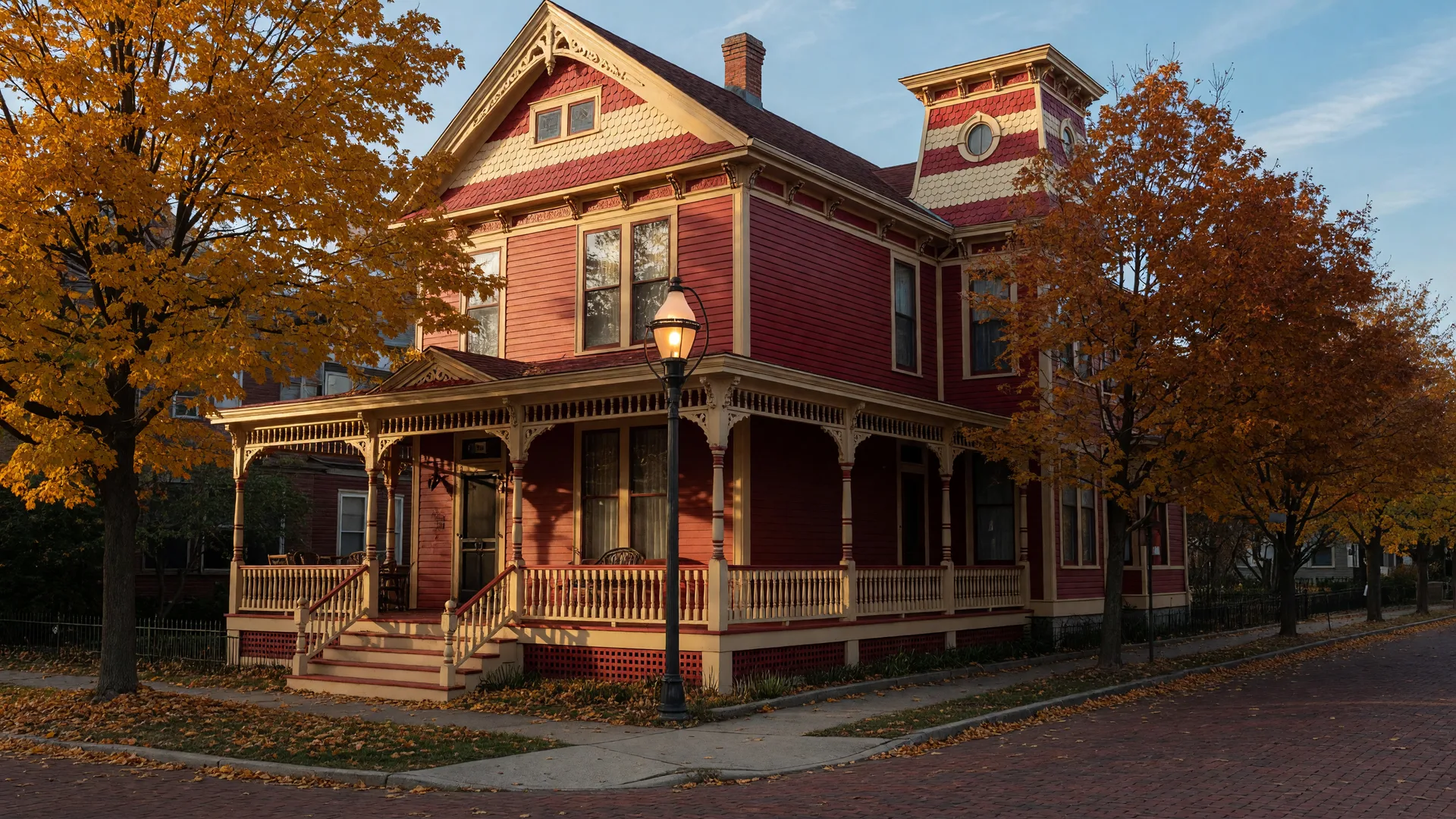
Springfield, Ohio offers one of the region's deepest stocks of Victorian-era housing, and it is often cheaper to buy than almost anywhere nearby: Redfin's vintage-homes filter for Springfield showed a median listing around $175,000 across roughly 108 homes at our 2026 check, well under the statewide median. The catch is the work. Historic homes here are typically pre-1950 builds with aging electrical, plumbing, paint, and foundations, so the purchase price is only half the story. This guide covers the three National Register districts, what houses actually sell for, what inspections turn up, how the city's Certificate of Appropriateness process works, and the state tax credits that can help. All figures were verified against county, city, state, and market sources on October 20, 2026.
Where are Springfield's historic homes concentrated?
Springfield's historic housing stock is concentrated in three National Register of Historic Places districts and a set of individually landmarked properties. The most famous is the South Fountain Avenue Historic District, listed in 1983, which covers about 15 city blocks just south of downtown along South Fountain Avenue and South Limestone Street. It grew quickly from the 1850s through the 1920s as merchants and factory owners built fashionable homes, and today it holds 82 contributing buildings spanning French Second Empire, Queen Anne, Italianate, Arts and Crafts, and Stick-Eastlake styles.
The East High Street Historic District, listed in 1974, is a smaller cluster of mansions east of downtown in Renaissance Revival, Italianate, and Richardsonian Romanesque styles. The city also lists the Springfield Historic District (1987), which captures the 1875 to 1949 building boom in Colonial Revival, Bungalow, Craftsman, and Queen Anne forms. Outside the districts, buyers still find landmark properties such as the Westcott House, Frank Lloyd Wright's 1908 Prairie-style design and the first Wright house built in Ohio, and the Gammon House at 620 Piqua Place, a documented Underground Railroad station.
Figure 1: Springfield's National Register historic districts and notable landmarks, with the styles each district is known for, compiled from Visit Greater Springfield and National Register records.
| District / landmark | Location | Known styles | Note |
|---|---|---|---|
| South Fountain Avenue Historic District | About 15 blocks south of downtown, S. Fountain Ave. and S. Limestone St. | Second Empire, Queen Anne, Italianate, Arts and Crafts, Stick-Eastlake | 82 contributing buildings; grew 1850s to 1920s |
| East High Street Historic District | Cluster of mansions east of downtown near E. High and S. Sycamore Sts. | Renaissance Revival, Italianate, Richardsonian Romanesque | Listed 1974 |
| Springfield Historic District | Multiple blocks citywide | Colonial Revival, Bungalow, Craftsman, Queen Anne | Covers 1875 to 1949 building eras |
| Westcott House | Wittenberg University area | Prairie School | Frank Lloyd Wright, 1908; first Wright house in Ohio |
| Gammon House | 620 Piqua Place | 19th-century vernacular | Documented Underground Railroad station |
For buyers, "historic" in Springfield usually means one of the National Register districts, but local protection also applies through the city's own Springfield Register and the Historic Landmarks Commission. We tell every historic-home buyer to confirm exactly which designation covers the address, because National Register listing and the city's local register trigger different rules, and the designation matters for renovation and tax credits. Our community guides and seller guide cover how that plays out in practice across Clark County.
How much does a historic home in Springfield actually cost?
Prices vary widely because condition varies widely. At our 2026 check, Redfin's "vintage homes" filter for Springfield listed roughly 108 older or historic homes at a median listing price around $175,000, while its Victorian-style filter showed a small set of homes near $165,000. For the whole city, Redfin's most recent snapshot put the median sale price near $153,000 with a median sale price per square foot near $133, a figure echoed by Homes.com's estimate around $143 per square foot. In the South Fountain Avenue district, fixers have listed as low as about $40,000 to $75,000 in recent years, while fully restored landmark houses have reached the $400,000 range.
Figure 2: Reported Springfield home price figures, 2026, as published by Redfin and Homes.com. These are point-in-time listing and sale snapshots, not appraisals, and actual results vary by house and date.
| Measure | Reported figure | Source |
|---|---|---|
| Vintage homes median listing | About $175,000 (about 108 listings) | Redfin, checked October 20, 2026 |
| Victorian-style median listing | About $165,000 (small sample) | Redfin, checked October 20, 2026 |
| Citywide median sale price | About $153,000 | Redfin city snapshot |
| Median sale price per square foot | About $133 | Redfin city snapshot |
| Average value / price per square foot | About $180,500 / about $143 | Homes.com city guide |
| South Fountain district fixers | Roughly $40,000 to $75,000 for fixer-uppers | Recent district listings (varies) |
| Fully restored landmark houses | Can exceed $400,000 | Historical listing activity |
What this means in practice: you can absolutely find a South Fountain Avenue home for well under $100,000, but you should assume that house needs real work. A house priced in the $150,000 to $200,000 range may already have updated systems and a Certificate of Appropriateness history you can review. When buyers ask us what a given budget buys, we pull recent comparable sales street by street, because two blocks apart the condition story can be completely different. That is the same discipline we apply in our property tax guide, where parcel-level numbers matter more than county averages.
What do inspections usually find in a 100-year-old house?
The honest answer is that the four costliest issues are almost always the same four. Most of Springfield's historic stock predates 1950, so expect to look hard at electrical, paint, plumbing, and the foundation. A standard home inspection catches the obvious stuff, but we always recommend the specialized checks below before writing an offer, because each one can move the negotiation by thousands of dollars.
Figure 3: Common inspection findings in older Springfield and Ohio homes with typical repair cost ranges, compiled from HomeGuide, Ohio Pipe Pros, Modernize, and Angi cost data. Ranges are national or Ohio regional estimates for general education, not bids for a specific house.
| System | What inspectors flag | Typical repair range |
|---|---|---|
| Electrical | Knob-and-tube wiring, 60-amp service, ungrounded outlets, undersized panels | Full rewire and removal about $12,000 to $35,000 or more (about $8 to $17 per square foot) |
| Lead paint | Any home built before 1978 may have lead-based paint; dust and soil testing matter | Inspection about $500; certified abatement roughly $1,500 to $5,500 (about $6 to $17 per square foot) |
| Plumbing | Cast iron drain pipes (built before about 1975), tree root intrusion, sewer line condition | Camera scope $150 to $350; partial replacement $1,500 to $6,000; full re-pipe $8,000 to $15,000 or more |
| Foundation | Cracked walls or floors driven by Ohio's clay soils and freeze-thaw cycles; basement water | Crack injection about $450 to $950 per crack; piering about $1,000 to $3,000 per pier; typical single-family projects $9,000 to $20,000 |
A few ground rules we repeat with every historic-home buyer. First, always order a sewer scope and a licensed electrical review in addition to the general inspection. Second, get a lead paint test if children are part of the household plan, and know that the state offers a lead abatement tax credit of up to $40,000 per qualifying pre-1978 dwelling. Third, do not panic at the general inspection: older homes will always list items a new build would not, and the goal is a prioritized repair budget, not a clean slate. These are general-education notes on inspection topics; your licensed inspector and contractor are the ones who price the actual work on the specific house.
Do historic districts mean I can't change anything on the house?
Not at all, but you do need approval for most exterior changes. If a house sits in a designated historic district or is a locally listed property, Chapter 1321 of Springfield's codified ordinances requires a Certificate of Appropriateness from the Historic Landmarks Commission for any change to design, color, texture, material, or exterior features, including construction, reconstruction, alteration, demolition, or adding a sign. That means windows, siding, porch work, roofing materials, paint colors, and even some landscaping elements can trigger review.
The good news is that the system is designed to be navigable. The city's Guidelines for Historic Properties defines three review levels. Level A covers routine maintenance, which generally needs no certificate at all. Levels B and C cover repairs and more significant alterations, and those go through either a staff-level administrative review or a full commission hearing. The commission meets the first Monday of each month at City Hall, 76 East High Street. In our experience the process is transparent: the city publishes its application and guidelines online, and a call to the Planning and Zoning Division before you sign a contract saves a lot of surprises later.
This matters most for two buyer groups: anyone buying a fixer expecting to flip the exterior quickly, and anyone planning energy upgrades like replacement windows. Both are very doable in Springfield's districts, but they require the right order of operations. We recommend reading the city's Guidelines for Historic Properties and the Certificate of Appropriateness ordinance before you commit.
Can tax credits help pay for a historic home renovation?
Yes, and this is where historic home ownership in Ohio gets a real financial advantage. The Ohio Historic Preservation Tax Credit, administered by the Ohio Development Services Agency, covers up to 25% of qualified rehabilitation expenditures on a certified historic structure, capped at $5 million per building. It is a competitive, round-based program, and each round sets aside a share for small and intermediate projects. A certified historic structure is generally one listed on the National Register or contributing to a registered historic district, which is exactly what most of Springfield's historic stock is.
Figure 4: Key terms of the Ohio Historic Preservation Tax Credit, from the Ohio Development Services Agency. This is general education, not tax advice; eligibility and caps are confirmed in the program's current round materials.
| Program element | Detail |
|---|---|
| Credit rate | Up to 25% of qualified rehabilitation expenditures |
| Per-building cap | $5,000,000 |
| Eligible property | Certified historic structure: National Register listed or contributing to a registered historic district |
| Application process | Competitive, round-based through the Ohio Development Services Agency |
| Small / intermediate set-aside | Each round reserves a share for small and intermediate projects |
A separate program helps with the most common pre-1978 problem: the Ohio lead abatement tax credit can cover up to $40,000 of qualified lead abatement work per eligible dwelling. Combine that with the federal rehabilitation credit for income-producing property, and a well-scoped historic renovation project can recover a meaningful share of its cost. We are not tax professionals, and the specifics change with each program round, so we always route buyers to the Ohio Development Services Agency and to their accountant before they commit to a project scope.
Is a historic home in Springfield the right move for you?
A historic home makes sense when you value character, walkable streets, mature trees, and the chance to own a piece of Ohio's architectural history, and when you are honest about the work. It makes less sense when you need move-in-ready condition on a strict timeline or a completely maintenance-free exterior. The numbers in this guide give you a realistic frame: a modest purchase price in the $40,000 to $175,000 range can come with $30,000 to $80,000 or more of prioritized repairs and renovation, which is exactly why the "total cost" conversation matters before the offer, not after.
In our Springfield office we handle historic-home purchases regularly, and the buyers who do best are the ones who get the sewer scope, the electrical review, the lead test, and the Certificate of Appropriateness question answered before they commit. We walk clients through comparable sales on the exact street, estimate the realistic repair budget with licensed contractors, and connect them with lenders and inspectors who understand old construction. If you are considering a house in the South Fountain Avenue district, the East High Street area, or anywhere else in Clark County, start the conversation with the numbers that matter. The Difference is Clear.
Get the real numbers before you write an offer.
Our Springfield team pulls street-level comparables, orders the right inspections, and connects you with the contractors and lenders who understand old construction. Tell us which house or neighborhood you are looking at. The Difference is Clear.
Sources
- Visit Greater Springfield, South Fountain Historic District and Historic Architecture (accessed October 20, 2026).
- National Register of Historic Places, South Fountain Avenue Historic District and East High Street Historic District records (accessed October 20, 2026).
- Redfin, Springfield Housing Market and Springfield Vintage Homes (accessed October 20, 2026).
- Homes.com, Springfield, OH City Guide (accessed October 20, 2026).
- City of Springfield, Guidelines for Historic Properties and Certificate of Appropriateness ordinance (Chapter 1321) (accessed October 20, 2026).
- Ohio Development Services Agency, Ohio Historic Preservation Tax Credit Program (accessed October 20, 2026).
- Repair cost references: HomeGuide (electrical), Ohio Pipe Pros (plumbing), Modernize (foundation), and Angi (lead paint) (accessed October 20, 2026).
Frequently asked questions
Where are Springfield, Ohio's historic homes located?
Most are in the three National Register districts: the South Fountain Avenue Historic District (about 15 city blocks south of downtown with 82 contributing buildings), the East High Street Historic District, and the Springfield Historic District. Landmark properties include the Frank Lloyd Wright Westcott House and the Gammon House, a documented Underground Railroad station at 620 Piqua Place.
How much does a historic home cost in Springfield?
Redfin's vintage-homes filter for Springfield showed a median listing around $175,000 across roughly 108 listings at our October 2026 check. Fixers in the South Fountain Avenue district have listed as low as about $40,000 to $75,000, while fully restored landmark houses have exceeded $400,000. These are point-in-time listing snapshots, not appraisals.
What do inspections usually find in a 100-year-old house in Springfield?
The four costliest systems are electrical (knob-and-tube or 60-amp service; a full rewire runs about $12,000 to $35,000 or more), lead paint in any pre-1978 home, aging cast iron drain pipes (a full re-pipe runs about $8,000 to $15,000 or more), and foundation work from Ohio's clay soils and freeze-thaw cycles. Always add a sewer scope and a licensed electrical review to the general inspection.
Can I change the outside of a historic home in Springfield?
Yes, but most exterior changes to a designated historic property need a Certificate of Appropriateness from the Historic Landmarks Commission under Chapter 1321 of city code. Routine maintenance generally needs no approval; repairs and alterations go through staff or full commission review. The city publishes its guidelines and application online.
Can tax credits help pay for a historic home renovation?
The Ohio Historic Preservation Tax Credit covers up to 25% of qualified rehabilitation expenses, capped at $5 million per building, for certified historic structures, through a competitive round-based application to the Ohio Development Services Agency. A separate Ohio credit covers up to $40,000 of qualified lead abatement per pre-1978 home. This is general education, not tax advice; verify eligibility with the state and your tax professional.