
October 16, 2026 · Beavercreek & Springboro Comparison
Beavercreek vs. Springboro: The 1974 vs. 1994 Median Build Year, the $335K vs. $431K Median Sale, and Fairfield Commons vs. Austin Landing for Retail
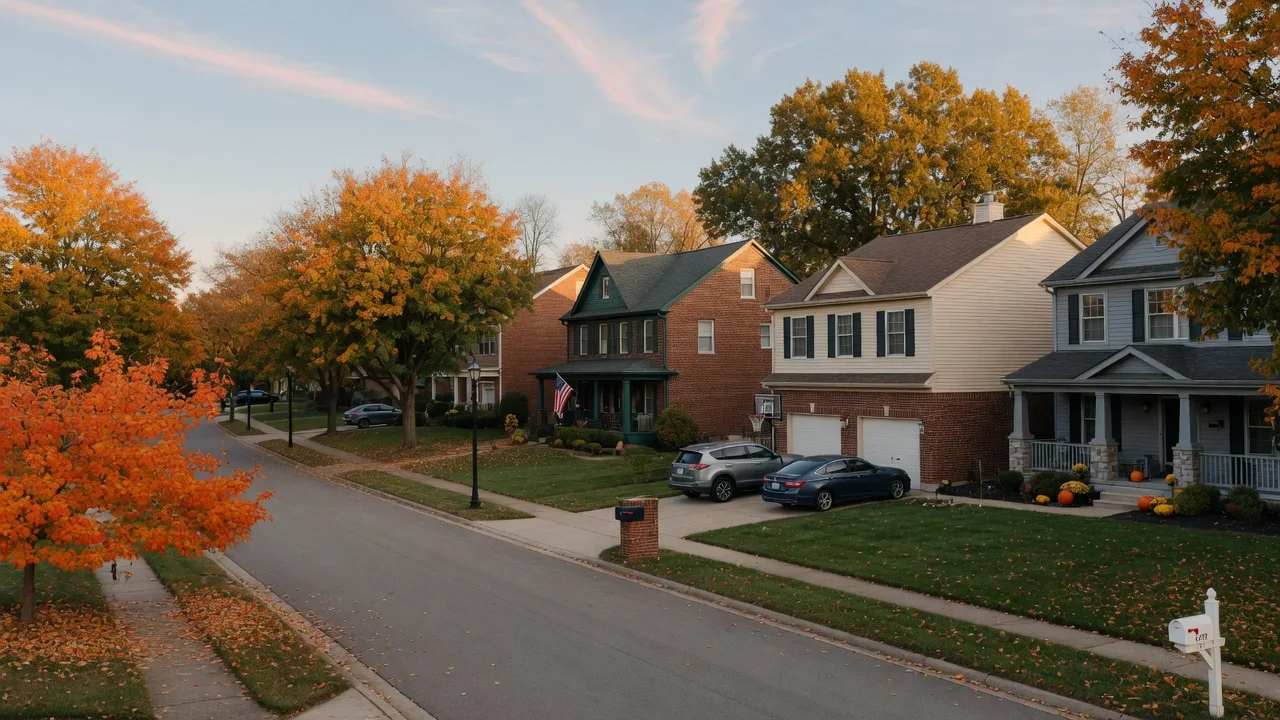
Beavercreek and Springboro are the two south and east Dayton suburbs we are asked to compare most often, and the numbers show why. Beavercreek's median home was built in 1974 and sells near $335,000; Springboro's median home dates to 1994 and sells near $431,000. Both sit on roughly quarter-acre to half-acre lots, but the retail and tax pictures diverge sharply. Beavercreek anchors on the 1.1 million square foot Mall at Fairfield Commons and charges no municipal income tax, with an effective property rate near 2.29 percent. Springboro centers on its historic downtown, the SR 73 retail strip, and Austin Landing on its border, with a 1.5 percent income tax and an effective property rate near 1.37 percent.
The two cities answer the same buyer question in different ways: do you want the fastest-moving east-side market anchored by Wright-Patterson and a regional mall, or the newer, higher-priced south-side market sitting between Dayton and Cincinnati? Neither answer is right or wrong, and this guide sticks to the numbers you can verify: build years, lot sizes, sale prices, tax rates, commute times, and the retail each city actually has. All figures were checked against Greene County and Warren County tax records, the U.S. Census Bureau, county and city sources, and published market and property records on October 16, 2026.
Which city is closer to downtown Dayton: Beavercreek or Springboro?
Beavercreek is the closer of the two to downtown Dayton. It sits along the I-675 corridor east of the city, and most neighborhoods run about 15 to 25 minutes to downtown Dayton while staying 5 to 15 minutes from the Wright-Patterson Air Force Base gates, Ohio's largest single-site employer. Springboro sits south along I-75, about 25 minutes from downtown Dayton and roughly 30 minutes from downtown Cincinnati, with direct highway access at the I-75 and SR 73 interchange (Exit 38). For a household with one commuter tied to Wright-Patterson or downtown Dayton, Beavercreek wins on raw drive time; for a dual-commute household splitting time between Dayton and Cincinnati, Springboro's position between the two metros is the point.
| Destination | Beavercreek | Springboro |
|---|---|---|
| Downtown Dayton | About 15 to 25 minutes via I-675 | About 25 minutes via I-75 |
| Wright-Patterson AFB gates | About 5 to 15 minutes | About 27 miles; roughly 30 to 40 minutes (estimate) |
| Downtown Cincinnati | About 50 to 60 minutes via I-75 | About 30 minutes via I-75 |
| Primary highway access | I-675 at Colonel Glenn Hwy / N Fairfield Rd | I-75 at SR 73 (Exit 38) |
How old are the homes in Beavercreek compared with Springboro?
The single biggest structural difference between the two cities is housing age. Whitepages property records put Beavercreek's median year built at 1974, meaning the typical Beavercreek home is about 50 years old in 2026, and NeighborhoodScout's build-era breakdown shows the largest share of the stock, about 43 percent, was built between 1970 and 1999, with a visible wave of new construction since 2000. Springboro is measurably newer: Homes.com puts its median year built at 1994, a median age of about 30 years, with the heaviest building decade 1990 to 1999 (2,089 units in the Montgomery County portion alone, per the county's community profile) and about 39 percent of the stock built in 2000 or later.
| Metric | Beavercreek | Springboro |
|---|---|---|
| Median year built | 1974 (Whitepages) | 1994 (Homes.com) |
| Median home age, 2026 | About 50 years | About 30 years |
| Peak building era | 1970-1999 (about 43% of stock) | 1990-1999, then 2000-2009 |
| Share built 2000 or later | Visible new-construction wave since 2000 | About 39% (NeighborhoodScout) |
| Typical single-family lot | Roughly 0.25 to 0.5 acre (listing data) | Just over 0.25 acre (Homes.com) |
What do property taxes cost in Beavercreek vs. Springboro?
Both cities are tax-expensive, but in opposite ways. Beavercreek charges no municipal income tax at all, one of only three Ohio cities without one, so it leans on property tax: the combined gross millage runs about 88.19 mills for Beavercreek Township and the Beavercreek school district on Greene County's 2024 rate sheet, and Ownwell puts the median effective rate at about 2.29 percent of home value. That mix may change soon: Beavercreek voters decide a November 3, 2026 ballot measure that would add a 1 percent income tax while cutting city property taxes by 50 percent, effective July 1, 2027 if approved.
Springboro is the reverse. It levies a 1.5 percent municipal income tax, its own city portion of the property bill is just 1.11 mills, which the city's 2025 annual report calls the lowest municipal levy in the region, and the combined gross millage runs about 90.10 mills for Clearcreek Township and the Springboro school district on Warren County's 2025 rate sheet. Ownwell puts Springboro's median effective property rate at about 1.37 percent of home value. The honest comparison, then, is not the property rate alone: it is the property estimate plus the income tax for a specific household, which is a job for the county treasurers' tools and a tax professional, not a rule of thumb.
| Metric | Beavercreek | Springboro |
|---|---|---|
| Combined gross millage | About 88.19 mills (Greene Co. 2024) | About 90.10 mills (Warren Co. 2025, Clearcreek Twp) |
| Median effective rate (Ownwell) | About 2.29% of home value | About 1.37% of home value |
| Municipal income tax | None (one of 3 Ohio cities without one) | 1.5% |
| City's own property levy | n/a (no income tax city) | 1.11 mills (lowest municipal levy in region) |
| County median effective rate | About 1.74% (Greene) | About 1.45% (Warren) |
These rates vary by the exact township and school-district parcel within each city, and Ohio taxes property at 35 percent of appraised value, so the same list price can produce different bills from one side of a municipal line to the other. Treat the table as a comparison tool, not a quote. This is general educational information about property taxes, not tax advice; a tax professional, the Greene County auditor, and the Warren County treasurer can produce the exact figure for a specific address.
Which city has the stronger retail scene: the mall or the border hub?
Retail is where the two cities feel most different day to day. Beavercreek's shopping is anchored by the Mall at Fairfield Commons, a two-level regional mall of about 1.1 million square feet that opened in 1993 and is anchored by Dillard's, JCPenney, and Dick's House of Sport, sitting just off I-675 on North Fairfield Road. Around it, the Colonel Glenn Highway corridor near Wright State University and SR 725 (Dayton-Xenia Road) carry strip centers and big-box retail including a Kroger Marketplace, and The Greene, a lifestyle center, sits on the Beavercreek side of the I-675 interchange.
Springboro's retail is more compact and more spread out. There is a small historic downtown along Main Street with local shops and dining, an SR 73 corridor at I-75 Exit 38 with a Kroger and quick-service restaurants, and the biggest draw sits just over the city line: Austin Landing, a mixed-use center of about 460,000 square feet of retail, dining, and entertainment at I-75 and Austin Boulevard, with Dick's Sporting Goods, Kohl's, Kroger, HomeGoods, Sephora, and TJ Maxx. The practical caveat for a buyer comparing the two is that Austin Landing's address is technically in Miamisburg, about a five-minute drive from most of Springboro, while Fairfield Commons sits inside Beavercreek.
| Metric | Beavercreek | Springboro |
|---|---|---|
| Regional anchor | Mall at Fairfield Commons, about 1.1M sq ft, opened 1993 | Austin Landing (Miamisburg border), about 460K sq ft |
| Notable tenants | Dillard's, JCPenney, Dick's House of Sport | Dick's, Kohl's, Kroger, HomeGoods, Sephora, TJ Maxx |
| Shopping corridors | Colonel Glenn Hwy, SR 725 (Dayton-Xenia Rd), The Greene | Historic downtown Main Street, SR 73 at I-75 Exit 38 |
| Supermarket on the main drag | Kroger Marketplace, 5165 Dayton-Xenia Rd | Kroger, 745 W Central Ave (SR 73) |
What are the school districts in Beavercreek and Springboro?
Beavercreek is served by Beavercreek City Schools and Springboro by Springboro Community City Schools. We are an objective data provider on this point: we do not rank or rate districts, and we encourage every buyer to look at the districts' own published report cards, programming, and attendance boundaries and decide what fits their family. The official sources are gocreek.org for Beavercreek and springboro.org for Springboro. One practical planning note that is purely structural: Beavercreek City Schools does not accept open enrollment, so living inside the boundary is the way in, while Springboro feeds the whole city into one district, though elementary attendance boundaries still vary by street.
What we tell buyers comparing Beavercreek and Springboro
In our experience helping buyers and sellers across Greene County and Warren County, the build-year gap is the difference that shows up first at inspection. A Beavercreek home near the 1974 median is typically on its second or third roof, HVAC system, and window set, so the inspection and the first decade of maintenance deserve real budget. A Springboro home near the 1994 median is just entering that replacement cycle now, which is a different kind of timing question: the systems work, but their useful life is a known horizon rather than a surprise. Both markets move fast, with Springboro's average of about 24 days on market tied with Beavercreek for the fastest in the metro, so a pre-approved buyer with a clear picture of the housing age they are willing to accept is the buyer who wins the address.
The other planning point is the full tax picture. Because Beavercreek has no income tax and Springboro has a 1.5 percent income tax, the property rate alone understates what each city costs in practice. A fair comparison runs the property estimate plus the income tax for the household's actual income, then layers in the pending Beavercreek ballot measure, which, if approved on November 3, 2026, would shift that city's mix toward a 1 percent income tax with a 50 percent cut in city property taxes starting July 1, 2027. Pair that with the commute difference, the housing-age difference, and the retail difference, and the two cities stop looking interchangeable very quickly.
Buyer and Seller Takeaways
- Buyers: Beavercreek's median home dates to 1974 and carries a lower entry price near $335,000; Springboro's dates to 1994 and trades near $431,000. Budget for a second- or third-cycle replacement of roofs, HVAC, and windows on an older Beavercreek home.
- Commuters: Beavercreek is 5 to 15 minutes from the Wright-Patterson gates and 15 to 25 minutes from downtown Dayton; Springboro is about 25 minutes to Dayton and 30 to Cincinnati, which suits dual-commute households.
- Tax planners: Beavercreek has no income tax but a higher effective property rate near 2.29 percent; Springboro has a 1.5 percent income tax and a lower effective property rate near 1.37 percent. Run both for your own income before deciding, and note Beavercreek's November 3, 2026 ballot measure.
- Retail: Beavercreek's about 1.1 million square foot Mall at Fairfield Commons and corridor retail are in-city; Springboro's retail centers on the SR 73 strip, its historic downtown, and Austin Landing about five minutes over the line in Miamisburg.
- Everyone: this is general educational information about housing, taxes, and markets, not legal, tax, or financial advice. Confirm current rates with Greene and Warren county treasurers, confirm school data with the districts, and consult qualified legal, tax, title, and mortgage professionals before you act.
Want the street-level picture of each city? Our Beavercreek neighborhood guide covers the I-675 corridor, Wright-Patterson proximity, and the Fairfield Commons retail zone, and our Springboro neighborhood guide maps the historic downtown and the I-75 side of the market. You can watch live price movement on our Beavercreek market watch and Springboro market watch pages, and our buyer guide walks through inspections, offers, and closing step by step.
Frequently Asked Questions
Which city is newer, Beavercreek or Springboro?
Springboro is newer. Its median year built is 1994 (Homes.com), a median age of about 30 years, with the heaviest building decade 1990 to 1999 and about 39 percent of the stock built in 2000 or later. Beavercreek's median year built is 1974 (Whitepages), a median age of about 50 years, with about 43 percent of its stock built between 1970 and 1999.
Which has higher property taxes, Beavercreek or Springboro?
At the same home value, Beavercreek's effective property rate is higher, near 2.29 percent versus Springboro's near 1.37 percent (Ownwell), because Beavercreek has no municipal income tax. Springboro instead charges a 1.5 percent income tax, so the fair comparison is the property estimate plus the income tax for a specific household, not the property rate alone.
Is Beavercreek closer to downtown Dayton than Springboro?
Yes. Beavercreek is about 15 to 25 minutes from downtown Dayton via I-675 and 5 to 15 minutes from the Wright-Patterson gates. Springboro is about 25 minutes to downtown Dayton via I-75 and roughly 30 minutes to downtown Cincinnati, which is the trade-off for households splitting time between the two metros.
Does Beavercreek or Springboro charge a municipal income tax?
Beavercreek currently charges none, one of only three Ohio cities without an income tax, though voters decide a November 3, 2026 ballot measure that would add a 1 percent income tax and cut city property taxes by 50 percent, effective July 1, 2027 if approved. Springboro charges a 1.5 percent municipal income tax.
Which city has better shopping, Beavercreek or Springboro?
Beavercreek has the larger in-city retail scene: the Mall at Fairfield Commons, about 1.1 million square feet with Dillard's, JCPenney, and Dick's House of Sport, plus corridor retail along Colonel Glenn Highway and SR 725 and The Greene nearby. Springboro's shopping centers on its historic downtown, the SR 73 strip, and Austin Landing, about 460,000 square feet of retail that sits just over the line in Miamisburg, roughly a five-minute drive.
What schools serve Beavercreek and Springboro?
Beavercreek is served by Beavercreek City Schools (gocreek.org), which does not accept open enrollment. Springboro is served by Springboro Community City Schools (springboro.org), which feeds the whole city into one district, with elementary boundaries varying by street. We do not rank districts; the official district sites publish their report cards and programming for each family to review.
Sources
- U.S. Census Bureau QuickFacts, Beavercreek city, Ohio (population 46,549 at the 2020 census; 48,134 estimate as of July 1, 2025)
- Whitepages Property Records, Beavercreek, Ohio (median year built 1974)
- NeighborhoodScout, Beavercreek Real Estate (about 43% of housing stock built 1970-1999)
- Homes.com, Springboro City Guide (median year built 1994; typical lot just over 0.25 acre)
- NeighborhoodScout, Springboro Real Estate (about 39% of stock built 2000 or later)
- Montgomery County Community Profile, Springboro (peak building decade 1990-1999, 2,089 units in the Montgomery County portion)
- Greene County, 2024 Tax Rates (Beavercreek Twp / Beavercreek CSD combined gross about 88.19 mills)
- Warren County Treasurer, Rates of Taxation 2025 (Clearcreek Twp / Springboro CSD combined gross about 90.10 mills)
- Ownwell, Beavercreek Property Taxes (median effective rate about 2.29% of home value)
- Ownwell, Springboro Property Taxes (median effective rate about 1.37% of home value)
- City of Beavercreek, City Taxes (no municipal income tax; one of three Ohio cities without one)
- City of Beavercreek, Income Tax (November 3, 2026 ballot measure: 1% income tax with a 50% cut in city property taxes, effective July 1, 2027 if approved)
- City of Springboro, Business Tax Information (municipal income tax of 1.5%)
- City of Springboro, Annual Report 2025 (city property levy 1.11 mills, lowest municipal levy in the region)
- The Mall at Fairfield Commons (two-level regional mall, about 1.1M sq ft, opened 1993; Dillard's, JCPenney, Dick's House of Sport)
- Austin Landing Retail Directory (mixed-use center, about 460K sq ft; Dick's, Kohl's, Kroger, HomeGoods, Sephora, TJ Maxx)
- City of Beavercreek, Community (retail corridors including The Greene and Colonel Glenn Highway)
- Springboro Chamber of Commerce, Shopping Directory (historic downtown and SR 73 retail)
- Beavercreek City Schools (official district site)
- Springboro Community City Schools (official district site)
- Redfin, Beavercreek Housing Market (median sale about $334,832 in July 2026)
- Drive-time references (Beavercreek to Cincinnati about 50 to 60 minutes; Beavercreek to downtown Dayton 15 to 25 minutes via I-675; Springboro to Dayton about 25 minutes and to Cincinnati about 30 minutes via I-75; Springboro to Wright-Patterson about 27 miles, roughly 30 to 40 minutes estimated)
- Housing age, tax, retail, commute, and market details reviewed and verified against the sources above on October 16, 2026. Figures flagged as estimates, including the Wright-Patterson drive from Springboro and the tax-bill comparisons, should be confirmed with the Greene County auditor, the Warren County treasurer, and each city before you rely on them.
Share This Post
Suggested social caption
"Comparing Beavercreek and Springboro? The median Beavercreek home was built in 1974 and sells near $335K; the median Springboro home dates to 1994 and sells near $431K. One has the 1.1 million sq ft Mall at Fairfield Commons and no income tax; the other has a historic downtown, Austin Landing on the border, and a 1.5% income tax. Full data tables from Glasshouse Realty."
Published October 16, 2026 · Updated October 16, 2026 · Information verified on October 16, 2026 against Greene County and Warren County tax records, the U.S. Census Bureau, city sources, district sites, and the market and property sources listed above. Build years, tax rates, and market figures change; confirm current requirements with the Greene County auditor, the Warren County treasurer, and qualified legal, tax, title, and mortgage professionals before you act.
Comparing Beavercreek and Springboro?
Whether you are weighing the newer south-side streets of Springboro or the faster-moving east-side market of Beavercreek, we can pull the real numbers for the homes you are considering: sale prices, build years, tax bills, and commute times. We know Greene and Warren counties street by street.
Talk to an AgentBuying in Beavercreek or Springboro?
Whether you are buying, selling, or just weighing the move, a Glasshouse agent can show you the real Greene and Warren county markets, the build-year and tax questions that matter for the home you are considering, and the communities that fit your life.
No pressure, no guesswork. Just honest, local answers from a team growing across Dayton and the Miami Valley.
Schedule a Consultation