
September 1, 2026 · Neighborhood Guides
Best Neighborhoods in Dayton Ohio for Commuters: Highway Access, Wright-Patt, and Downtown
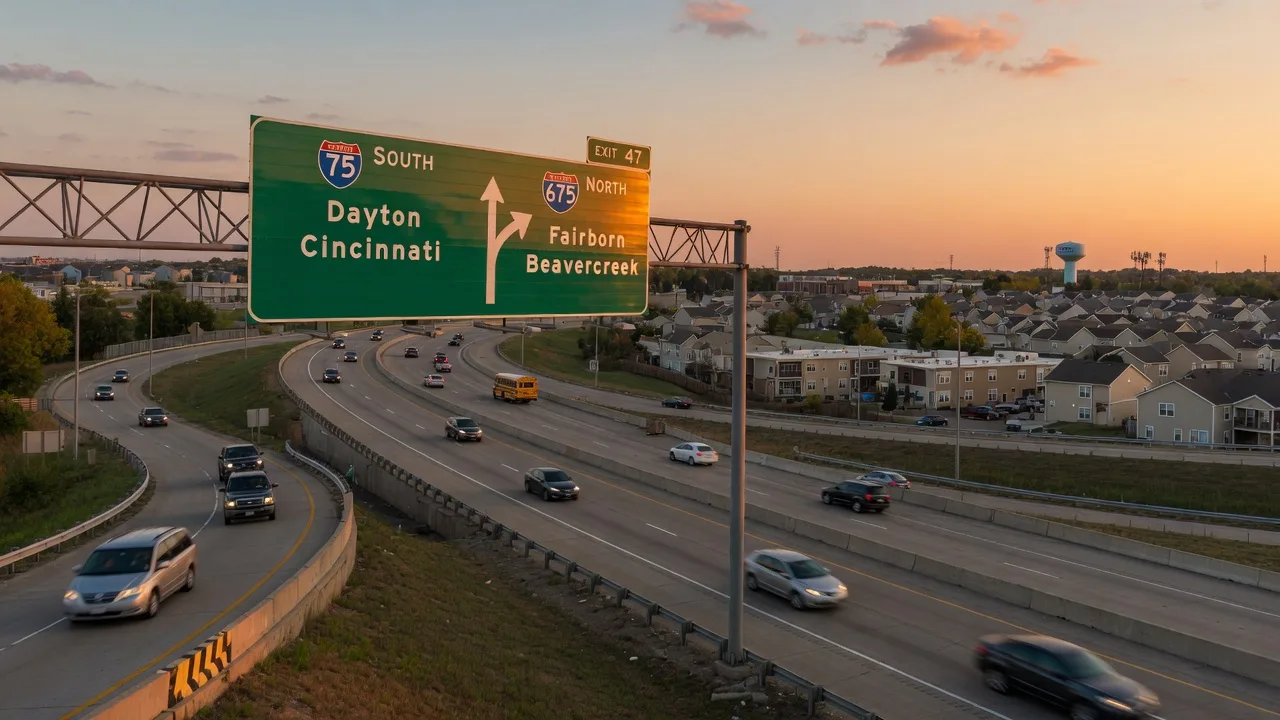
For homebuyers in the Dayton Ohio metro area, commute time is one of the most important factors in choosing where to live. Whether you work at Wright-Patterson Air Force Base, commute to downtown Dayton, or travel between Miami Valley communities for your job, the neighborhood you choose can mean the difference between a 15-minute drive and a 45-minute slog. The Dayton area is crisscrossed by I-75, I-675, and US-35, making it one of Ohio's most accessible mid-sized metros — but some neighborhoods offer significantly better commute options than others. Here is our guide to the best Dayton neighborhoods for commuters in 2026.
Beavercreek: Best for Wright-Patterson Commuters
If you are stationed at or employed by Wright-Patterson Air Force Base, Beavercreek is arguably the most convenient place to live. Located directly adjacent to the base's eastern boundary, Beavercreek offers a commute of less than 10 minutes to the Wright-Patt gates. Residents also enjoy easy access to I-675, which connects to I-70 and I-75 for trips across the region.
Beyond its commute advantages, Beavercreek features excellent schools, abundant shopping at The Greene Town Center, and a robust inventory of single-family homes ranging from entry-level ranches to executive-style properties. For military families and civilian defense contractors alike, Beavercreek remains the top commuter choice.
Centerville: Best for Southern Corridor Commuters
Centerville sits along the I-675 southern corridor, making it an ideal base for commuters heading to downtown Dayton (20 minutes), Wright-Patt (20 minutes), or south toward Cincinnati (about 40 minutes). The neighborhood is also close to Austin Landing, a major employment hub with corporate offices and retail.
Centerville's appeal to commuters is bolstered by its highly rated school system, extensive parks, and well-planned road network. The community offers a mix of established neighborhoods with mature trees and newer developments near the southern edge of the city. For professionals who split their time between Dayton and Cincinnati, Centerville is the sweet spot.

Huber Heights: Best for I-70 Access and Affordability
Huber Heights is one of Dayton's most affordable suburbs and offers direct access to I-70, making it a strong choice for commuters who travel east toward Springfield or Columbus, or west toward the Indiana border. The neighborhood also sits near the intersection of I-70 and I-75, providing quick routes to both Wright-Patt (15 minutes) and downtown Dayton (15 minutes).
Huber Heights has seen consistent new construction in recent years, and its housing prices remain below the Dayton metro average. For first-time buyers or families who need a short commute to multiple employment centers without paying a premium, Huber Heights delivers exceptional value.
Kettering: Best for Downtown Dayton Access
Kettering borders Dayton's southern edge and offers some of the shortest commute times to downtown. With direct access to I-75 and Stroop Road, most Kettering neighborhoods are 10 to 15 minutes from downtown Dayton. The city also provides easy access to the southern suburbs and Wright-Patterson via Route 444 and I-675.
Kettering is known for its charming mid-century homes, strong civic engagement, and extensive park system. Its central location makes it a favorite for professionals who want urban access with suburban character. The city's bus system and bike-friendly streets offer alternatives for those who want to reduce their car dependence.
Tipp City: Best for I-75 North Corridor Commuters
Tipp City, located about 15 miles north of Dayton along I-75, is a growing community that attracts commuters who work in the northern Miami Valley corridor. The drive to downtown Dayton is about 20 minutes, and access to I-75 makes it easy to reach Troy, Piqua, and Sidney.
Tipp City offers small-town charm with historic downtown shops, a popular farmers market, and newer residential developments. For commuters who prefer a quieter pace of life but need reliable highway access to Dayton's employment centers, Tipp City is increasingly popular.
| Neighborhood | To Downtown Dayton | To Wright-Patt | Highway Access |
|---|---|---|---|
| Beavercreek | 12 min | 5 min | I-675 |
| Centerville | 20 min | 18 min | I-675 |
| Huber Heights | 15 min | 12 min | I-70, I-75 |
| Kettering | 10 min | 15 min | I-75 |
| Tipp City | 20 min | 25 min | I-75 |
| Springboro | 22 min | 20 min | I-75, I-675 |
| Oakwood | 5 min | 10 min | I-75, SR-48 |
| Fairborn | 12 min | 5 min | I-675, US-35 |
Oakwood: Best for Walk-to-Work Urban Commuters
For commuters who work in downtown Dayton, Oakwood offers the shortest commute in the region — roughly 5 minutes by car and less than 15 minutes by bike. Some Oakwood neighborhoods are even within walking distance of downtown. Its location along the southern edge of Dayton proper puts residents at the intersection of urban convenience and suburban quality of life.
Oakwood's historic homes, tree-lined streets, and top-rated schools make it one of Dayton's most desirable neighborhoods. While home prices here are higher than in most other Dayton suburbs, the commute savings and lifestyle benefits are significant for downtown professionals.
What to Consider When Choosing a Commuter Neighborhood
Beyond drive times, here are a few factors that can make or break a commuter-friendly neighborhood in Dayton:
- Highway proximity vs. surface street traffic. A neighborhood close to an on-ramp can save 10 minutes per trip compared to one that requires surface street driving to reach the highway.
- School districts. Commuter-friendly neighborhoods near Wright-Patt or downtown often have different schools than the suburbs. If school quality matters, include that in your decision. See our Dayton school districts and neighborhoods guide for details.
- Alternate routes. I-75 and I-675 can experience congestion during peak hours. Some neighborhoods offer alternative routes via US-35, SR-4, or local arterials that can bypass the worst traffic.
- Future development. Check what new housing, commercial development, or road projects are planned in areas you are considering. Growth patterns can change commute dynamics significantly.
Navigating the Dayton Commute
Whether you are moving to Dayton for a job at Wright-Patterson, transferring to the area for a corporate role, or simply looking for a shorter commute, the right neighborhood makes all the difference. The Glasshouse Realty team knows the Miami Valley's traffic patterns, school zones, and commute corridors inside out. We can help you find a home that works for your schedule and your lifestyle. Explore our full neighborhood directory or call (937) 949-0006 to speak with a local agent.
Relocating to Dayton for Work: Resources for Newcomers
If you are relocating to the Dayton area for a new job, we have several resources to help you get oriented. Our relocating to Dayton guide covers everything from school enrollment to utility setup. We also have specific guides for Wright-Patterson Air Force Base personnel and for professionals relocating to Dayton for work. For a bird's-eye view of how Dayton compares to other Ohio cities, see our cost of living comparison.
For first-time buyers navigating the Dayton market, our buyer resources page and first-time homebuyer guide provide step-by-step help for making an offer, securing financing, and closing on your Dayton home.
Looking for the perfect commuter-friendly home in Dayton?
Let Glasshouse Realty help you find a neighborhood that matches your commute needs and lifestyle. With 14 offices across Ohio, our agents know every highway exit and neighborhood shortcut.
Contact an AgentFrequently Asked Questions
What is the best neighborhood in Dayton for commuting to Wright-Patterson AFB?
Beavercreek and Fairborn are the most convenient neighborhoods for Wright-Patterson commuters, both offering 5-minute drives to the base gates. Beavercreek provides more upscale housing and shopping, while Fairborn offers more affordable options.
How long is the average commute in Dayton Ohio?
The average commute time in the Dayton metro area is approximately 22 minutes, well below the national average of 27 minutes. Most Dayton suburbs offer commute times of 15 to 25 minutes to downtown and major employment centers.
Which Dayton neighborhoods have the easiest highway access?
Huber Heights (I-70 and I-75), Kettering (I-75 and I-675), and Centerville (I-675) offer the best highway access in the Dayton area. These neighborhoods provide quick routes to downtown, Wright-Patt, and regional destinations.
What is the shortest commute to downtown Dayton?
Oakwood offers the shortest commute to downtown Dayton at approximately 5 minutes by car. Kettering is also convenient at about 10 minutes. Both neighborhoods are located along Dayton's southern border.
Published September 1, 2026 · Updated September 1, 2026
The Difference is Clear
300+ agents, 14 offices, zero desk fees. Glasshouse Realty is the independent brokerage that puts agents and clients first.
Join Glasshouse RealtyMoving to Dayton and need help finding the right neighborhood?
Our agents know every commute corridor. Let us match you with the perfect location for your lifestyle and work schedule.
Local expertise. The Difference is Clear.
Schedule a Consultation