
October 28, 2026 · Tax Guide
Cleveland CRA Tax Abatements: Finding the 15-Year Abated New Builds in Ohio City, Detroit-Shoreway, and Tremont, With the 85% vs. 100% Math and the $350,000 Cap
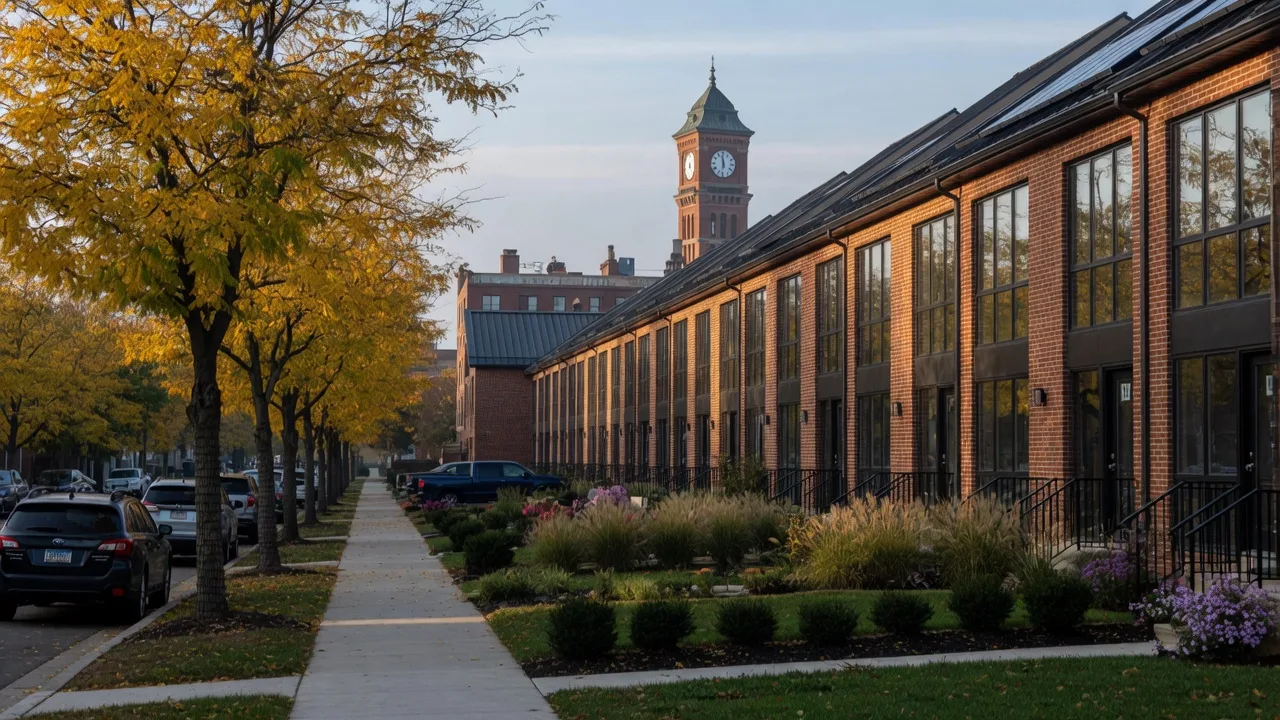
Cleveland's Community Reinvestment Area (CRA) tax abatement runs 15 years and is attached to the property, not the owner, so a buyer of a new or fully renovated home in Ohio City, Detroit-Shoreway, or Tremont can inherit a tax break worth roughly $6,600 to $8,800 a year. Since January 1, 2024, new single-family construction in these near-West Side neighborhoods qualifies at an 85 percent abatement rate with a $350,000 value cap, while projects approved under the earlier program, and a smaller set that qualify for the full 100 percent, carry the complete exemption. This guide maps the program rules, the street-level developments where abated homes are actually selling, and the exact way to verify a listing's abatement status before you make an offer.
What changed in Cleveland's CRA tax abatement program in 2024?
For years, Cleveland's blanket policy under Ordinance 244-2017 gave 100 percent abatement for 15 years to almost any qualifying improvement citywide. The City of Cleveland replaced that with Ordinance 482-2022, which took effect January 1, 2024, and divided the city into three CRA subareas based on market strength. All abatements still run 15 years, but the rate now depends on where the home sits. Projects that submitted a complete schematic design review to the Planning Commission by December 2023 were grandfathered under the old 15-year, 100 percent terms, which is why some new builds on the market today still advertise the full 100 percent exemption while everything approved since gets less.
Table: Cleveland's CRA residential tax abatement tiers under the current program, effective January 1, 2024, with the single-family caps published in the city's 2024 program chart. Ohio City, Tremont, and most of Detroit-Shoreway fall in the Market Rate tier. Verify the exact subarea for any parcel with the City of Cleveland Department of Community Development, accessed October 28, 2026.
| Subarea | Abatement Rate | Single-Family Cap | What It Covers |
|---|---|---|---|
| CRA 1, Market Rate | 85% | $350,000 new construction / $450,000 rehabilitation | Ohio City, Tremont, most of Detroit-Shoreway, and other established near-West Side and central areas |
| CRA 2, Middle Market | 90% | $400,000 | Middle-market neighborhoods across the city |
| CRA 3, Opportunity | 100% | $450,000 | The city's lowest-value areas, the highest-reward tier |
Two other routes to a full 100 percent abatement exist under the current rules. Projects where every unit is affordable to families at or below 80 percent of the area median income qualify for the complete exemption, and a new "aging in place" category created in 2024 offers a 15-year, 100 percent abatement for new homes built to aging-in-place design standards. As of the city's most recent reporting, no abatements had yet been approved under that aging-in-place category, but the option is on the books for builders willing to meet the standards.
How does the 15-year CRA abatement actually save money?
The abatement does not erase the whole tax bill. It cancels most of the increase in assessed value created by the new construction or the renovation, on top of what the land and any pre-existing structure were worth. Ohio taxes 35 percent of a home's appraised value as assessed value, and the City of Cleveland's share of Cuyahoga County property taxes falls in a range around 2 to 2.3 percent of market value once House Bill 920 reduction factors are applied. Every year, the owner still pays the tax on the land itself, which typically runs $1,500 to $2,500, plus the 15 percent of the improvement tax that an 85 percent abatement leaves in place.
Table: Illustrative 15-year CRA abatement savings for a $350,000 new-construction single-family home in a Market Rate (CRA 1) neighborhood such as Ohio City. Figures use Ohio's 35 percent assessment ratio and Cuyahoga County's published effective residential millage range; every parcel varies, and the cap and rate you actually get depend on the parcel's subarea and the project's approval date. Illustrative estimate, accessed October 28, 2026.
| Line Item | 85% Abatement (current program) | 100% Abatement (grandfathered / Opportunity) |
|---|---|---|
| Home value used for the abatement | $350,000 (CRA 1 cap) | $350,000 |
| Assessed value at 35% | $122,500 | $122,500 |
| Full annual tax on that value | about $7,800 to $10,300 | about $7,800 to $10,300 |
| Annual tax saved | about $6,600 to $8,800 | about $7,800 to $10,300 |
| 15-year total saved | roughly $100,000 to $130,000 | roughly $117,000 to $155,000 |
| Still due every year | land tax, 15% of the improvement tax, and tax on value above the cap | land tax and tax on value above the cap |
In our work helping buyers close on new construction across Cleveland's near-West Side, the number that surprises people is not the savings, it is the cap. A townhome listed at $550,000 in Ohio City only carries the abatement on the first $350,000 of value in a Market Rate area, so the tax on the $200,000 above the cap is charged at the full rate for the entire 15 years. We always pull the exact abated and taxable values from the county's parcel record before a client sets their budget, because the "tax abated" marketing line can hide a meaningful full-rate tail on a higher-priced home.
Which neighborhoods qualify, and at what rate?
Ohio City, Tremont, and most of Detroit-Shoreway are classified as Market Rate (CRA 1) areas, so new single-family and two-family construction there qualifies at 85 percent for 15 years, capped at $350,000 for new construction and $450,000 for rehabilitation. That classification reflects a real estate market strong enough to draw investment without the deepest subsidy, which is exactly what the 2024 restructure was designed to acknowledge. The practical result for a buyer is that most new builds in these three neighborhoods carry the 85 percent tier, not the 100 percent tier the old program used to deliver.
The grandfathered exception matters at street level. Projects that reached a complete schematic design review by December 2023 kept the old terms, which is why a handful of newer townhome communities still advertise a full 15-year, 100 percent abatement even though the program changed. When you see a listing that says "100 percent tax abated," it is worth asking which of three things is true: the project was grandfathered under the old program, the parcel sits in an Opportunity (CRA 3) area, or the developer is describing the program rather than the parcel's actual approval. The county parcel record and a written confirmation from the city settle it.
Where are the abated new builds actually selling in these three neighborhoods?
Published listings and development announcements give a street-level picture of where abated new construction is concentrated. In Detroit-Shoreway, the OKO cluster-home community on West 58th Place between West 58th and West 59th, near Detroit Avenue, has detached townhomes advertised with a 15-year, 100 percent abatement around the $679,999 range, and the West 58th Townhomes at 1968 West 58th Street are marketed as qualifying for the full 15-year abatement. Near the Gordon Square Arts District, Greenlight Building Company's townhomes at 1352 West 78th Street (completed spring 2026) and the three-unit Edgewater South collection at 1367 West 74th Street list with abatement eligibility, and close to 300 residential units were under construction around Gordon Square per local development reporting in mid-2026.
In Ohio City, the Walworth Pointe townhome community near West 25th and Lorain, steps from the West Side Market and the RTA Red Line, is under construction with a 15-year abatement, while Vine Court townhomes off West 25th in Hingetown have been listed with a full city abatement through 2034. SoLo Homes and Lofts infill development is rebuilding the housing stock along West 26th, West 29th, and West 30th, with the 109-unit Ambler Apartments rising at 2166 West 26th Street. In Tremont, the Burik Luxury Townhomes by Christoff Group on Columbus Road in Duck Island, six units around 2,000 square feet each from about $699,000, were announced in 2025 with abatement attached.
Table: Median sale price context for the three Market Rate (CRA 1) neighborhoods, from published market trackers. Figures vary by source, date, and metric, so treat them as context for budgeting rather than an exact value for any single home. Sources are listed below, accessed October 28, 2026.
| Neighborhood | Recent Median Sale Price | Source and Period |
|---|---|---|
| Ohio City | about $315,000 | Redfin neighborhood tracker, 2026 |
| Tremont | about $405,000 (12-month rolling) | Homes.com neighborhood tracker, 2026 |
| Detroit-Shoreway | about $275,000 | Redfin neighborhood tracker, 2026 |
How do you verify that a specific home actually carries the abatement?
Cleveland's property records live with the Cuyahoga County Fiscal Officer, who operates the MyPlace parcel search at myplace.cuyahogacounty.us. Search any address by parcel number or owner name and the parcel's general information screen shows the land use and tax abatement code, while the tax and assessment screens show the abated taxable value versus the full taxable value. A home with an active abatement will show a lower taxable value than its assessed value would otherwise imply, and that gap is the dollar value of the benefit.
Because a listing that says "qualifies for" or "eligible for" abatement is not the same as a granted abatement, we advise buyers to get two confirmations: the parcel's abatement code on MyPlace, and a written statement from the City of Cleveland Department of Community Development that the abatement was granted and tied to the property's building permit. The city only grants abatements for work completed under a valid permit from the Department of Building and Housing that meets the Cleveland Green Building Standard and receives a Certificate of Occupancy, so the permit trail is the ground truth. If the abatement is real, the county records will show it, and a title professional can confirm it remains in effect at closing.
Does the abatement transfer when an abated home is resold?
Yes. The CRA abatement is attached to the property, not the original buyer, and it transfers to the next owner for the remainder of the 15-year term. For owner-occupied single-family homes, the benefit typically continues as long as the new buyer is an owner-occupant. That transferability is a large part of why abated new builds trade at a premium in the resale market: the remaining years of tax savings are a real cash value a seller can document with the county records. For multifamily projects, the affordability covenants that keep the abatement in force can be lost if the owner does not meet the rental set-aside requirements, so the rules differ once you move past single-family and two-family homes.
What should a buyer check before making an offer on an abated new build?
Here is the checklist we walk through with clients considering new construction in Ohio City, Detroit-Shoreway, or Tremont. Every item is verifiable with public records, and none of it is a shortcut you should take a builder's word on.
- Pull the parcel on MyPlace and read the abatement code, the abated taxable value, and the full taxable value side by side. The gap is the savings.
- Confirm the project's approval date. Approved before December 2023 means the old 100 percent terms likely apply; approved after means the current 85 percent tier in these neighborhoods.
- Check the cap against the price. A home above $350,000 in a Market Rate area carries full-rate tax on everything above the cap for all 15 years.
- Ask for written confirmation from the City of Cleveland that the abatement was granted and tied to the property's building permit, and that the work met the Cleveland Green Building Standard and received its Certificate of Occupancy.
- Have your title professional verify the abatement remains active at closing, and confirm with the county what the bill will look like once the remaining term ends.
- Run the full-year budget on the land tax and the non-abated portion, not just the discounted number, so the post-abatement payment is no surprise at year 16.
For the wider Cleveland picture, see our Greater Cleveland region page, our Ohio City versus Tremont neighborhood guide for how the two communities compare block by block, our Cuyahoga County Board of Revision appeal guide for the day the abatement ends and your bill jumps, and our RITA income tax guide for Cleveland suburbs for the income tax side of the same budget question.
Frequently Asked Questions
How much does a Cleveland CRA tax abatement save a buyer each year?
On a $350,000 new-construction home in a Market Rate area at the 85 percent rate, the annual savings typically run about $6,600 to $8,800, or roughly $100,000 to $130,000 over the full 15-year term, depending on the parcel's effective tax rate. A grandfathered 100 percent abatement on the same home saves about $7,800 to $10,300 a year. Buyers still pay the land tax every year, and in Market Rate areas, the tax on any value above the $350,000 cap.
Does a Cleveland tax abatement transfer to the new owner when the home is resold?
Yes. The abatement is attached to the property rather than the original buyer and transfers for the remainder of the 15-year term, usually as long as the new buyer is an owner-occupant. That is why abated new builds carry a premium in the resale market: the remaining tax savings are a documented cash value. Multifamily projects have affordability covenants that can be lost, so the rules differ above single-family and two-family homes.
Which Cleveland neighborhoods get the 100 percent abatement under the current program?
Under the program in effect since January 1, 2024, the full 100 percent rate applies in CRA 3 Opportunity areas, to projects where every unit is affordable to families at or below 80 percent of the area median income, and to new homes built to the aging-in-place standard. Ohio City, Tremont, and most of Detroit-Shoreway are Market Rate (CRA 1) areas at 85 percent. Some newer communities still advertise 100 percent because they were grandfathered under the pre-2024 program, which is worth confirming on the parcel record.
How do I check whether a specific house actually has the abatement?
Search the address on the Cuyahoga County Fiscal Officer's MyPlace parcel search at myplace.cuyahogacounty.us. The parcel's tax and assessment screens show the abated taxable value versus the full taxable value, and a gap between them is the active abatement. For final confirmation, get a written statement from the City of Cleveland Department of Community Development that the abatement was granted and tied to the property's building permit.
What is the cap on an abated home in Ohio City or Tremont?
In a Market Rate (CRA 1) area, the abatement value is capped at $350,000 for new construction and $450,000 for rehabilitation. Anything above the cap is taxed at the full rate for the entire 15-year term. Middle Market areas cap at $400,000 and Opportunity areas at $450,000. Checking the capped value against the purchase price is an essential step before budgeting for an abated home.
What happens when the 15-year abatement expires?
At the end of the 15-year term, the home is assessed at its full value and the owner pays the complete property tax bill, including the portion that was abated. That is typically a step up in the annual payment, so it is worth planning for from day one. If the final assessed value looks too high, Ohio's annual Board of Revision complaint window (January 1 to March 31) is the route to challenge it.
Sources
- City of Cleveland: Residential Tax Abatement program page
- City of Cleveland: 2024 Tax Abatement Program Chart (updated August 2025)
- City of Cleveland: online applications open for the updated CRA-based residential tax abatement (February 12, 2024)
- cleveland.com: Cleveland's new tax abatement rules are in play, online applications open (February 2024)
- Cleveland City Council: restructuring residential tax abatement (Ordinance 482-2022 background)
- Progressive Urban: the City of Cleveland has a new tax abatement policy (May 2024)
- Signal Cleveland: how Cleveland's aging-in-place city property tax break works
- Signal Cleveland: CMSD forgoes millions from tax abatements
- Cuyahoga County Fiscal Officer: MyPlace property search (abatement fields on parcel records)
- Cuyahoga County Treasurer: tax rates by community, tax year 2024 / current year 2025
- cleveland.com: how property tax bills work in Cuyahoga County and the HB 920 effect
- NEOtrans: Gordon Square building spree accelerates (August 2026)
- NEOtrans: SoLo developments rebuild Ohio City housing stock (February 2026)
- Cleveland Jewish News: Christoff Group announces Tremont development (Burik Luxury Townhomes, 2025)
- Redfin: Ohio City housing market tracker
- Homes.com: Tremont recently sold prices
- Redfin: Detroit-Shoreway housing market tracker
Reporting period: City of Cleveland Department of Community Development program materials and 2024 program chart (updated August 2025), the city's February 2024 application notice, Cuyahoga County Fiscal Officer parcel records, county tax rate schedules, and published market and development reporting, accessed October 28, 2026. This guide is general market education, not legal, tax, financial, or mortgage advice. Tax abatement rules, caps, and approval terms can change, and every parcel differs; verify the current program with the City of Cleveland and the Cuyahoga County Fiscal Officer, and consult qualified tax, legal, title, and mortgage professionals for your specific situation.
Social caption: New guide: Cleveland's CRA tax abatement, decoded. How the 15-year abatement really works in Ohio City, Detroit-Shoreway, and Tremont, the 85% vs 100% difference, the $350,000 cap, and how to verify a listing before you offer. Link in bio. #ClevelandRealEstate #OhioCity #Tremont #DetroitShoreway #TaxAbatement #GlasshouseRealty
Published October 28, 2026 · Updated October 28, 2026
Looking at an abated new build in Cleveland?
A Glasshouse Realty agent can pull the parcel record on MyPlace, walk you through the abatement terms and the cap math, and help you compare new construction across Ohio City, Detroit-Shoreway, and Tremont. No obligation, just the numbers, explained clearly.
Talk to a Glasshouse AgentGet a local read on an abated home before you offer.
Our agents know the Ohio City, Detroit-Shoreway, and Tremont markets block by block. We can help you verify abatement status, run the cap math, and understand what the tax bill looks like after year 15.
No pressure. Just the parcel records and the market data, from agents who work in these neighborhoods every day.
Schedule a Consultation