
October 14, 2026 · Tax Guide
The RITA Tax Trap for Cleveland Suburbs: What a 2.0% Income Tax in Strongsville, Beachwood, or Brecksville Really Costs
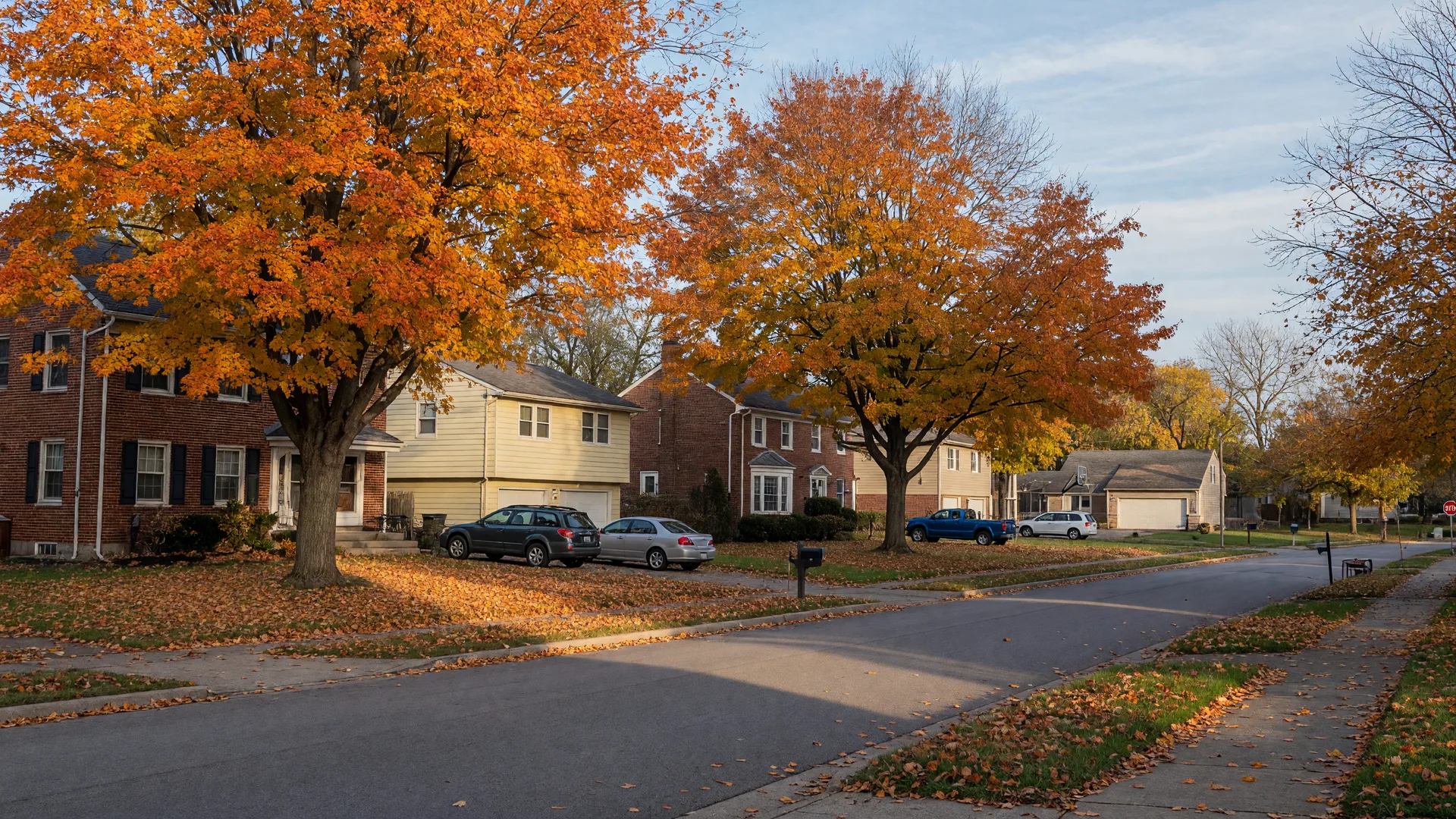
Strongsville, Beachwood, and Brecksville, three Cuyahoga County suburbs, each levy a 2.0 percent municipal income tax collected by the Regional Income Tax Agency (RITA), and each charges it to residents no matter where they work. The surprise for buyers is not the rate itself: it is the credit structure, the mid-year move rules, and the quarterly payment deadlines that arrive after closing. A Strongsville resident who works in Cleveland, where the city income tax is 2.5 percent, pays Cleveland 2.5 percent and still owes Strongsville 0.125 percent because of the city's 75 percent credit factor. A Beachwood or Brecksville resident in the same job owes nothing extra, because both cities credit 100 percent of tax paid to a work city, capped at 2.0 percent. Here is the street-level breakdown, with the rates, the penalties, and the closing checklist.
What exactly is RITA, and which Cleveland suburbs use it?
RITA, the Regional Income Tax Agency, is the Ohio agency that administers municipal income tax for more than 400 cities and villages across the state. When you live in a RITA-member city, you file your local income tax return with RITA rather than with the city directly, and RITA distributes the money to the city. Strongsville, Beachwood, and Brecksville are all RITA members, as are North Olmsted (a member since 1972) and Parma Heights (which moved to RITA on January 1, 2021).
The contrast matters when you compare suburbs. The City of Cleveland does not use RITA: it collects its 2.5 percent income tax through its own Central Collection Agency (CCA), a division of the city's finance department. Lakewood administers its own 1.5 percent tax through a municipal income tax division, and Parma collects its own 2.5 percent tax directly. The agency that sends the bill differs by city, but the obligation is the same: the tax follows your residence, not your employer.
How much does a 2.0% municipal income tax cost in Strongsville, Beachwood, or Brecksville?
All three cities set their resident rate at 2.0 percent, which is a tax on your income, not on your home. On $80,000 of taxable income the annual bill is $1,600; on $100,000 it is $2,000; on $150,000 it is $3,000. The rate is not the whole story, because the credit for tax paid to a work city differs, and that difference changes the bottom line for anyone who commutes into Cleveland or another city with its own income tax.
Table: Municipal income tax, property tax, price, and commute comparison for Strongsville, Beachwood, and Brecksville. Income tax rates and credit factors are from RITA member pages; property rates are Cuyahoga County tax schedules; prices are published 2026 market medians; commute estimates are geography-based approximations for typical conditions, accessed October 14, 2026.
| City | Income Tax Rate | Credit Factor | Credit Cap | Effective Property Rate | 2026 Median Price | Drive to Downtown Cleveland |
|---|---|---|---|---|---|---|
| Strongsville | 2.0% (since Jan 1, 2020) | 75% | 2.0% | ~1.64% of value | ~$357K | ~20 mi, 25-30 min via I-71 |
| Beachwood | 2.0% (since Jan 1, 2020) | 100% | 2.0% | ~1.80% of value | ~$407K-$420K | ~10-13 mi, 20-25 min via I-271/I-480/I-77 |
| Brecksville | 2.0% (since Jan 1, 2021) | 100% | 2.0% | ~1.98% of value | ~$350K | ~14-16 mi, 20-25 min via I-77 |
Why does Strongsville's 75% credit leave a residual when Beachwood's 100% credit does not?
Ohio municipal income tax is owed in two places: the work city and the residence city. Your employer withholds for the work city first, and your home city then gives a credit for tax paid elsewhere. The credit formula is the work-city tax multiplied by your home city's credit factor, capped at the home city's credit rate. That is where the three suburbs diverge even though all three rates are 2.0 percent.
Strongsville credits 75 percent of the tax paid to a work city, capped at 2.0 percent. A Strongsville resident earning $100,000 in Cleveland pays Cleveland $2,500, then claims a credit of $1,875 (75 percent of $2,500), which sits under the 2.0 percent cap, so $125 remains due to Strongsville. Beachwood and Brecksville credit 100 percent of the work-city tax, capped at their own 2.0 percent rate. The same Cleveland paycheck earns a $2,500 credit, capped at $2,000, which fully offsets the home-city tax, so nothing extra is owed. The total local income tax on that $100,000 is $2,625 in Strongsville and $2,500 in Beachwood or Brecksville.
Table: What a Cleveland-based worker earning $100,000 actually pays in each suburb. The credit is the lesser of (work-city tax x credit factor) and the credit cap. Figures are rate-based illustrations for general education, not tax advice; verify current rates and credit rules with RITA and the cities.
| City | Cleveland Tax (2.5%) | Credit Factor | Credit Allowed | Residual Owed to Home City | Total Local Income Tax |
|---|---|---|---|---|---|
| Strongsville | $2,500 | 75% | $1,875 | $125 | $2,625 |
| Beachwood | $2,500 | 100% | $2,000 (capped) | $0 | $2,500 |
| Brecksville | $2,500 | 100% | $2,000 (capped) | $0 | $2,500 |
What happens if you move into a RITA city mid-year?
If you live in a RITA municipality during any part of the year, you must file an annual return, Form 37, with RITA by April 15 of the following year. Part-year residents mark the part-year box, report the move date and the prior address, and allocate income to the period actually lived in the city. Residents 18 and older file even when no tax is due. The common miss is the opposite assumption: that a move in October means the tax starts in January. It does not, and the letter from RITA the following spring is how most new residents find out.
Do you need to make quarterly estimated payments to RITA?
Since tax year 2016, Ohio law requires quarterly estimated municipal income tax payments when you will owe $200 or more to a municipality after credits and withholding. The payments are due April 15, June 15, September 15, and January 15. The trigger is income not covered by employer withholding: self-employment, 1099 contract work, gig income, and, in cities whose ordinances tax it, rental and investment income. If your payments fall below 90 percent of the tax due, penalty and interest apply to the shortfall.
What penalties does RITA charge for late filing?
RITA charges 15 percent of the tax not timely paid, including unpaid estimated tax, plus interest at the federal short-term rate plus 5 percent, which was 9 percent for calendar year 2026. A separate late-filing penalty of $25 per month, capped at $150, applies under Ohio Revised Code 718.27 even when no tax is due, which is why the return itself matters as much as the payment. RITA publishes a penalty waiver process for taxpayers who can show reasonable cause, and the waiver request is a routine form, not a fight.
How do property taxes compare in the three suburbs?
Property tax is a separate line from the income tax, and the two together are what a monthly budget actually feels. Cuyahoga County's published tax schedules show a total voted rate of 121.710 mills for the Beachwood City School District for tax year 2025, payable in 2026; 119.270 mills for the Brecksville City School District; and 117.800 mills for Strongsville City Schools in the most recent published schedule. Effective-rate estimates put the property tax at roughly 1.64 percent of market value in Strongsville, 1.80 percent in Beachwood, and 1.98 percent in Brecksville. Millage is not the same as a tax bill: the effective rate depends on the reduction factors Ohio applies, so verify the current year's rate for the exact parcel with the county and the district.
What should a buyer check before closing in a RITA city?
In our work helping buyers relocate into Cuyahoga County suburbs, the RITA letter is the most common post-closing surprise: a new resident who moves in the fall assumes the city income tax starts the next calendar year, when Ohio law actually requires a return for any part of the year lived in a RITA city, due the following April 15. We run the income tax line, the property tax line, and the commute line together before a buyer compares two suburbs, because two homes at the same price in Strongsville and Beachwood can carry different local tax bills for the same Cleveland job. The difference is not the 2.0 percent rate, which is identical; it is the credit factor, which is not.
- Confirm whether the city is a RITA member and at what rate, using the RITA member page for the exact city.
- Know your work city's rate and your home city's credit factor, and run the residual math before you compare two suburbs.
- If you are self-employed or work on 1099 contracts, plan quarterly estimates from the first quarter you own the home.
- If you move mid-year, expect to file a part-year return by April 15 and report income earned only while living in the city.
- Budget the income tax alongside the property tax when comparing monthly costs, not just the mortgage payment.
- Confirm your employer updates withholding to the new residence city after closing, because the tax follows your residence.
For the wider Cleveland picture, see our Strongsville housing market guide, our Rocky River vs. Lakewood Shoreway commute fact-check, and our cost of living comparison across Ohio's biggest metros, plus the Cleveland and Northeast Ohio region page for the full market view.
Frequently Asked Questions
What is RITA, and why did I get a letter from them after buying in Strongsville, Beachwood, or Brecksville?
RITA, the Regional Income Tax Agency, administers municipal income tax for more than 400 Ohio cities and villages. All three cities are RITA members, so the agency sends the annual return and any balance-due notices to residents. The letter is the standard notice that a return is due; it does not mean you did anything wrong, but a return is required even when no tax is due.
Do I have to file a RITA return if I only lived in the city for part of the year?
Yes. Ohio requires a return for any part of the year lived in a RITA municipality, due April 15 of the following year. Part-year filers mark the part-year box on Form 37 and report income earned while living in the city, excluding income earned before the move. Residents 18 and older file even when no tax is due.
How much does a 2.0% municipal income tax cost on a $100,000 income?
$2,000 a year before credits. Working in Cleveland at 2.5 percent ($2,500), a Beachwood or Brecksville resident gets a full credit capped at 2.0 percent and owes nothing extra, while a Strongsville resident gets a 75 percent credit of $1,875 and owes a $125 residual. Total local income tax: $2,500 in Beachwood and Brecksville, $2,625 in Strongsville.
Why does Strongsville's 75% credit factor cost more than Beachwood's 100% credit factor?
The credit is the work-city tax multiplied by the home city's credit factor, capped at the home city's credit rate. At Cleveland's 2.5 percent rate, Strongsville credits 1.875 percent (75 percent of 2.5 percent) and leaves a 0.125 percent residual. Beachwood and Brecksville credit the full 2.5 percent but cap it at their own 2.0 percent rate, which fully offsets the home-city tax.
Do I need to make quarterly estimated payments to RITA?
Yes, if you will owe $200 or more after credits and withholding. Payments are due April 15, June 15, September 15, and January 15. The trigger is usually income without withholding: self-employment, 1099 work, gig income, and rental or investment income where the city's ordinance taxes it. Payments below 90 percent of the tax due draw penalty and interest.
What are RITA's penalties for filing late, and can they be waived?
RITA charges 15 percent of tax not timely paid plus interest, which was 9 percent for calendar year 2026, and a $25-per-month late-filing penalty capped at $150 under Ohio Revised Code 718.27 that applies even when no tax is due. RITA publishes a penalty waiver process for taxpayers who can show reasonable cause.
Sources
- RITA: Strongsville member page (2.0% rate, 75% credit factor, 2.0% credit cap)
- RITA: Beachwood member page (2.0% rate, 100% credit factor, 2.0% credit cap)
- RITA: Brecksville member page (2.0% rate, 100% credit factor, 2.0% credit cap)
- RITA: Welcome New Taxpayers
- RITA: Do I Need To File?
- RITA: Estimated Tax Payments
- RITA: Penalty and Interest Rates
- RITA: Annual interest rate for calendar year 2026 is 9%
- City of Strongsville: Finance Department (income tax and property tax)
- City of Brecksville: City Taxes
- City of Cleveland: Division of Taxation (CCA)
- City of Lakewood: Municipal Income Tax
- City of Parma: Taxation
- Cuyahoga County: DTE 70 tax rates, tax year 2025 / current year 2026
- Cuyahoga County: Tax Rates by Community, TY24/CY25
- Redfin: Strongsville housing market data
- Redfin: Beachwood housing market data
- Redfin: Brecksville housing market data
- Zillow: Strongsville home values
- Zillow: Beachwood home values
- Ownwell: Strongsville property tax estimates
- Ownwell: Beachwood property tax estimates
- Ownwell: Brecksville property tax estimates
- cleveland.com: Explaining Ohio's maze of city income tax rates and credits (2020)
Reporting period: RITA member pages and filing guides, city finance pages, Cuyahoga County tax schedules, and published 2026 price reports, accessed October 14, 2026. This guide is general market education, not legal, tax, financial, or mortgage advice. Verify current rates, credit rules, and filing requirements with RITA, the cities, and qualified tax, legal, and mortgage professionals for your specific situation.
Social caption: New guide: the RITA tax trap in Cleveland's suburbs. Strongsville, Beachwood, and Brecksville all levy a 2.0% income tax, but their credit structures differ, and your work city decides the final bill. Full breakdown with tables, penalties, and a closing checklist. Link in bio. #ClevelandRealEstate #RITA #StrongsvilleOH #BeachwoodOH #BrecksvilleOH #GlasshouseRealty
Published October 14, 2026 · Updated October 14, 2026
Weighing a RITA suburb for your next move?
Tell us your work address and your target budget, and we will map the income tax, property tax, and commute math for Strongsville, Beachwood, Brecksville, and every RITA city in between before you schedule a showing. No pressure, just the numbers.
Talk to an AgentComparing Cleveland suburbs?
Whether you are buying in Strongsville, Beachwood, Brecksville, or another RITA-member community, a Glasshouse agent can walk you through the tax, price, and commute picture in one conversation.
We help buyers compare suburbs across the Cleveland market every week, including the tax structures that change the true cost of a home.
Schedule a Consultation