
October 20, 2026 · Century Home Maintenance
Cleveland Heights Century Homes: Median Built 1925, 49% From the 1920s, and the $12K-$35K Rewire, $25K-$60K Slate Roof, and Boiler Age Check Before an Offer
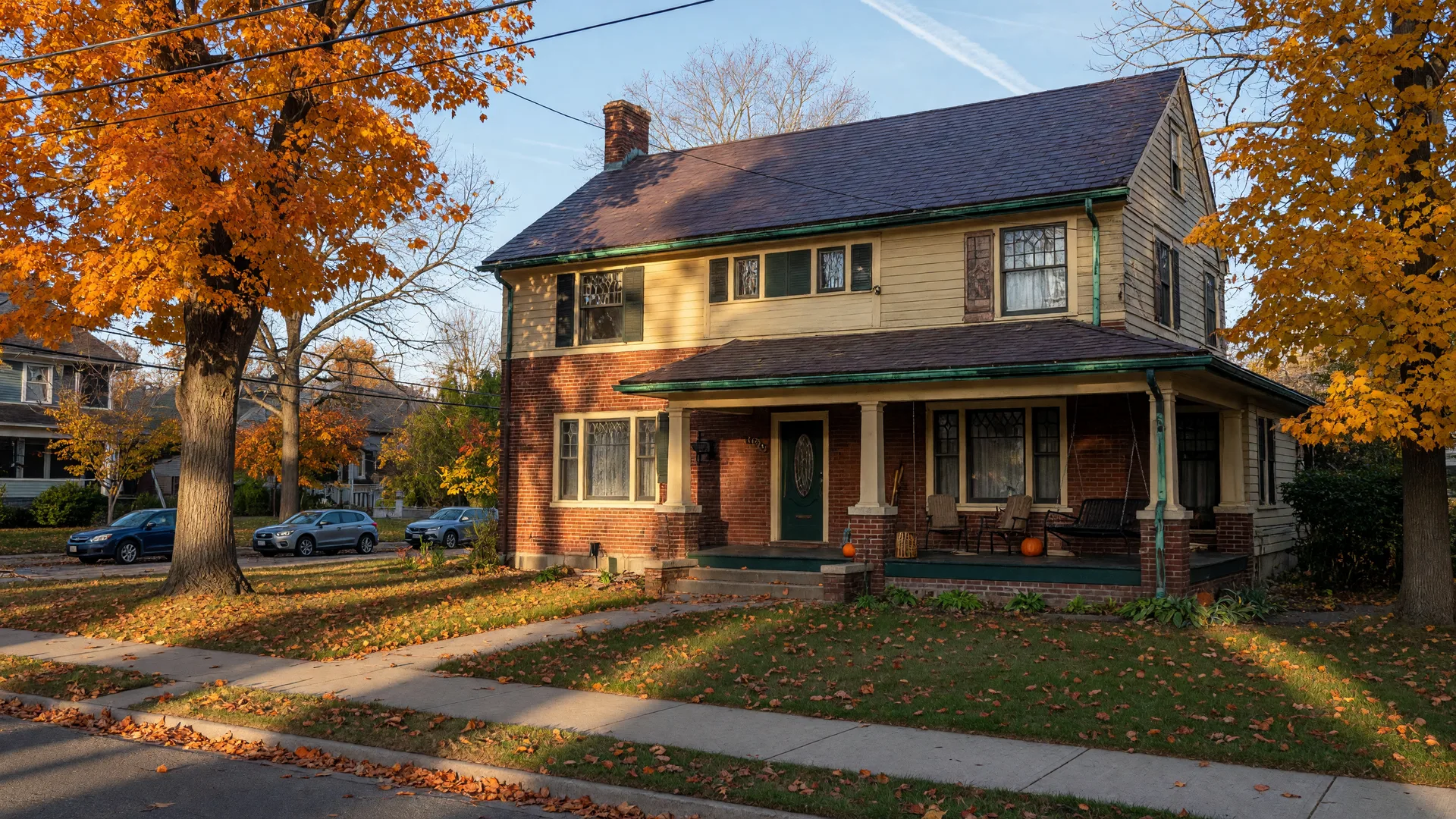
Cleveland Heights has one of the oldest housing stocks in the country: the median home was built in 1925, and about 49% of the city's existing homes date from the 1920s alone, per a cleveland.com analysis of county building records. In practice that means most homes still carry the era's original systems, and the three that move the deal are the electrical, the roof, and the heat. Full knob-and-tube rewires run roughly $12,000 to $36,600, a slate roof replacement runs about $25,000 to $60,000 or more, and 50-to-70-year-old boilers are routine. This guide walks through what to check on each before you write an offer, with figures verified against published sources in October 2026.
In our experience helping buyers and sellers work through Cleveland Heights contracts, the century-home systems are where the inspection contingency gets the most attention, and the negotiation almost always comes back to three numbers: what it costs to make the electrical safe, the condition of the slate roof, and the age and service history of the boiler. None of these is a reason to avoid the house by itself; each one is a budget and timing question that belongs in the offer. This guide is general education about older-home systems and the local rules that apply to a Cleveland Heights sale, not legal, tax, title, mortgage, or insurance advice. For a specific property, work with a licensed electrician, a slate-capable roofing contractor, a licensed heating contractor, your home inspector, your title company, your lender, and your attorney.
How Old Is Cleveland Heights' Housing Stock, Really?
Cleveland Heights built out almost entirely in the first three decades of the 1900s. The 1920s was the city's busiest construction decade, and the big streetcar-era neighborhoods that now make up most of the housing stock, including the large tracts around Cedar and Fairmount, were platted and built between about 1915 and 1930. The practical effect on a buyer is that "century home" is the category, not the exception, and the systems inside are the systems the era installed.
| Measure | Figure | Source |
|---|---|---|
| Median year built | 1925 | cleveland.com analysis of county building records |
| Existing homes built in the 1920s | about 49% | cleveland.com, county building records |
| Homes built before 1939 | about 59% | NeighborhoodScout |
| Median sale price, 3 months ending August 2026 | about $256,000, up 6.7% year over year | Redfin |
| Median days on market, 3 months ending August 2026 | about 27 days | Redfin |
| Average home value, August 2026 | about $214,000 | Zillow |
Reporting note: age figures come from cleveland.com's 2018 county building-record analysis and NeighborhoodScout; market figures come from Redfin and Zillow and use different valuation methods, so treat them as separate reads rather than comparable numbers. All sources accessed October 20, 2026.
How Common Is Knob-and-Tube Wiring in Cleveland Heights, and What Does It Cost to Replace?
Very common. Knob-and-tube wiring was the standard electrical system through the late 1940s, so it is present in much of Cleveland Heights' pre-war stock, and it can still be found in most older homes here even when the panel and some circuits have been updated over the years. The system is an ungrounded two-wire design, its rubber-and-cloth insulation degrades with age, and it cannot be safely buried under attic or wall insulation. Because circuits in these systems often share neutrals, a partial rewire is difficult to bring up to code, which is why the practical fix is usually a full rewire.
Ohio does not ban knob-and-tube wiring, and a Cleveland Heights home with it can legally be sold. The insurance question is where it shows up: individual carriers set their own underwriting rules, and many standard carriers decline to write a new policy on a home with active knob-and-tube wiring. The Ohio FAIR Plan offers limited coverage for homes predominantly wired this way, and some carriers will cover a partially upgraded system, so buyers should confirm the insurance position with their agent before removing an electrical contingency. Sellers, meanwhile, must disclose known problems with the electrical system on the Ohio Residential Property Disclosure Form under Ohio Revised Code Section 5302.30.
| Scope | Typical cost | Notes |
|---|---|---|
| Full-home rewire, finished plaster-and-lath walls | $12,000 to $36,600 | Angi 2026 range, depending on home size, panel work, and access |
| Per square foot | about $8 to $20 | HomeGuide cost guidance |
| Plaster-and-lath surcharge | +30% to 60% on labor | Wires must be fished through walls or walls opened up |
| Partial rewire | Often not to code | Shared neutral circuits make a full rewire the standard fix |
Cost figures from Angi and HomeGuide, accessed October 20, 2026. Actual bids vary with house size, the condition of the plaster, and how much of the system remains live. Get three written quotes from licensed electricians before you negotiate.
What Does a Slate Roof on a Cleveland Heights Century Home Cost to Repair or Replace?
Slate is the most expensive roofing material you are likely to find in Northeast Ohio, and a full natural-slate replacement on a typical century home runs about $25,000 to $60,000 or more. Installed prices from regional contractors come in around $15 to $35 per square foot, against roughly $4.50 to $7 per square foot for asphalt shingles. The reason the range is so wide is that slate roofs sit on framing and decks that were built for them, and replacing slate over old decking, especially on a mansard or a roof with complex hips and valleys, can require reinforcement that asphalt would not.
The most common failure is not the slate itself. Fastener corrosion, often called nail sickness, sets in after about 70 to 100 years and lets slates slip or fall, and flashing failure accounts for as much as 60% of slate roof leaks, especially at chimneys, valleys, and edges. Copper gutters thin out over decades from acid rain and thermal cycling, so look for pitting, pinholing, and green run-off staining. Few local contractors specialize in slate, which is why a buyer should line up a slate-capable roofer for the quote, not an asphalt roofer pricing a tear-off.
| Option | Typical range | What it means |
|---|---|---|
| Natural slate replacement, century home | $25,000 to $60,000+ | About $15 to $35 per installed square foot, per Northeast Ohio slate contractors |
| Asphalt shingle replacement, comparison | about $4.50 to $7 per sq ft | Lower upfront cost, shorter service life |
| Spot slate repair | $300 to $1,500+ per occurrence | Specialty trade; matching slate and copper work costs more |
| Flashing failure share of slate leaks | up to 60% | Chimneys, valleys, and edges fail before the slate does |
Sources: This Old House slate roof cost guidance; Peak and Valley Roofing, Northeast Ohio 2026 cost per square foot; ASHI guidance for inspectors on slate roofs. Accessed October 20, 2026. A roofer who only does asphalt is the wrong person to price a slate roof.
What Should You Check on a Century Home Boiler Before You Make an Offer?
Cleveland Heights century homes heat with cast-iron radiator systems, either one-pipe steam or hot-water hydronic, and the boiler is the most maintenance-sensitive of the three systems. A well-maintained cast-iron boiler should serve 20 to 30 years, and many here are still running at 50 to 70 years, at which point age itself is the issue: parts get hard to find, efficiency is far below a modern unit, and there is no ductwork for central air. Replacement prices in Ohio run about $5,000 to $10,000 for a like-for-like hot-water unit, $8,000 to $16,000 for a high-efficiency condensing unit, and roughly $7,500 to $13,500 for a steam boiler once near-boiler piping, controls, and safety valves are included.
On a walkthrough, the checks that cost nothing are the ones that matter: ask for the boiler's age and service records, have the heat run during the showing, and feel every radiator. In a steam system, the vents should hiss and then close as steam arrives, and each radiator should heat evenly; in a hot-water system, watch for cold spots at the top of a radiator, which mean trapped air, or at the bottom, which can mean a blocked return. Listen for banging or water hammer, which points to condensate sitting in steam pipes, and confirm the water level on a steam boiler is not overfilled. Budget for a dedicated inspection by a licensed heating contractor, not just a general home inspection, and factor in likely upgrades such as a chimney liner and near-boiler piping corrections.
| Item | Typical figure | What to check |
|---|---|---|
| Cast-iron boiler service life | 20 to 30+ years with maintenance | Age and service records; 50-to-70-year-old units still common |
| Like-for-like hot-water replacement | about $5,000 to $10,000 | Standard-efficiency unit, same system type |
| High-efficiency condensing replacement | about $8,000 to $16,000 | Chimney liner and near-boiler piping can add cost |
| Steam boiler replacement | about $7,500 to $13,500 | Includes near-boiler piping, controls, and safety valves |
| Average repair | about $400, range $200 to $600 | Plus a $150 to $200 service-call minimum in the Cleveland market |
| Walkthrough check | Run every radiator | Steam vents hiss then close; hot-water radiators heat evenly; no water hammer |
Sources: Weil-McLain boiler life guidance; ProMatcher Cleveland boiler cost data; Modernize steam boiler installation guidance; Angi boiler inspection checklist. Accessed October 20, 2026. Have a licensed heating contractor verify age, service history, and pressure-relief valve operation before removing a heat contingency.
Does Cleveland Heights Require Anything Else Before the Sale Closes?
Yes, and it is one of the most important dates in a Cleveland Heights contract. The City of Cleveland Heights requires a point-of-sale inspection before a seller can enter into an agreement to sell a single-family, two-family, duplex, apartment, condominium, or commercial property. The current fee is $200 for the first unit plus $50 for each additional unit, the inspection covers visible interior and exterior conditions, and the Certificate of Inspection is valid for one year from the inspection date. The seller must give the buyer a copy of the certificate before the contract is executed, and violations that are not corrected trigger an escrow hold equal to 125% of the estimated repair cost with a $1,000 minimum.
On top of the city program, Ohio law adds a disclosure layer. Under Ohio Revised Code Section 5302.30, a seller of a one-to-four-unit residential property must complete and deliver the Residential Property Disclosure Form issued by the Ohio Department of Commerce. The form covers the condition of the roof, foundation, basement, floors, and walls, plus the plumbing, electrical, and mechanical systems, water supply, sewer or septic system, and known problems such as water damage, mold, and floodplain location. Ohio follows caveat emptor, so the seller must disclose what they actually know rather than investigate the property, but if the form is not delivered before the buyer signs the purchase contract, ORC 5302.30(K) gives the buyer a right to rescind the transaction.
Buyer and Seller Takeaways
- Buyers: treat the electrical, roof, and boiler as three separate budgets, not one inspection line. Rewires run about $12,000 to $36,600, slate replacements about $25,000 to $60,000 or more, and a 50-to-70-year-old boiler is a near-term replacement risk.
- Buyers: confirm the insurance position on knob-and-tube wiring with your agent before you remove an electrical contingency. Carriers set their own rules, and the Ohio FAIR Plan is the fallback for homes predominantly wired this way.
- Buyers: use a slate-capable roofer and a licensed heating contractor for quotes. A general home inspection is a start, but the roof and boiler need specialty eyes before an offer.
- Sellers: order the Cleveland Heights point-of-sale inspection early. It is required before a sale contract, the $200-per-unit fee is set by ordinance, and uncorrected violations carry an escrow of 125% of the repair estimate with a $1,000 minimum.
- Sellers: complete the Residential Property Disclosure Form under ORC 5302.30 and be accurate on the roof, electrical, and mechanical lines. The buyer can rescind if the form is not delivered before the contract is signed.
- Everyone: this is general education about older-home systems and municipal and state rules, not legal, tax, title, mortgage, or insurance advice. Confirm the current rules with the city, your title company, your lender, and your attorney, and have licensed contractors price the work for your specific address.
A century home in Cleveland Heights is a systems question as much as a house question, and the point-of-sale inspection is the city's gate on top of the buyer's own due diligence. It pairs naturally with the other documents in a Cuyahoga County closing: our Cleveland point-of-sale inspection checklist maps which east-side cities require one and how escrow holds work, and our guide to reading an Ohio title commitment explains the Schedule A and Schedule B exceptions your title company will resolve before transfer. For the wider picture of what living in the region involves, our guide to moving to Northeast Ohio compares Cleveland-area housing, costs, and commutes side by side.
Frequently Asked Questions
Is knob-and-tube wiring illegal in Ohio, and can a Cleveland Heights home with it be sold?
No. Ohio has no law banning knob-and-tube wiring or requiring its removal before a sale, so a Cleveland Heights home with it can legally be sold. The practical issues are insurance, because many standard carriers decline to write a new policy on a home with active knob-and-tube wiring, and disclosure, because the seller must report known electrical problems on the Residential Property Disclosure Form under ORC 5302.30.
How much does it cost to rewire a century home in Cleveland Heights?
A full-home rewire runs about $12,000 to $36,600 depending on home size, panel work, and access, which works out to roughly $8 to $20 per square foot. Plaster-and-lath walls add 30% to 60% on labor because wires must be fished through walls or walls opened up. Because knob-and-tube circuits often share neutrals, a full rewire is usually the only code-compliant fix.
How can I tell if a Cleveland Heights home has a slate roof, and what does replacement cost?
Slate roofs appear as flat, layered gray or purple-gray stone tiles rather than granular asphalt shingles, often with copper gutters and flashings. A full natural-slate replacement on a century home runs about $25,000 to $60,000 or more, or roughly $15 to $35 per installed square foot. Spot repairs run about $300 to $1,500 or more per occurrence, and flashing failure accounts for up to 60% of slate roof leaks.
What should I check on a boiler before making an offer on a century home?
Ask for the boiler's age and annual service records, run the heat during the showing, and feel every radiator. Steam vents should hiss and then close as steam arrives; hot-water radiators should heat evenly with no trapped air. Listen for water hammer, confirm the steam water level is not overfilled, and budget for a dedicated inspection by a licensed heating contractor. A like-for-like hot-water replacement runs about $5,000 to $10,000, and a steam replacement about $7,500 to $13,500.
Does Cleveland Heights require a point-of-sale inspection before a home sale?
Yes. The City of Cleveland Heights requires a point-of-sale inspection before a seller enters into an agreement to sell, with a fee of $200 for the first unit plus $50 for each additional unit. The inspection covers visible interior and exterior conditions, the Certificate of Inspection is valid for one year, and uncorrected violations require escrow of 125% of the estimated repair cost with a $1,000 minimum.
What must a seller disclose about an older home's condition in Ohio?
Under Ohio Revised Code Section 5302.30, a seller of a one-to-four-unit residential property must complete and deliver the Residential Property Disclosure Form issued by the Ohio Department of Commerce. It covers the roof, foundation, basement, floors, walls, plumbing, electrical, and mechanical systems, water supply, sewer or septic system, and known issues such as water damage, mold, and floodplain location. If the form is not delivered before the buyer signs the purchase contract, the buyer has a right to rescind.
Sources
- cleveland.com, When Was Your Town Built? (Cleveland Heights median year built 1925; about 49% of homes from the 1920s)
- NeighborhoodScout, Cleveland Heights Real Estate (about 59% of homes built before 1939)
- Redfin, Cleveland Heights Housing Market (median sale price about $256,000, up 6.7% year over year; about 27 days on market, three months ending August 2026)
- Zillow, Cleveland Heights Home Values (average home value about $214,000, August 2026)
- Angi, Knob and Tube Wiring Replacement Cost (full rewire $12,000 to $36,600)
- HomeGuide, Cost to Replace Knob and Tube Wiring (about $8 to $20 per square foot)
- cleveland.com, Knob & Tube Wiring Can Make Getting Insurance Difficult (carrier underwriting on knob-and-tube in older Cleveland-area homes)
- Ohio Revised Code Section 5302.30 (Residential Property Disclosure Form requirement and rescission right)
- Ohio Department of Commerce, Residential Property Disclosure (form and filing guidance)
- This Old House, How Much Does a Slate Roof Cost? (slate roof pricing guidance)
- Peak and Valley Roofing, Roofing Cost per Square Foot in Northeast Ohio 2026 (natural slate $15 to $30 per square foot, local specialty)
- ASHI, What Home Inspectors Need to Know About Slate Roofs (nail sickness, flashing failure share of leaks)
- Weil-McLain, How Long Do Boilers Last? (cast-iron boiler life and replacement signs)
- ProMatcher, Cleveland Boiler Installation Costs (Cleveland boiler cost averages)
- Modernize, Steam Boiler Installation Costs (steam boiler replacement range)
- Angi, Boiler Inspection Checklist for Homeowners (walkthrough and inspection checks)
- City of Cleveland Heights, Point of Sale Inspections (certificate required before sale contract; $200 first unit plus $50 per additional)
- City of Cleveland Heights, Point-of-Sale Fact Sheet (one-year certificate validity; escrow of 125% of estimated repair costs, minimum $1,000)
- Ages, fees, costs, and rules reviewed October 20, 2026. Market and cost figures change with each reporting cycle; confirm current figures and rules with the sources above, the City of Cleveland Heights, your title company, your lender, and your attorney.
Share This Post
Suggested social caption
"Buying a century home in Cleveland Heights? The median house was built in 1925, about 49% of the city's stock dates from the 1920s, and the three systems that decide the deal are the electrical, the roof, and the heat. Knob-and-tube rewires run about $12K to $36.6K, slate roof replacements about $25K to $60K, and 50-to-70-year-old boilers need a dedicated check before an offer. The full pre-offer checklist, verified October 2026, from Glasshouse Realty."
Published October 20, 2026 · Updated October 20, 2026 · Information verified on October 20, 2026 against the published sources listed above. Rewire, roof, boiler, and market figures are point-in-time estimates that change with each reporting cycle, and the Cleveland Heights point-of-sale program and Ohio disclosure rules change with each ordinance and statute cycle. This guide is general education about older-home systems, not legal, tax, title, mortgage, or insurance advice. For a specific property, work with licensed electricians, slate-capable roofing contractors, licensed heating contractors, your home inspector, your title company, your lender, and your attorney.
Looking at a century home in Cleveland Heights?
Get a clear read on the electrical, roof, and boiler before you write an offer, plus the exact Cleveland Heights point-of-sale and disclosure rules for the address you are considering. We know the Greater Cleveland market block by block.
Talk to an AgentBuying or selling a century home on the Cuyahoga County east side?
Whether you are making an offer on a 1920s Colonial in Cleveland Heights or listing one, a Glasshouse agent can help you line up the electrical, roofing, and heating quotes, confirm the point-of-sale timeline, and price the work into the contract before you commit.
No pressure, no guesswork. Just clear, local answers from a team growing across Greater Cleveland and Northeast Ohio.
Schedule a Consultation