
August 21, 2026 · Market Updates
Dayton Metro Home Prices Just Surpassed Cleveland's — Here's Why and What It Means
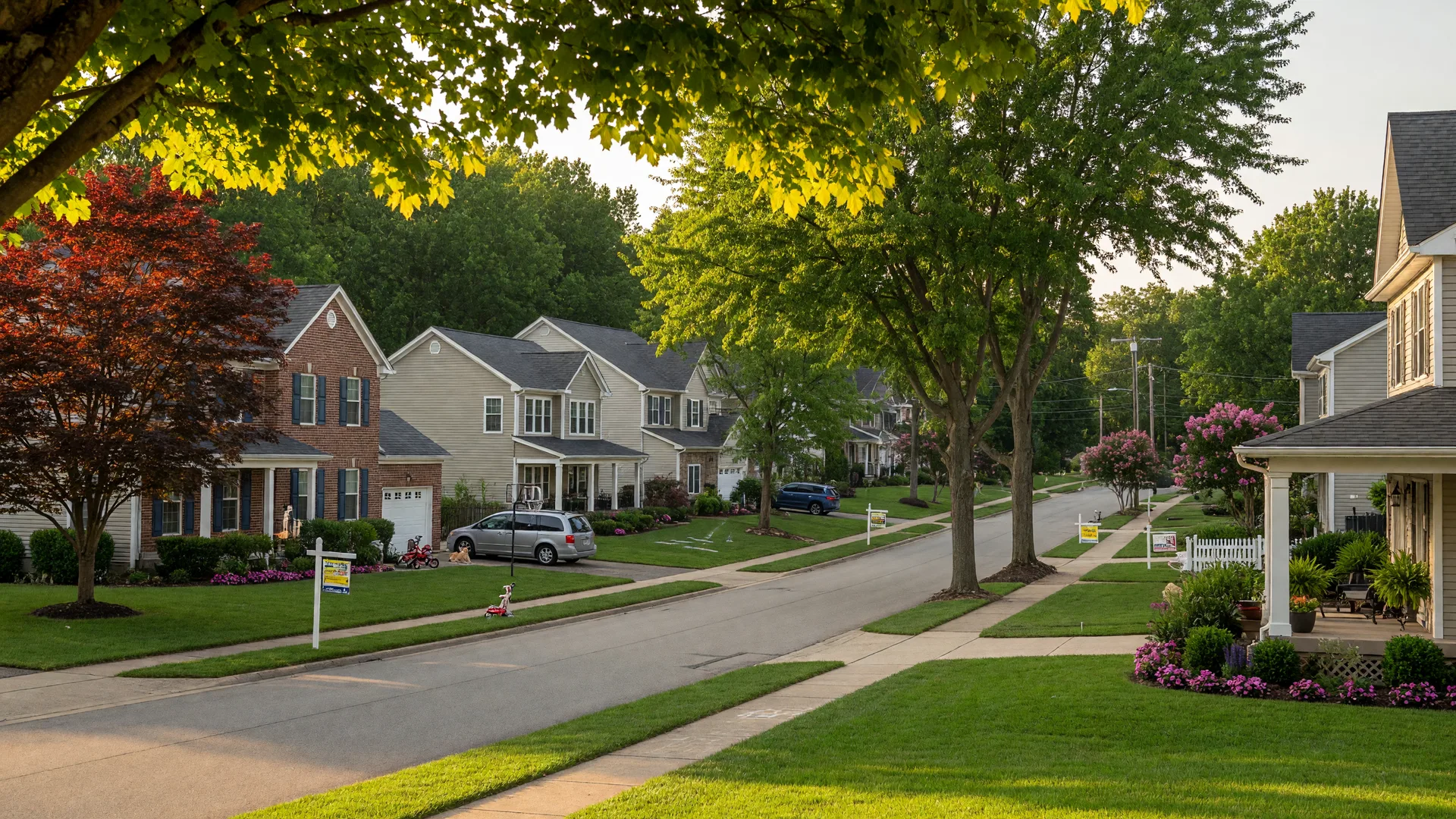
If someone told you five years ago that the Dayton metro area's median home price would surpass Cleveland's, you might have raised an eyebrow. But that is exactly where we are in 2026. New mid-year data shows Dayton's median home sales price landing around $270,000, edging out Cleveland's April figure of $262,250. The gap is not huge, but the direction is unmistakable: Dayton is no longer the cheaper Ohio cousin. And a big part of that story runs through Springboro.
The Numbers Behind the Headline
According to the RE/MAX National Housing Report for April 2026, the Cleveland metro's median home sales price was $262,250, ranking it the second most affordable U.S. metro. Dayton came in at roughly $270,000 by May 2026 per Miami Valley data sources — a difference of nearly $8,000. Meanwhile, a July 2026 Reddit thread comparing Ohio metro prices sparked widespread surprise that Dayton had pulled ahead of Cleveland, with commenters pointing to Springboro's roughly $425,000 median as the primary force lifting the entire Dayton metro average.
To put this in perspective, as recently as 2020 the typical Dayton home sold for tens of thousands less than its Cleveland counterpart. The reversal is not about Cleveland declining — it is about Dayton rising. And the driver is not downtown condos or urban infill. It is the southern suburbs.
Springboro Is Reshaping the Dayton Metro Average
Springboro, located in southern Warren County along the I-75 corridor between Dayton and Cincinnati, has become a real estate heavyweight. With a median home price around $425,000 and household incomes averaging $112,872, Springboro is pulling the regional average upward in a way that changes how the entire Dayton metro looks statistically.
Several factors explain Springboro's premium pricing. The Springboro Community City School District is consistently rated among the best in the region. Newer master-planned subdivisions like Bailey Farm and Clearview Crossing offer modern floor plans and amenity-rich communities that command higher prices. And Springboro's location — roughly equidistant from downtown Dayton and Cincinnati — gives residents access to employment centers in both metros. For buyers coming from Cincinnati markets where comparable homes cost $600,000 or more, Springboro at $425,000 looks like a relative bargain.
But Springboro is not the only suburb lifting the average. Beavercreek sits near Wright-Patterson Air Force Base and consistently trends above the metro median. Oakwood commands premium prices for its historic homes and top-rated schools. Centerville, Bellbrook, and Tipp City all contribute to a metro area where the floor is higher than it used to be.
$270K
Dayton Metro Median
$262K
Cleveland Metro Median
$425K
Springboro Median
$113K
Springboro HHI
What This Means for Dayton Buyers
If you are looking to buy in the Dayton area, the headline that "Dayton now costs more than Cleveland" might sound alarming. But here is what matters: the median is an average. It includes Springboro and Oakwood, but it also includes Kettering, Huber Heights, Fairborn, Troy, and West Carrollton — where home prices remain well below the metro median. The Dayton market is not uniformly expensive. It is increasingly segmented, with premium suburbs pulling the average up while many solid neighborhoods remain genuinely affordable.
For entry-level buyers and first-time homebuyers, the story is still good. Prices in neighborhoods like Huber Heights, Fairborn, and Miamisburg remain accessible. The OHFA down payment assistance programs we have covered in our down payment guide still apply. What the rising median tells you is that the region is growing in value, not that it is becoming unaffordable.
What This Means for Sellers
For sellers, the Dayton-vs-Cleveland comparison is more than a trivia point. It is a signal that the region is being discovered by a broader pool of buyers — including people relocating from Cincinnati and Columbus who see Dayton's suburbs as a value play. If you are selling in Springboro, Beavercreek, or Centerville, you are competing in a market that increasingly draws attention from outside the traditional Dayton buyer pool. That is a good position to be in.
The caveat, as we discussed in our balanced market guide, is that the overall market is normalizing. Pricing your home correctly from day one and presenting it in excellent condition still matters. The buyers are there — but they are rate-sensitive and selective.
Why the Dayton-Cleveland Comparison Matters for the Region
The fact that Dayton's metro median has inched past Cleveland's is not about one city beating another. It is about a fundamental shift in how the Miami Valley is perceived. For decades, Dayton was the affordable alternative — the place you went when Columbus or Cincinnati priced you out. That role is not going away (our cost of living is still lower than all three), but the region is also attracting buyers who choose Dayton not because it is cheap but because it offers genuine quality of life.
The combination of strong schools, shorter commutes, lower crime rates in the suburbs, and access to outdoor recreation along the Little Miami River and at Cox Arboretum MetroPark is drawing families and professionals who could live anywhere. The data is now reflecting what locals have known for years: the greater Dayton area is a great place to invest in a home.
The Bottom Line
Dayton's median home price surpassing Cleveland's is not a fluke. It is the result of steady demand in premium suburbs, in-migration from higher-cost metros, and a regional economy anchored by Wright-Patterson AFB, healthcare, and logistics. For buyers, the Dayton market still offers excellent value — especially outside the premium corridors. For sellers, the rising median means your home is part of a region that is being noticed. Whether you are buying, selling, or just watching the market, the difference is clear: Dayton is no longer flying under the radar.
Frequently Asked Questions
Is Dayton's median home price really higher than Cleveland's?
Yes, based on mid-2026 data. Dayton's metro median sales price was approximately $270,000 compared to Cleveland's $262,250. The gap is modest but meaningful, driven primarily by premium suburbs like Springboro ($425,000 median), Beavercreek, and Oakwood.
Why is Springboro so much more expensive than the rest of Dayton?
Springboro's premium pricing comes from top-rated schools, newer master-planned subdivisions, high household incomes ($112,872 median), and its strategic location on the I-75 corridor between Dayton and Cincinnati. It draws buyers priced out of both metro areas who see Springboro as a value relative to comparable suburbs near Cincinnati.
Is Dayton still an affordable place to buy a home?
Yes, especially in neighborhoods outside the premium corridor. Areas like Huber Heights, Fairborn, Troy, and West Carrollton offer solid homes well below the metro median. Dayton's cost of living remains lower than Columbus, Cincinnati, and Cleveland overall. The rising median reflects growth in specific suburbs, not uniform price increases across every neighborhood.
Will Dayton home prices keep rising relative to other Ohio metros?
The trend suggests continued appreciation driven by Wright-Patterson AFB, steady in-migration, and limited housing supply in the most desirable suburbs. However, the market is normalizing toward balance, so double-digit annual gains are unlikely. Expect moderate, sustainable growth through 2027.
Published August 21, 2026 · Updated August 21, 2026
Want to Know What Your Dayton Home Is Worth in Today's Market?
Whether you are buying, selling, or just curious about what is happening in your neighborhood, Glasshouse Realty can give you the real picture. No pressure, just honest local insight from a brokerage that knows every corner of the Miami Valley.
Talk to a Glasshouse AgentWant to know what your Dayton home is worth in today's market?
Our agents track price trends neighborhood by neighborhood. Tell us where you are looking or selling, and we will share what the data says about your area.
Local expertise from a brokerage that lives and breathes the Miami Valley market every day.
Schedule a Consultation