
October 13, 2026 · Lakewood & Rocky River Comparison
Lakewood vs. Rocky River: 9,191 vs. 4,600 Residents per Square Mile, 40-Foot Frontage Lots, and Street Parking vs. Attached Garages
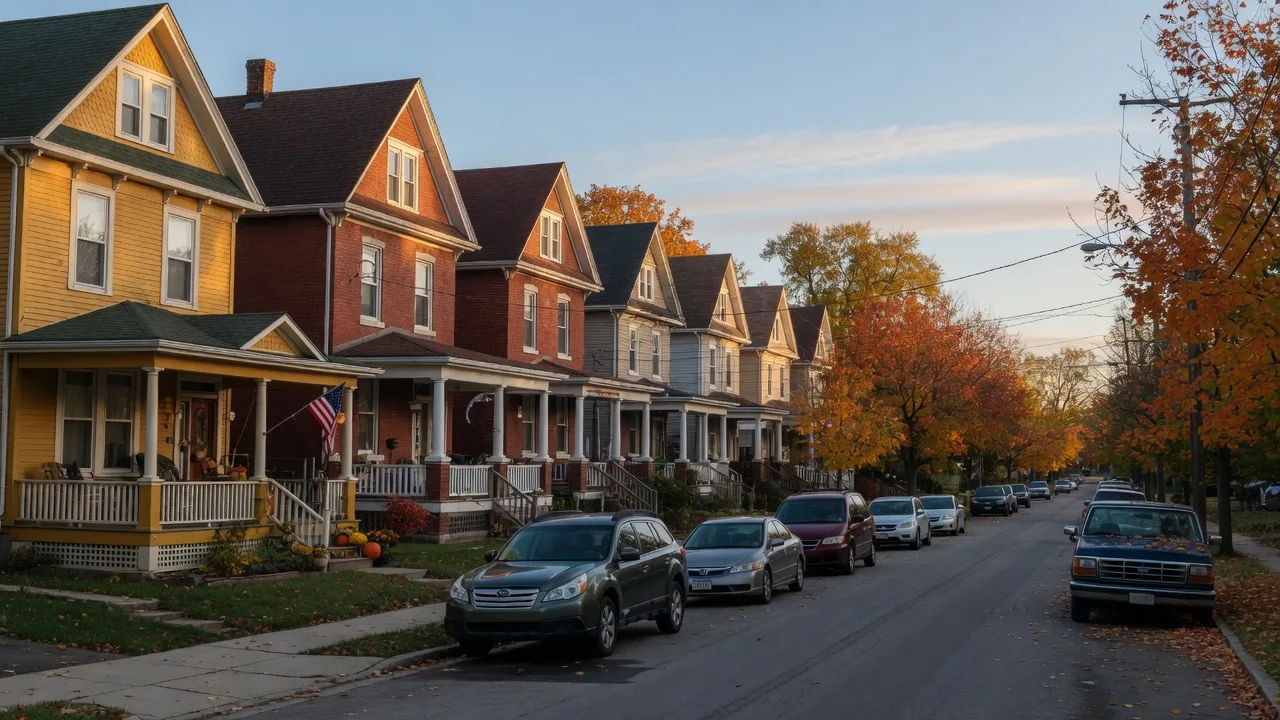
Lakewood and Rocky River share Cleveland's west-side lakefront, but they are built for different lives. Lakewood is Ohio's most densely populated city at about 9,191 residents per square mile, a pre-war streetcar grid where the median lot is about 4,800 square feet with 40 feet of frontage, most homes predate garage requirements, and residents park on the street. Rocky River spreads the same shoreline at about 4,600 residents per square mile, with post-war homes on larger lots, 66 percent owner-occupancy, and garages tucked into rear yards. Median sale prices, tax rates, and commutes follow the same split.
In our experience helping buyers and sellers across Cuyahoga County's west-side lakefront, the parking and garage question is what separates these two markets in practice. A Lakewood buyer coming from a suburb with a two-car garage often assumes a garage is standard; in Lakewood it is not, and the 24-hour street parking rule, the permit program, and the 18-inch to 36-inch garage setbacks are the details that matter. A Rocky River buyer gets rear-yard garages as the norm but pays for them in lot size and price. This guide is a street-level breakdown of the layout differences, verified against the City of Lakewood, the City of Rocky River, the Cuyahoga County fiscal officer, and published market and walkability sources on October 13, 2026. It is general educational information, not legal, tax, title, or mortgage advice; confirm current rules with each city and with qualified professionals before you act.
How dense is Lakewood compared with Rocky River?
The density gap is the single biggest structural difference between the two cities. Lakewood counted 50,942 residents at the 2020 census on about 5.5 square miles, a density of roughly 9,191 people per square mile that makes it the most densely populated city in Ohio. Its roughly 28,800 housing units sit on a streetcar-era grid of narrow lots, and only about 44 percent of homes are owner-occupied. Rocky River counted 21,755 residents at the 2020 census (about 21,468 per the Census Bureau's 2024 estimate) on about 4.7 square miles, a density of roughly 4,600 people per square mile, with about 7,330 homes and 66 percent owner-occupancy.
| Metric | Lakewood | Rocky River |
|---|---|---|
| Population (2020 census) | 50,942 | 21,755 (about 21,468 in 2024 estimate) |
| Land area | About 5.5 sq mi | About 4.7 sq mi |
| Population density | About 9,191 per sq mi, the highest of any Ohio city | About 4,600 per sq mi |
| Housing units | About 28,800 | About 7,330 |
| Owner-occupancy | About 44% | About 66% |
| Typical lot | Median about 4,800 sq ft (0.11 acre), about 40 ft of frontage | Larger than Lakewood, notably near the lake |
What do the housing stocks look like: pre-war brick and porches vs. post-war ranches?
Lakewood's inventory is dominated by pre-war housing: about 60 percent of homes were built before 1939, the median year built is about 1937, and typical single-family homes run roughly 1,500 to 1,733 square feet. The classic Lakewood house is a brick or frame colonial with a deep front porch on a 40-foot lot, built for a streetcar suburb where nobody drove to school or the corner store. Rocky River's stock is newer: the median year built is 1956, the average single-family home is about 2,060 square feet, and lots are wider and deeper, especially in the lakefront sections. Lakewood also rewrote its zoning in recent years to legalize middle housing, including duplexes, triplexes, fourplexes, and cottage clusters, on residential lots, while Rocky River's code remains more traditional single- and two-family oriented.
| Metric | Lakewood | Rocky River |
|---|---|---|
| Median year built | About 1937; about 60% of homes pre-1939 | 1956 |
| Typical single-family size | About 1,500 to 1,733 sq ft | About 2,060 sq ft |
| Street parking | Allowed up to 24 hours; no blanket overnight ban; meters 8 a.m. to 6 p.m.; residential street parking permits | Driveway and garage parking is the norm |
| Garage rules | Detached garages max 480 sq ft or 25% of rear yard; side/rear setbacks 18 in (R1H/R2) or 36 in (R1M); height cap 15 ft; new construction needs 1 off-street space in a garage | Detached garages allowed in rear yard only, 5-ft side and rear setbacks; attached garages/carports in R-3 must match the principal building setback, 10 ft from side/rear lines abutting multi-family, 20 ft abutting R-1/R-2 |
| Zoning direction | Recent overhaul legalizes duplexes, triplexes, fourplexes, cottage clusters on residential lots | Traditional single- and two-family oriented code |
Where do people park: street parking in Lakewood vs. garages in Rocky River?
This is the question that surprises out-of-area buyers most. In Lakewood, Chapter 351 of the city's codified ordinances allows vehicles to park on the street for up to 24 hours unless signage says otherwise, with no blanket overnight ban. Meters are enforced 8 a.m. to 6 p.m. (coin or ParkMobile), and rush-hour parking is prohibited 7 to 9:30 a.m. weekdays on the south side of Lake Avenue, the south side of Clifton Boulevard, and both sides of Hilliard Road between Madison Avenue and Riverside Drive. The police department administers a residential street parking permit program for the areas that need it. Most of the city's century homes were built before any garage requirement, so a large share of the stock simply relies on the street.
When Lakewood homeowners do add a garage, the city's garage planning packet caps detached garages at 480 square feet or 25 percent of the rear yard, whichever is greater, with side and rear setbacks of 18 inches in R1H and R2 districts and 36 inches in R1M, and a height cap of 15 feet measured to the midpoint between ridge and eave. Front-yard parking is forbidden, and new construction must provide at least one off-street space per dwelling unit, with one of those spaces in a garage. Rocky River takes a different approach: under Chapter 1153 of its zoning code, detached accessory garages are allowed only in the rear yard with 5-foot side and 5-foot rear lot-line setbacks, and in the R-3 single-family attached district, garages and carports must match the principal building's setback from the public right-of-way, sit 10 feet from side or rear lot lines abutting multi-family or non-residential districts, and 20 feet from side or rear lot lines abutting R-1 or R-2 districts.
How much do homes cost in Lakewood vs. Rocky River?
Published medians put the two cities close at the headline level, but the reporting periods differ and the housing is not comparable. Redfin reported a Lakewood median sale price near $349,000 for the three months ending May 2026, up about 7.5 percent year over year, while its Rocky River median was near $318,000 for the three months ending February 2026, down about 10.4 percent year over year. PropertyFocus put Lakewood's 12-month median near $336,550, and Homes.com listed a Rocky River median near $385,000. The takeaway is not a single number: Lakewood's median is propped up by a tight pre-war stock with strong demand, while Rocky River's wider range reflects newer, larger homes on bigger lots.
| Metric | Lakewood | Rocky River |
|---|---|---|
| Median sale price | About $349K (Redfin, 3 months ending May 2026, +7.5% YoY); about $336,550 12-month median (PropertyFocus) | About $318K (Redfin, 3 months ending Feb 2026, -10.4% YoY); about $385K median (Homes.com) |
| Walk Score | 70, the most walkable city in Ohio per Walk Score | 71 for the central location |
| Transit Score | 41, with Red Line rail at W. 117th St-Madison | Bus only, no rail service |
| Bike Score | 64 | Not published in the sources accessed |
What do property taxes cost in Lakewood vs. Rocky River?
The Cuyahoga County fiscal officer's published rates show Lakewood at a full, voted rate of 165.16 mills with an effective residential rate of 83.44 mills, about 2.63 percent of market value after House Bill 920 reduction factors. Rocky River's full, voted rate for 2025 (payable 2026) is 134.00 mills, with effective residential components of 33.20433 mills for the Rocky River City School District, 9.701326 mills for Cuyahoga County, and 9.90 mills for the City of Rocky River, plus a Rocky River Public Library levy at a full rate of 6.10 mills whose effective rate was not published in the source we accessed. Ohio taxes property at 35 percent of appraised value, and HB 920 reduction factors are why effective millage runs well below the voted numbers. The county's official reference is the Cuyahoga County Treasurer's Tax Rates by Community page.
| Jurisdiction | Full / voted rate | Effective residential rate |
|---|---|---|
| Lakewood | 165.16 mills | 83.44 mills, about 2.63% of market value |
| Rocky River (2025, payable 2026) | 134.00 mills | Components: RR City SD 33.20433, Cuyahoga County 9.701326, City of Rocky River 9.90; library full rate 6.10 (effective not published in source) |
These figures are comparison tools, not quotes. Actual bills vary with each parcel's assessed value, current levies, and reduction factors, and the Rocky River library levy's effective rate should be confirmed on the county's official rate list. This is general educational information about property taxes, not tax advice; a tax professional or the Cuyahoga County fiscal officer's office can produce the exact figure for a specific address.
How long is the commute from each city to downtown Cleveland?
Lakewood is the closer city at roughly 7 miles from downtown, a 10 to 15 minute drive off-peak via Clifton Boulevard, Detroit Avenue, or I-90. Rocky River sits about 9 to 11 miles out at roughly 13 to 17 minutes off-peak. Both routes feed the Route 2 Cleveland Memorial Shoreway, and the morning queue forms at the Main Avenue Bridge over the Cuyahoga River; peak-hour drives typically run 5 to 10 minutes longer than the off-peak numbers. We have a full street-level breakdown of the Shoreway, the 35 mph Lakefront West boulevard rebuild, and the bridge bottleneck in our Rocky River vs. Lakewood shoreway commute fact-check.
| Community | Miles to downtown | Off-peak drive | Transit options |
|---|---|---|---|
| Lakewood | About 7 miles | 10 to 15 minutes | RTA Red Line at W. 117th St-Madison; buses 25, 26/26A, 55A/B/C, 78, 83 |
| Rocky River | About 9 to 11 miles | 13 to 17 minutes | RTA buses 26/26A (Detroit) and 55/55B/55C; no rail |
How walkable is each city, and what transit serves them?
Walk Score ranks Lakewood as the most walkable city in Ohio with a citywide score of 70, plus a Transit Score of 41 and a Bike Score of 64. The city was built for walking: neighborhood schools, corner stores, and front porches all face the sidewalk, and the Lakewood City School District has never owned a school bus. The RTA Red Line stops at the W. 117th Street-Madison station inside Lakewood and at Triskett just across the border, putting Tower City, University Circle, and Hopkins Airport on rail. Rocky River scores 71 for its central location, and the GCRTA's 26/26A Detroit and 55/55B/55C bus lines run through the city to downtown, but there is no rail service. For a car-free or one-car household, Lakewood's rail access is the structural advantage; for a household that wants a garage and a driveway, Rocky River is the structural answer.
What are the school districts in Lakewood and Rocky River?
Lakewood is served by the Lakewood City School District and Rocky River by the Rocky River City School District. We are an objective data provider on this point: we do not rank or rate districts, and we encourage every family to review the districts' own published data, test scores, and programming and decide what fits them. The official sources are lakewoodcityschools.org for Lakewood and rrcs.org for Rocky River.
What we tell buyers comparing Lakewood and Rocky River
In our experience helping buyers and sellers on Cuyahoga County's west side, the practical workflow differs by city. In Lakewood, we walk buyers through the parking reality before they fall for a porch: check the street for the 24-hour rule, the permit program, and the rush-hour restrictions on Lake Avenue, Clifton Boulevard, and Hilliard Road, and budget for the 18-inch to 36-inch setbacks and 15-foot height cap if they want to add a garage. In Rocky River, the garage is usually already there, but the rear-yard-only rule and the 5-foot setbacks matter when a buyer wants to enlarge or replace one, and the R-3 attached-garage setbacks (10 feet from multi-family lines, 20 feet from R-1/R-2 lines) apply to townhome-style product. On the tax side, Lakewood's 83.44 effective mills versus Rocky River's roughly 134.00 voted rate with its component structure is a real difference at the same price, so we run both through the county's rate list before an offer is written.
Neither city is objectively better; they answer different questions. Lakewood answers the question of density, walkability, rail transit, and pre-war character on a 40-foot lot. Rocky River answers the question of a newer, larger, owner-occupied, garage-first suburb with the same lakefront. The right choice is the one that matches how you actually live, and the numbers above are the evidence to make that call.
Buyer and Seller Takeaways
- Buyers in Lakewood: assume street parking, not a garage. The 24-hour street parking rule, the residential permit program, and the rush-hour restrictions on Lake Avenue, Clifton Boulevard, and Hilliard Road are the operating reality for most century homes.
- Buyers in Rocky River: garages are the norm, but zoning puts detached garages in the rear yard with 5-foot side and rear setbacks, and attached garages in R-3 districts must match the principal building setback.
- Garage builders: Lakewood caps detached garages at 480 sq ft or 25% of the rear yard with 18 to 36 inch setbacks and a 15 ft height cap; front-yard parking is forbidden in both cities.
- Commuters: Lakewood is about 7 miles and 10 to 15 minutes from downtown; Rocky River is about 9 to 11 miles and 13 to 17 minutes. Peak-hour Shoreway drives run 5 to 10 minutes longer.
- Tax planners: Lakewood's effective residential rate is 83.44 mills (about 2.63% of market value); Rocky River's voted rate is 134.00 mills with effective school, county, and city components. Confirm both on the Cuyahoga County Treasurer's rate list.
- Everyone: this is general educational information about layouts, parking, taxes, and housing markets, not legal, tax, or financial advice. Confirm current rules with the City of Lakewood and the City of Rocky River, and consult qualified legal, tax, title, and mortgage professionals before you act.
Want the street-level picture of each city? Our Lakewood neighborhood guide covers the streetcar grid, the front-porch neighborhoods, and the Detroit and Madison corridors, and our Greater Cleveland market coverage puts both cities in the context of the whole metro. For the drive-time side of the comparison, our shoreway commute fact-check has the peak-hour math, and our moving to Northeast Ohio guide walks through the region's housing, costs, and commutes side by side.
Frequently Asked Questions
Is Lakewood really the most densely populated city in Ohio?
Yes. Lakewood counted 50,942 residents at the 2020 census on about 5.5 square miles, a density of roughly 9,191 people per square mile, the highest of any Ohio city. Rocky River, by contrast, counted 21,755 residents on about 4.7 square miles, about 4,600 people per square mile.
Can I park on the street overnight in Lakewood?
Generally yes. Chapter 351 of Lakewood's codified ordinances allows vehicles to park on the street for up to 24 hours unless signage says otherwise, with no blanket overnight ban. Meters are enforced 8 a.m. to 6 p.m., rush-hour parking is restricted on Lake Avenue, Clifton Boulevard, and Hilliard Road, and the police department runs a residential street parking permit program for areas that need it.
Does Rocky River zoning require garages to sit in the rear yard?
For detached garages, yes. Under Chapter 1153 of the Rocky River zoning code, detached accessory garages are allowed only in the rear yard with 5-foot side and 5-foot rear lot-line setbacks. In the R-3 single-family attached district, garages and carports must match the principal building's setback from the public right-of-way, sit 10 feet from side or rear lot lines abutting multi-family or non-residential districts, and 20 feet from side or rear lot lines abutting R-1 or R-2 districts.
Which city has higher property taxes, Lakewood or Rocky River?
Lakewood's full, voted rate is 165.16 mills with an effective residential rate of 83.44 mills, about 2.63 percent of market value. Rocky River's full, voted rate for 2025 (payable 2026) is 134.00 mills, with effective residential components of 33.20433 mills for the school district, 9.701326 mills for the county, and 9.90 mills for the city, plus a library levy at a 6.10 mill full rate. Confirm the current figures on the Cuyahoga County Treasurer's Tax Rates by Community page.
How long does it take to drive from Lakewood and Rocky River to downtown Cleveland?
Lakewood is about 7 miles from downtown, a 10 to 15 minute drive off-peak via Clifton Boulevard, Detroit Avenue, or I-90. Rocky River is about 9 to 11 miles out at roughly 13 to 17 minutes off-peak. Both routes use the Route 2 Shoreway, and peak-hour drives typically run 5 to 10 minutes longer because of the Main Avenue Bridge bottleneck.
Does the RTA Red Line serve Rocky River?
No. The RTA Red Line's western stops are at Triskett and W. 117th Street-Madison, both at or near the Lakewood border. Rocky River is served by GCRTA bus routes 26/26A (Detroit) and 55/55B/55C into downtown, but has no rail service.
Sources & Verification
- Wikipedia, Lakewood, Ohio (2020 census population 50,942; density about 9,191 per sq mi; about 28,800 housing units; about 60% of homes pre-1939; median lot about 4,800 sq ft with 40 ft frontage; owner-occupancy about 44%)
- Wikipedia, Rocky River, Ohio (2020 census population 21,755; density about 4,600 per sq mi on about 4.7 sq mi)
- U.S. Census Bureau QuickFacts, Lakewood and Rocky River (population estimates)
- City of Lakewood, Parking (24-hour street parking limit, meter hours, residential street parking permits, Chapter 351)
- Lakewood Codified Ordinances 1123.06 (minimum lot area 5,000 sq ft and 40 ft width for single- and two-family districts)
- City of Lakewood, Garage Planning Packet (480 sq ft or 25% of rear yard cap; 18 in R1H/R2 and 36 in R1M setbacks; 15 ft height cap)
- Rocky River Zoning Code 1153.15 (detached garages in rear yard only, 5-ft side and rear setbacks)
- Rocky River Zoning Code 1155.13 (R-3 attached garage and carport setbacks)
- Cuyahoga County Treasurer, Tax Rates by Community (official county rate list)
- City of Rocky River, Finance Department (2025 real property tax rates, payable 2026: 134.00 full mills; school 33.20433, county 9.701326, city 9.90 effective; library 6.10 full)
- Redfin, Lakewood Housing Market (median sale about $349K, 3 months ending May 2026, +7.5% YoY) and Redfin, Rocky River Housing Market (median sale about $318K, 3 months ending Feb 2026, -10.4% YoY)
- Walk Score, Lakewood (70, most walkable city in Ohio; Transit 41, Bike 64) and Walk Score, Rocky River (71 central location)
- City of Lakewood, Public Transportation (RTA Red Line at W. 117th St-Madison; bus routes 25, 26/26A, 55A/B/C, 78, 83) and GCRTA Routes (26/26A Detroit, 55/55B/55C)
- Homes.com, Rocky River Local Guide (median year built 1956; average single-family about 2,060 sq ft; about 7,330 homes; 66.2% owner-occupied) and BestPlaces housing comparison
- Lakewood City School District (official district site) and Rocky River City School District (official district site)
- Density, housing stock, parking, garage, tax, price, walkability, transit, and commute details reviewed and verified against the sources above on October 13, 2026. Figures flagged as estimates, including the market medians, should be confirmed with the listing data and each city before you rely on them.
Share This Post
Suggested social caption
"Lakewood vs. Rocky River: Ohio's most densely populated city at 9,191 residents per square mile on 40-foot lots with street parking, versus a 4,600-density suburb with rear-yard garages. Median sale prices, tax rates, walk scores, and commute times in one data table from Glasshouse Realty."
Published October 13, 2026 · Updated October 13, 2026 · Information verified on October 13, 2026 against the City of Lakewood's parking and garage rules, the Rocky River zoning code, the Cuyahoga County fiscal officer's published rates, and the market, walkability, and transit sources listed above. Parking rules, tax rates, and market figures change; confirm current requirements with the City of Lakewood, the City of Rocky River, and qualified legal, tax, title, and mortgage professionals before you act.
Weighing Lakewood's Streetcar Grid Against Rocky River's Garage Suburbs?
Whether you are comparing the two lakefront suburbs or any community on Cleveland's west side, we can pull the real numbers for the homes you are considering: sale prices, tax bills, parking and garage rules, and commute times. We know Cuyahoga County street by street.
Talk to an AgentBuying on Cleveland's West-Side Lakefront?
Whether you are buying, selling, or just weighing the move, a Glasshouse agent can show you the real Cuyahoga County market, the parking, garage, and tax questions that matter for the home you are considering, and the communities that fit your life.
No pressure, no guesswork. Just honest, local answers from a team growing across Ohio.
Schedule a Consultation