
October 16, 2026 · Tax Guide
0% Municipal Income Tax Havens: Beavercreek Township and Concord Township at 1.97% and 1.03% Property Rates
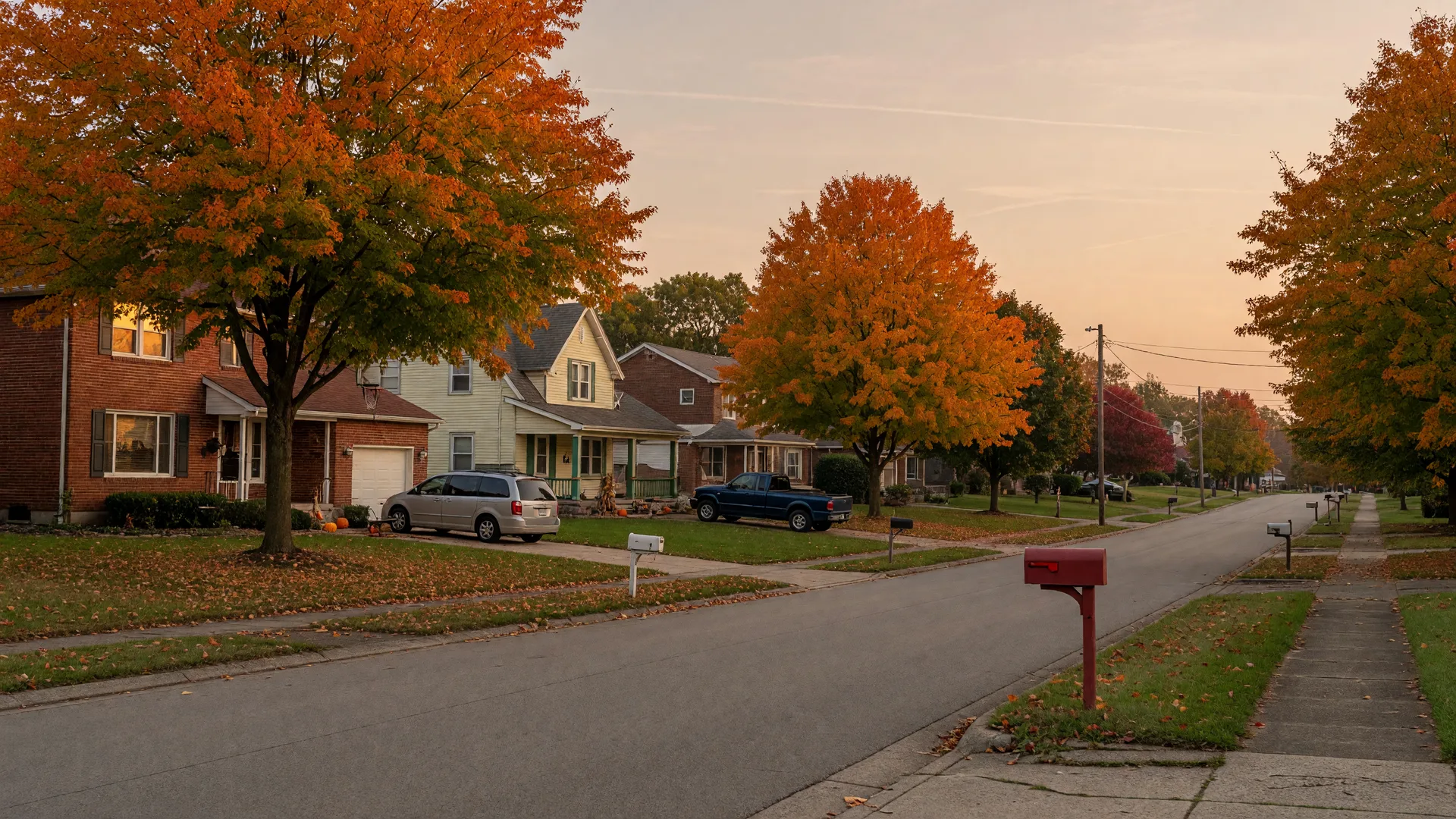
Beavercreek Township in Greene County and Concord Township in Lake County, like every Ohio township, collect no municipal income tax, so a resident's local income tax bill is $0 no matter where the paycheck comes from. The trade-off sits in the property tax, and it is not the same in both places: Beavercreek Township runs an effective rate near 1.97 percent of market value, while Concord Township runs near 1.03 percent. Adjacent cities charge 2.0 to 2.5 percent of earned income instead. Here is the comparison, with the rates and the math.
Do Ohio townships really collect 0% municipal income tax?
Yes, and it is written into state law. Ohio Revised Code Chapter 718, which governs municipal income taxes, authorizes the tax only for "municipal corporations," the legal term for Ohio cities and villages. Section 718.04 grants the authority for an income tax to a municipal corporation. Townships are a different class of local government under Ohio law, so they have no statutory authority to levy a municipal income tax at all. That is why living in a township means a 0 percent local income tax based on your residence: the township simply cannot charge one. Township services are funded through property taxes, levies, fees, and shared state revenue instead.
The one caveat is where you work, not where you live. Your employer still withholds for the city where your job is located, and that obligation follows the workplace, not the home. What the township saves you is the residence-side tax: a Kettering or Mentor resident pays their city's rate on their earnings, while a township resident in the same job owes the township nothing extra.
How do property tax rates compare in Beavercreek Township and Concord Township?
Property tax is where the two townships diverge sharply. Beavercreek Township carries a heavier school-and-levy load: Greene County's published 2024 rates list 88.19 mills of nominal millage for the Beavercreek City School District taxing district (B03) and 80.52 mills for the slice served by Xenia Community Schools (B04). Because Ohio applies reduction factors, the effective rate lands lower than nominal millage; third-party estimates put Beavercreek Township near 1.97 percent of market value. Concord Township sits on the other end of the scale, with a median effective property rate near 1.03 percent, well under Ohio's state median of roughly 1.6 percent. Nominal millage is not a tax bill, so the exact number for a given parcel depends on its taxing district combination, which is why the county auditor is the source of truth at closing.
Table: The two 0% income-tax townships side by side, with effective property tax rates, school districts, and 2026 median prices. Income tax rates from RITA and city finance pages; effective property rates are third-party estimates anchored to Greene and Lake county schedules; median prices are published 2026 aggregator figures, accessed October 16, 2026.
| Jurisdiction | Type | Municipal Income Tax | Effective Property Rate | School District | 2026 Median Price |
|---|---|---|---|---|---|
| Beavercreek Township | Township (Greene Co.) | 0% | ~1.97% | Beavercreek City Schools (portions Xenia) | ~$335K |
| City of Beavercreek | City (Greene Co.) | 0% today; 1% on Nov 3, 2026 ballot | ~2.29% | Beavercreek City Schools | ~$335K |
| Concord Township | Township (Lake Co.) | 0% (1.75% inside JEDD) | ~1.03% | Riverside Local (portions Mentor, Chardon) | ~$245K-$250K |
What does living in a 0% township actually save on a $100,000 income?
The income tax is a tax on what you earn, not what your house is worth, so the savings compound every year. A household earning $100,000 pays $0 in local income tax in either township. The same household pays $2,000 a year in Fairborn or Mentor (2.0 percent), $2,250 in Kettering or Xenia (2.25 percent), and $2,500 in Dayton (2.5 percent). Over ten years, a $2,250 annual difference is $22,500 that stays in the household budget. Every city listed credits tax paid to a work city, up to the home city's rate, so residents are not double-taxed on the same wages; the listed figure is what a resident pays when their work-city tax does not exceed the home-city rate.
Table: Local income tax on $100,000 of earned income by jurisdiction. Rates are from RITA member pages and city finance pages; credits offset tax paid to a work city up to the home-city rate. Illustration for general education only, not tax advice, accessed October 16, 2026.
| Jurisdiction | Municipal Income Tax Rate | Tax on $100K | Credit for Tax Paid to Work City |
|---|---|---|---|
| Beavercreek Township | 0% | $0 | n/a |
| City of Beavercreek | 0% today | $0 | n/a |
| Concord Township | 0% (1.75% inside JEDD) | $0* | n/a |
| Fairborn | 2.00% | $2,000 | 100% up to 2.00% |
| Kettering | 2.25% | $2,250 | 100% up to 2.25% |
| Xenia | 2.25% | $2,250 | 100% up to 2.25% |
| Dayton | 2.50% | $2,500 | 100% up to 2.50% |
| Mentor | 2.00% | $2,000 | 100% up to 2.00% |
| Willoughby | 2.00% | $2,000 | 100% up to 2.00% |
| Eastlake | 2.00% | $2,000 | 100% up to 2.00% |
| Painesville | 2.00% | $2,000 | 100% up to 2.00% |
*Concord Township residents owe the 1.75% Concord-Painesville JEDD tax only on income earned within the JEDD. The $0 figure assumes earnings outside the JEDD.
Why is the City of Beavercreek also a 0% income tax city, and what is on the November 2026 ballot?
The City of Beavercreek is currently one of only three Ohio cities with no municipal income tax, along with Bellbrook and Cortland, and its official tax page states that plainly. That could change on November 3, 2026, when Beavercreek voters decide a charter proposal that would impose a 1.0 percent municipal income tax effective July 1, 2027, paired with a 50 percent cut in the city's property tax. The outcome does not touch Beavercreek Township, because a township cannot put an income tax on the ballot at all. For anyone comparing the city and the township side of the same school district, this vote is worth watching, because it would shift part of the local tax burden in the city from property to income starting in mid-2027.
Which school districts serve Beavercreek Township and Concord Township?
District boundaries are parcel-specific, and the exact assignment should be verified with the county auditor before an offer. Beavercreek Township is served mostly by Beavercreek City Schools, a district of roughly 47 square miles covering the City and Township of Beavercreek, Alpha, and parts of Fairborn, Kettering, Riverside, Sugarcreek Township, and Xenia; a slice of township parcels falls instead in Xenia Community Schools. Concord Township is split across three districts by location: primarily Riverside Local Schools (44077), with portions served by Mentor Public Schools (44060) and Chardon Local Schools (44024). We provide the district boundaries and the links so you can evaluate them yourself; school quality is a decision each family makes on its own data.
What is the Concord-Painesville JEDD, and does it tax Concord Township residents?
The one place a township resident can pay local income tax is inside a Joint Economic Development District (JEDD), a tax-sharing arrangement between a township and a neighboring city. The Concord-Painesville JEDD levies a 1.75 percent income tax on wages and business net profits earned within the district, administered by the Regional Income Tax Agency (RITA). Concord Township's own FAQ is explicit: township residents are not subject to income tax based on where they live, but they do pay the 1.75 percent on income earned while working inside the JEDD. In practice, that means a Concord resident who commutes to downtown Cleveland owes the township nothing, while a Concord resident working at a business physically inside the JEDD pays 1.75 percent on that JEDD-sourced income.
What should a buyer check before closing in a 0% income-tax township?
In our work helping buyers weigh Greene and Lake county townships against neighboring cities, the property tax line almost always decides the choice, and it is the line people underestimate. The income tax saving is easy to see, but the millage that replaces it depends on a three-part taxing district, the township, the school district, and any special districts, and it changes parcel to parcel. We run the exact taxing district, the current effective rate, and the income tax line together before a buyer compares two addresses, because two homes at the same price in a township and a nearby city can carry very different local tax bills for the same job. Here is the checklist we use.
- Pull the exact taxing district for the parcel from the county auditor (Greene County for Beavercreek Township, Lake County for Concord Township), not just a city-wide average.
- Ask for the current effective property tax rate, because Ohio's reduction factors make it lower than the nominal millage published on levy ballots.
- Confirm your work city's income tax still applies at your job, since employer withholding follows the workplace, not the township address.
- For Concord Township, confirm whether the address is inside the Concord-Painesville JEDD and whether any of your income comes from working within it.
- Check township and special-district levies for services such as fire, EMS, and roads; townships fund those through property tax, not income tax.
- If you are looking in the City of Beavercreek, track the November 3, 2026 ballot measure that would add a 1.0% income tax and cut city property taxes, because it changes the comparison if approved.
- Verify the school district assignment parcel by parcel before you assume a boundary, and check the county auditor's records for the exact parcel.
For the wider picture, see our how property taxes work in the Dayton area explainer, our RITA tax trap guide for Cleveland's suburbs, the Beavercreek market update, the Kettering market update, and the Greater Dayton region page and Greater Cleveland region page for the full market view.
Frequently Asked Questions
Do Ohio townships charge a municipal income tax?
No. Ohio Revised Code Chapter 718 authorizes municipal income tax only for municipal corporations, meaning Ohio cities and villages. Townships are not municipal corporations under state law, so they have no authority to levy an income tax. A township resident's local income tax based on residence is 0 percent.
Why is the City of Beavercreek also listed as a 0% income tax city?
The City of Beavercreek is one of only three Ohio cities with no municipal income tax, along with Bellbrook and Cortland. Voters decide on November 3, 2026 whether to impose a 1.0 percent income tax effective July 1, 2027, paired with a 50 percent cut in the city's property tax. Beavercreek Township is not affected, because townships cannot put an income tax on the ballot.
How much do I save in local income tax by living in a township instead of Kettering or Mentor?
On $100,000 of earned income, the township saves $2,250 a year versus Kettering or Xenia at 2.25 percent, $2,000 a year versus Fairborn, Mentor, Willoughby, Eastlake, or Painesville at 2.0 percent, and $2,500 a year versus Dayton at 2.5 percent. Over ten years a $2,250 difference is $22,500.
Do Concord Township residents pay the Concord-Painesville JEDD tax?
Only on income earned inside the JEDD. The Concord-Painesville Joint Economic Development District levies a 1.75 percent income tax on wages and business net profits earned within the district, administered by RITA. Residence in Concord Township is not taxed; a resident working outside the JEDD owes the township nothing.
What determines my property tax in Beavercreek Township?
Your property tax is set by your exact taxing district, the township plus school district plus any special districts. Greene County's 2024 rates list 88.19 mills for the Beavercreek Township and Beavercreek City School District combination (B03) and 80.52 mills for the slice in Xenia Community Schools (B04). Ohio's reduction factors make the effective rate lower than nominal millage, so check the auditor for the parcel's current effective rate.
Do I still pay income tax to the city where I work if I live in a township?
Yes. Your employer withholds municipal income tax for the city where your job is located, and that obligation follows the workplace. What the township changes is the residence side: the township charges you nothing, so you do not owe an additional home-city tax on top of the work-city withholding.
Sources
- Ohio Revised Code Chapter 718: Municipal Income Taxes
- Ohio Revised Code Section 718.04: Authority for tax on income (municipal corporations)
- City of Beavercreek: Taxation (no municipal income tax)
- City of Beavercreek: City Taxes (one of three Ohio cities without income tax)
- City of Beavercreek: Income Tax ballot measure (November 3, 2026)
- Greene County: 2024 Tax Rates (Beavercreek Township taxing districts B03 and B04)
- City of Beavercreek: 2022 Residential Property Taxes (effective millage 79.91)
- Beavercreek Township: School Districts
- Beavercreek City Schools
- Concord Township FAQ: Do township residents pay township taxes like cities do?
- Concord Township FAQ: How much is the JEDD income tax?
- RITA: Painesville Concord JEDD member page (1.75% income tax)
- Concord Township: Schools (Riverside, Mentor, Chardon districts)
- Lake County Auditor: Rates of Taxation, 2024 Payable 2025
- Concord Township: Understanding Taxes in Concord
- City of Kettering: Individual Taxpayer Information (2.25% rate)
- City of Fairborn: Income Tax Division (2.0% rate)
- RITA: Xenia member page (2.25% rate)
- City of Dayton: Tax Information and Forms (2.5% rate)
- City of Mentor: Municipal Income Tax (2.0% rate)
- City of Willoughby: Finance (2.0% rate)
- City of Eastlake: Tax Information (2.0% rate)
- RITA: Painesville member page (2.0% rate)
- Ownwell: City of Beavercreek effective property tax rate
- Ownwell: Beavercreek Township effective property tax rate
- Ownwell: Concord Township effective property tax rate
- Redfin: Beavercreek housing market data
- Resideline: Beavercreek housing market data
- Redfin: Greene County housing market data
- Concord Township home prices by ZIP code (local analysis)
- Redfin: Mentor housing market data
- Redfin: Painesville housing market data
- Redfin: Lake County housing market data
- Niche: Concord Township real estate data
Reporting period: Ohio Revised Code, RITA member pages, Greene County and Lake County tax schedules, city finance pages, township FAQ pages, and published 2026 price reports, accessed October 16, 2026. This guide is general market education, not legal, tax, financial, or mortgage advice. Verify current rates, credit rules, and district boundaries with the counties, RITA, the cities, and qualified tax, legal, and mortgage professionals for your specific situation.
Social caption: New guide: 0% municipal income tax havens. Ohio townships can't levy an income tax, so Beavercreek Township (Greene County) and Concord Township (Lake County) run at 0% while nearby cities charge 2.0% to 2.5%. We compared the property tax that replaces it: 1.97% vs. 1.03%. Full tables, the JEDD caveat, and the savings math. Link in bio. #OhioRealEstate #BeavercreekOH #ConcordTownship #GreeneCounty #LakeCounty #GlasshouseRealty
Published October 16, 2026 · Updated October 16, 2026
Comparing a 0% township against a neighboring city?
Tell us the two addresses and your target budget, and we will pull the exact taxing districts, millage, and income tax lines for Beavercreek Township, Concord Township, and every city in between before you schedule a showing. No pressure, just the numbers.
Talk to an AgentWeighing a township against a neighboring city?
Whether you are buying in Beavercreek Township, Concord Township, or a city with a 2.0% to 2.5% income tax, a Glasshouse agent can walk you through the property tax, income tax, and price picture in one conversation.
We help buyers compare Greene and Lake county townships against adjacent cities every week, including the tax structure that sets the true monthly cost of a home.
Schedule a Consultation